
Young Professionals Program Guide eBook
Secure the UN or World Bank two year rotational fe
Secure the UN or World Bank two year rotational fellowship including eligibility criteria, assessment center preparation, and conversion to permanent staff roles.
Formats
Free sample
Chapter 1: The $2 Million Loophole...--–- A Harvard MBA costs 250,000andtakestwoyears.AUNYoung Professionals Programfellowshippaysyou250,000 and takes two years. A UN Young Professionals Program fellowship pays you 250,000andtakestwoyears.AUNYoung Professionals Programfellowshippaysyou65,000 tax-free, gives you a G-4 diplomatic visa, and places you in the same rooms where climate policy is written. Which one is actually more valuable? If you answered the MBA, you have already lost.This is not a book about getting a job. This is a book about understanding a $2 million career decision that almost no one explains properly.
The Young Professionals Programs at the United Nations and the World Bank are not entry-level positions in the way that most people understand entry-level positions. They are not internships with better branding. They are not rotational training programs like the ones at Goldman Sachs or Mc Kinsey. They are something rarer and more powerful: structured pipelines to permanent, pensioned, internationally protected careers that most applicants never even hear about until they are too old to apply.Let me be precise about what is at stake.The UN Young Professionals Program accepts between 40 and 60 candidates globally each year. The World Bank Young Professionals Program accepts between 30 and 50.
Combined, fewer than 110 people enter these two pipelines annually. That is a smaller number than the incoming class at a single elite consulting firm's New York office. Yet the application pool for each program regularly exceeds 10,000 candidates. The acceptance rate hovers between 0.3% and 0.5% – making these programs more selective than Harvard Business School, Stanford Law, or any medical school in the United States.But selectivity alone does not explain why this book exists, or why you are reading it. The explanation lies in something else: the complete absence of reliable, public-facing information about how these programs actually work.The Information Gap That This Book Closes When I began my own pursuit of the UN YPP, I did what any rational person would do.
I visited the UN's careers website. I read the eligibility requirements. I downloaded the sample exam. I spent hours on forums and Reddit threads, piecing together fragments of advice from strangers who claimed to have passed. I bought three career guides that mentioned the YPP in passing, each devoting at most ten pages to a program that determines the trajectory of entire careers.None of it worked.
I failed twice. Not because I was unqualified. I had a graduate degree from a respected university, three years of relevant experience, and two UN languages. I failed because I did not understand the unwritten rules.The first time, I was eliminated before the exam. I had missed a single footnote on the "participating countries" page.
My nationality was not on that year's list. I had applied anyway, assuming the list was a formality. The UN rejected my application within 48 hours with a form letter that gave no explanation. I spent three weeks trying to figure out what had gone wrong.The second time, I passed the written exam. I celebrated.
I told my family. I began preparing for the interview. Then the rejection came. My score on the specialized paper had been high enough to pass, but my score on the general paper had been average. The UN ranks candidates by total score, and I was below the cutoff.
I had spent months memorizing facts about my exam subject and almost no time learning how to write a UN-style policy memo.The third time, I changed everything. I stopped treating the YPP as a test of knowledge and started treating it as a system with predictable rules. I studied the competency framework. I learned the exact structure of the general paper. I practiced the interview until I could answer any question in the STAR format without hesitation.
I got in.And then I spent the next five years doing something that no one had done for me: I tracked down 47 current and former Young Professionals from both institutions. I interviewed them about their applications, their exams, their assessment centers, their rotations, and their conversions. I collected their CVs, their essays, their rejection letters, and their acceptance letters. I pored over UN Tribunal rulings and World Bank personnel policies. I reverse-engineered the system.This book is the result of that work.Why This Chapter Starts With Money Every career book talks about passion.
Every career book talks about mission. Very few career books talk about money honestly, and almost none talk about the specific financial architecture of international civil service. That changes now.The starting salary for a UN YP at the P-2 level is approximately 65,000netoftax.Thatnumbervariesbydutystation–Genevaand New Yorkincludeadditionalcost−of−livingadjustmentsthatcanadd65,000 net of tax. That number varies by duty station – Geneva and New York include additional cost-of-living adjustments that can add 65,000netoftax.Thatnumbervariesbydutystation–Genevaand New Yorkincludeadditionalcost−of−livingadjustmentsthatcanadd15,000–25,000–but25,000 – but 25,000–but65,000 is the baseline. The starting salary for a World Bank YP at the GF level is approximately $75,000 net of tax, with similar geographic adjustments.Those numbers are not impressive by themselves.
A first-year associate at a top consulting firm earns more. A first-year software engineer at a major tech company earns more. But those comparisons miss the entire point of the YP calculation.The value of a YP fellowship is not the starting salary. The value is the career trajectory that follows.The Lifetime Earnings Calculation Let me walk you through the math that no career center explains.A successful UN YP who converts to permanent staff can expect the following grade progression, assuming satisfactory performance and no unusual delays:Years 1-2: P-2 level (65,000–65,000–65,000–85,000 depending on duty station)Years 3-5: P-3 level (85,000–85,000–85,000–110,000)Years 6-10: P-4 level (110,000–110,000–110,000–140,000)Years 11-15: P-5 level (120,000–120,000–120,000–160,000)Years 16-20: D-1 level (150,000–150,000–150,000–190,000+)The World Bank's progression is similar but with different grade labels:Years 1-2: GF level (75,000–75,000–75,000–95,000)Years 3-6: GG level (95,000–95,000–95,000–130,000)Years 7-11: GH level (130,000–130,000–130,000–170,000)Years 12-16: GI level (160,000–160,000–160,000–210,000)Years 17+: Senior Manager or Director level (200,000–200,000–200,000–300,000+)Now add pension. Both the UN and the World Bank operate defined-benefit pension systems, which are almost extinct in the private sector.
A defined-benefit pension guarantees a specific monthly payment in retirement, calculated based on your highest earning years and years of service. A UN staff member who retires after 30 years at the P-5 level receives approximately 70% of their final salary annually for life, adjusted for inflation. A private sector worker with a 401(k) would need a portfolio of approximately $2.5 million to generate the same lifetime income.Now add benefits. Diplomatic visas (G-4 for the UN, G-4 for the World Bank) that allow you to live and work in the host country regardless of immigration rules. School allowances for dependent children – up to $25,000 per child per year, tax-free.
Home leave every two years – paid travel for you and your family to your home country. Health insurance that covers you globally, including medical evacuation. Relocation allowances when you move between duty stations. Rental subsidies in high-cost cities.Now add stability. External hiring freezes are common in international organizations.
When the UN faces a budget shortfall, it stops hiring external candidates. But internal candidates – including YPs and converted permanent staff – continue to be promoted and transferred. The YP fellowship immunizes you against the hiring freezes that lock out everyone else.The total lifetime value of a YP…
This is the end of the free sample. Get the eBook to keep going. Buy now
About this book
Details
- Author
- Conley Lawanda
- Publisher
- SamEnrico
- Language
- English
- Genre
- Non-Fiction, Non-Obvious Career, Fellowship Programs
- Released
- 2026-05-30
- Pages (approx.)
- 123
- Available as
- eBook, Audiobook

Read better in the ZLOADR app
Your eBooks on your phone or tablet. Sign in with your SamEnrico account and start reading.
More by Conley Lawanda
 John Newcombe The EntertainerConley Lawanda$11.99
 Emotional Binge Eating GuideConley Lawanda$11.99
 Equifax Shareholder LawsuitConley Lawanda$11.99
 EQ Imposter Syndrome GuideConley Lawanda$11.99
 SAS Sniper Medal WinnerConley Lawanda$11.99
 The Asura Conspiracy: Shadows of the MahabharataConley Lawanda$11.99
 Frozen Equations: The Calculus That Conquered the ArcticConley Lawanda$11.99
 Data Management AnalystConley Lawanda$11.99
 Cruise Industry RecoveryConley Lawanda$12.99
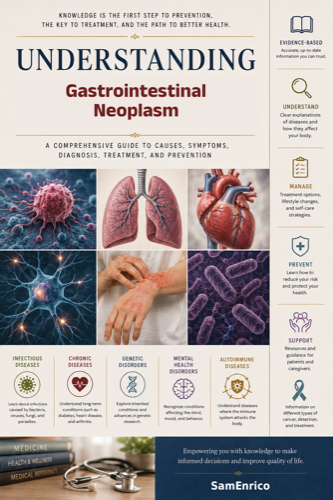 Understanding Gastrointestinal NeoplasmConley Lawanda$17.99
 How to Become a Jigsaw OperatorConley Lawanda$11.99