
Non-FictionBusiness BriefPreference Programs
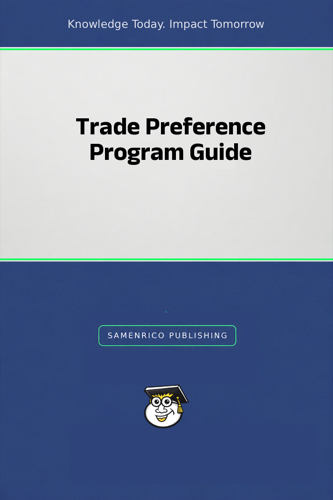
Trade Preference Program Guide
Claim duty free benefits under GSP, AGOA, and othe
Claim duty free benefits under GSP, AGOA, and other preference programs using this handbook.
Formats
About this book
Free sample
Chapter 1: The Million-Dollar Mistake--–- In a cramped warehouse outside Newark, New Jersey, a mid-sized importer of Ethiopian leather handbags had just finished a routine customs audit. The result was not routine. Over five years, the company had paid $1.7 million in duties on products that should have entered the United States completely tax-free under the African Growth and Opportunity Act (AGOA). Their competitor, a similar importer based in Los Angeles, had paid zero. The difference was not quality, speed, or relationships.
The difference was knowledge. The Newark importer simply did not know that a trade preference program existed for African-made goods. Their customs broker had never mentioned it. Their suppliers in Addis Ababa had never heard of it. And so, for sixty consecutive months, they wrote checks to U.S.
Customs and Border Protection (CBP) for money they never owed. This book exists to ensure you are never that importer.The $100 Billion Blind Spot Trade preference programs are among the best-kept secrets in international commerce. Collectively, the United States operates over a dozen unilateral preference programs—including the Generalized System of Preferences (GSP), the African Growth and Opportunity Act (AGOA), the Caribbean Basin Trade Partnership Act (CBTPA), the Haiti HOPE/HELP legislation, and the Andean Trade Preference Act (ATPA)—that together cover tens of thousands of products from more than 130 countries. These programs allow eligible products to enter the U.S. market duty-free or at significantly reduced tariff rates, provided the importer follows specific origin, documentation, and shipping rules.Yet despite the enormous savings available, preference programs remain dramatically underutilized.
According to the United Nations Conference on Trade and Development (UNCTAD), global utilization rates for GSP-style programs average less than 60 percent across developing countries. For smaller exporters and first-time users, the rate drops below 30 percent. In plain language: billions of dollars in legally avoidable tariffs are paid every year simply because importers and exporters do not know the rules or are afraid to navigate them.This chapter introduces you to the fundamental architecture of U.S. trade preference programs: what they are, how they differ from free trade agreements, why…
This is the end of the free sample. Get the eBook to keep going. Buy now
Contents
- Chapter 1
- Chapter 2
- Chapter 3
- Chapter 4
- Chapter 5
- Chapter 6
- Chapter 7
- Chapter 8
- Chapter 9
- Chapter 10
- Chapter 11
- Chapter 12
Details
- Author
- Brownlee Cori
- Publisher
- SamEnrico
- Language
- English
- Genre
- Non-Fiction, Business Brief, Preference Programs
- Released
- 2026-06-06
- Pages (approx.)
- 151
- Available as
- eBook, Audiobook

Read better in the ZLOADR app
Your eBooks on your phone or tablet. Sign in with your SamEnrico account and start reading.
More by Brownlee Cori
 The Bedtime Body ScanBrownlee Cori$11.99
 Hypnotic Nerve Pain GuideBrownlee Cori$11.99
 Global Team Async Workflow GuideBrownlee Cori$11.99
 Executive Kidnap Crisis Logistics ManualBrownlee Cori$11.99
 The 21st Century's Silent Revolution: How the Right to Repair Movement Became LawBrownlee Cori$11.99
 Echoes of the Forgotten: The Lost Tapes of the 1969 Apollo 11 Backup CrewBrownlee Cori$11.99
 Part Time Work Dubai StudentsBrownlee Cori$12.99
 Blockchain Supply Chain TrackBrownlee Cori$12.99
 Rv Cleaning (Waste Tank Handling)Brownlee Cori$11.99
 Understanding Congenital Mitral MalformationBrownlee Cori$17.99
You may also like
 Hong Kong Handover 1997Dunn Johnnie$11.99
 Zumba For Postnatal Recovery CourseNeal Christian$11.99
 Zumba for BeginnersLadner Nikia$11.99
 YouTube Comment Mining GuideHumes Pandora$12.99
 Worry Box MeditationCarlin Rudy$11.99
 Workplace Stress MeditationNguyen Lynn$11.99
 Workplace Stress and Sleep RepairHawley Ivory$11.99
 Workplace Perfectionism CureDelaney Jeffry$11.99
 Workplace Injustice Anger GuideWallen Isabelle$11.99
 Work Addiction and Burnout LinkGreenwood Ester$11.99
 Women in Yoga and WellnessBeattie Galina$11.99
 Women in Stand Up ComedyChun Evangeline$11.99