
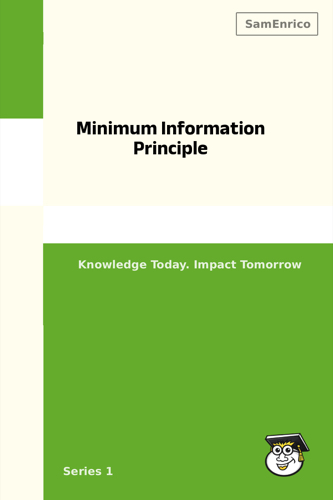
Minimum Information Principle Audiobook
Teaches breaking complex topics into atomic cards
Teaches breaking complex topics into atomic cards for easier memorization.
Formats
Free sample
Chapter 1: The Familiarity Trap--–- Every student knows the feeling. You close the textbook after an hour of intense reading. The diagrams make sense. The arguments flow logically. You nod along, convinced that you have finally grasped the material.
Then comes the test. Or worse, a colleague asks a simple question. Your mind goes blank. The concepts you just read dissolve like morning fog. You remember fragments, vague impressions, the shape of an argument without its substance.
This is not a failure of effort or intelligence. This is the natural consequence of mistaking recognition for recall, and it is the single greatest barrier to lasting knowledge.For decades, educators and self-taught learners alike have operated under a dangerous assumption: that understanding and memorization are separate processes, and that the former somehow precedes the latter. We tell ourselves that if we just read something enough times, highlight enough passages, or listen to enough lectures, the material will eventually stick. This approach feels productive because it generates immediate feedback. When you re-read a paragraph, it feels familiar.
When you review your highlights, you recognize the key points. That feeling of familiarity is comforting, but it is also profoundly deceptive. Neuroscience has shown that recognition and recall are handled by entirely different neural pathways. Recognition is passive. It requires only that a stimulus triggers a vague sense of having encountered it before.
Recall is active. It demands that your brain reconstruct information from scratch, without cues, in the empty space of your own mind. The difference between these two processes is the difference between recognizing a song on the radio and being able to hum it from memory. It is the difference between spotting a familiar face in a crowd and describing that face to a police sketch artist. And it is the difference between feeling like you know something and actually knowing it.This book exists because that difference matters more than most people realize.
In the pages that follow, you will be introduced to a principle that has been validated by decades of cognitive science research, refined by the developers of spaced repetition systems, and practiced by the world's most effective self-learners. It is called the Minimum Information Principle, and it is deceptively simple: any piece of information you wish to remember permanently must be broken down into the smallest possible atomic units, each tested individually through active recall. This principle…
This is the end of the free sample. Get the Audiobook to keep going. Buy now
About this book
Details
- Author
- Boudreau Corrine
- Publisher
- SamEnrico
- Language
- English
- Genre
- Non-Fiction, Self-Help, Learning Theory
- Released
- 2026-06-05
- Pages (approx.)
- 153
- Available as
- eBook, Audiobook

Listen in the VoxFlicks app
Audiobooks and audio dramas wherever you go. Sign in with your SamEnrico account and press play.
More by Boudreau Corrine
 Forensic Hair Microscopy GuideBoudreau Corrine$11.99
 Rowboat Racer Hypnosis GuideBoudreau Corrine$11.99
 Control Release Recovery GuideBoudreau Corrine$11.99
 Scientist Imposter GuideBoudreau Corrine$11.99
 The Potassium HandbookBoudreau Corrine$11.99
 Entrepreneur WorkaholismBoudreau Corrine$11.99
 Persuasion For ChefsBoudreau Corrine$11.99
 From Ashes to Apollo: The Miraculous Return of the Saturn V RocketBoudreau Corrine$11.99
 The Ballad of William Wavell Wakefield: Rugby's Forgotten MaestroBoudreau Corrine$11.99
 How to Produce a Flame BroilerBoudreau Corrine$11.99
 How to Produce Saxophone Pad SaversBoudreau Corrine$11.99
 A Collector's Handbook to the Austin 4 (1939-40)Boudreau Corrine$11.99