
Non-FictionStudent's ShortcutPause Strategy
Degree In Progress Bootcamp Choice eBook
Decide whether to pause university for intensive b
by Sapp Houston
Decide whether to pause university for intensive bootcamp and return later based on global dropout re-enrollment success rates.
Formats
Free sample
Chapter 1: The 33% Lie--–- You have been told that leaving college is a failure. That once you step off the path, the path closes behind you. That a pause becomes a permanent stop, and a permanent stop becomes a life of "what if."That is a lie.Not a gentle mistruth. Not an exaggeration for motivational effect. A flat, statistically indefensible lie.Here is what the data actually says: In the United States alone, over 40 million adults have some college credit but no degree.
That is not a typo. Forty million. More than the entire population of California. In Colorado, a single state, 757,000 people have walked through university doors, earned credits, and then walked out before finishing. They are not dropouts in the way you imagine—teenagers who never belonged on a campus in the first place.
They are parents, veterans, nurses' aides, retail managers, aspiring engineers, and burnt-out honors students. They are you, possibly, reading this sentence.And here is the second number you need to hold in your mind: Without any intervention—no phone call, no financial aid forgiveness, no coach, no bootcamp, no wake-up—only 2.3 to 2.7 percent of those 40 million people will re-enroll in any given year.That sounds devastating. It is meant to. But do not stop there. Because that 2.3 percent baseline is precisely what this book is designed to defeat.
The question is not whether you can return. The question is whether you will return with a system or without one.This chapter is called "The 33% Lie" for a specific reason. You will hear people—well-meaning advisors, anxious parents, bootcamp salespeople—tell you that if you leave school, your chances of ever finishing drop to near zero. They will wave vague statistics about dropout rates. They will say things like "most people never go back" as if that is a law of physics rather than a description of disorganized effort.The lie is not that the risk is real.
The risk is absolutely real. The lie is that the risk is random—that you are either the kind of person who finishes or the kind who doesn't, and leaving reveals which kind you are.That is not how re-enrollment works. Re-enrollment is a logistics problem disguised as a character problem. And once you see the disguise, you can never unsee it.The Birth of the "Stopout"Before we go any further, we need to murder a word. The word is "dropout."Dropout implies a permanent state.
You drop out of high school. You drop out of society. You drop out of a conversation. It is a word that carries a whiff of moral failure, of insufficient grit, of a door that has not just closed but been nailed shut.The research literature—the real literature, the kind written by economists and education researchers who track tens of thousands of students over decades—uses a different word: stopout.A stopout is someone who leaves an educational program with the explicit or implicit intention of returning. The time horizon varies.
Some stopouts return within one semester. Some return within five years. Some return within a decade. But the key distinction is that a stopout has not terminated their educational trajectory. They have paused it.Why does this matter?
Because words shape what we believe is possible. If you tell yourself you dropped out, your brain codes that as a completed event. It is in the past. It is a closed loop. If you tell yourself you stopped out, your brain codes that as an interrupted process.
The loop is still open. You just need to find the loose thread and pull.This book will use the word "stopout" for every person who leaves college before finishing, regardless of their intention at the time of leaving. Even if you left in anger, even if you left in despair, even if you swore you would never set foot on a campus again—you are a stopout. Because the data shows that thousands of people who said exactly those things eventually re-enrolled. Your past self does not get to vote on what your future self is capable of.The National Baseline: 2.3 Percent Let us get precise about the numbers.The National Student Clearinghouse Research Center tracks every student who has ever enrolled in postsecondary education in the United States.
Their "Some College, No Degree" (SCND) reports are the gold standard. As of the most recent data, there are approximately 40.4 million adults with SCND. That number has been growing steadily for two decades.Among those 40.4 million people, the annual re-enrollment rate—the percentage who return to any postsecondary institution in a given academic year—consistently falls between 2.3 percent and 2.7 percent.Pause on that number for a moment.If you are a stopout right now, reading this book, and you do absolutely nothing—no phone calls, no research, no financial aid applications, no coaching, no bootcamp—the probability that you will be enrolled in college one year from today is roughly one in forty.Those are terrible odds. They are meant to be terrible. They are the reason this book exists.But here is what that number does not mean: It does not mean that your individual probability of returning is 2.5 percent.
Because that 2.5 percent is an average across an enormous, heterogeneous population that includes people who owe 50,000inunpaidtuition,peoplewhofailedoutonacademicprobation,peoplewhomovedthreestatesaway,peoplewhohadababy,peoplewhogotdivorced,peoplewhojoinedthemilitary,peoplewhowenttoprison,peoplewhoarecurrentlyhomeless,peoplewhoarecurrentlyearning50,000 in unpaid tuition, people who failed out on academic probation, people who moved three states away, people who had a baby, people who got divorced, people who joined the military, people who went to prison, people who are currently homeless, people who are currently earning 50,000inunpaidtuition,peoplewhofailedoutonacademicprobation,peoplewhomovedthreestatesaway,peoplewhohadababy,peoplewhogotdivorced,peoplewhojoinedthemilitary,peoplewhowenttoprison,peoplewhoarecurrentlyhomeless,peoplewhoarecurrentlyearning200,000 a year without a degree, and people who have simply forgotten they were ever enrolled.Your specific situation is not the average. Your specific situation, once you apply the frameworks in this book, can be radically different from the average.The goal of this book is to move you from the 2.3 percent baseline to the 33 percent three-year re-enrollment rate achieved by the best stopout intervention programs—and then, for those who follow the full system, to the 70+ percent completion rate for stopouts who successfully re-enroll with support.The Bootcamp Premise: A Dangerous Attraction Before we go further, we need to talk about why you are reading this book in the first place. You did not pick up a book called "Degree In Progress Bootcamp Choice" because you are happily enrolled in a four-year university with a 4.0 GPA and a clear path to graduation. You picked it up because something is not working.Maybe you are currently enrolled and miserable. Maybe you have already left and are trying to figure out what comes next.
Maybe you are suspended, or on probation, or drowning in debt, or working a job that makes you feel like your brain is slowly atrophying.And someone—a friend, a You Tube ad, a sponsored Linked In post, a career coach at your local workforce center—has suggested a bootcamp.The pitch is seductive. It goes something like this: "College is slow, expensive, and theoretical. Bootcamps are fast, focused, and practical. Why spend four years and 100,000onadegreewhenyoucanspendtwelveweeksand100,000 on a degree when you…
This is the end of the free sample. Get the eBook to keep going. Buy now
About this book
Details
- Author
- Sapp Houston
- Publisher
- SamEnrico
- Language
- English
- Genre
- Non-Fiction, Student's Shortcut, Pause Strategy
- Released
- 2026-06-01
- Pages (approx.)
- 139
- Available as
- eBook, Audiobook

Read better in the ZLOADR app
Your eBooks on your phone or tablet. Sign in with your SamEnrico account and start reading.
More by Sapp Houston
 Personal Ing For Success Target AudienceSapp Houston$11.99
 The Talent Migration Data HandbookSapp Houston$11.99
 Intuitive Eating For Bariatric Surgery GuideSapp Houston$11.99
 Opioid Rotation ProtocolSapp Houston$11.99
 The Food Pantry ChefSapp Houston$11.99
 The Arctic Exodus: The Great Snow Goose Migration MysterySapp Houston$11.99
 The Affair That Shook the Crown: Prince Andrew and the Epstein ScandalSapp Houston$11.99
 Distributing Profits to Foreign OwnersSapp Houston$12.99
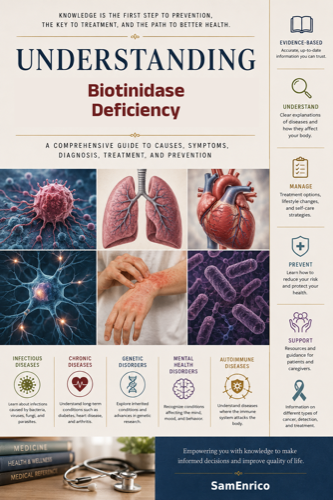 Understanding Biotinidase DeficiencySapp Houston$17.99
 Security Operations AnalystSapp Houston$11.99
 How to Start a Poultry Grit Business (Beginners Guide)Sapp Houston$11.99
You may also like
 Hong Kong Handover 1997Dunn Johnnie$11.99
 Zumba For Postnatal Recovery CourseNeal Christian$11.99
 Zumba for BeginnersLadner Nikia$11.99
 YouTube Comment Mining GuideHumes Pandora$12.99
 Worry Box MeditationCarlin Rudy$11.99
 Workplace Stress MeditationNguyen Lynn$11.99
 Workplace Stress and Sleep RepairHawley Ivory$11.99
 Workplace Perfectionism CureDelaney Jeffry$11.99
 Workplace Injustice Anger GuideWallen Isabelle$11.99
 Work Addiction and Burnout LinkGreenwood Ester$11.99
 Women in Yoga and WellnessBeattie Galina$11.99
 Women in Stand Up ComedyChun Evangeline$11.99