
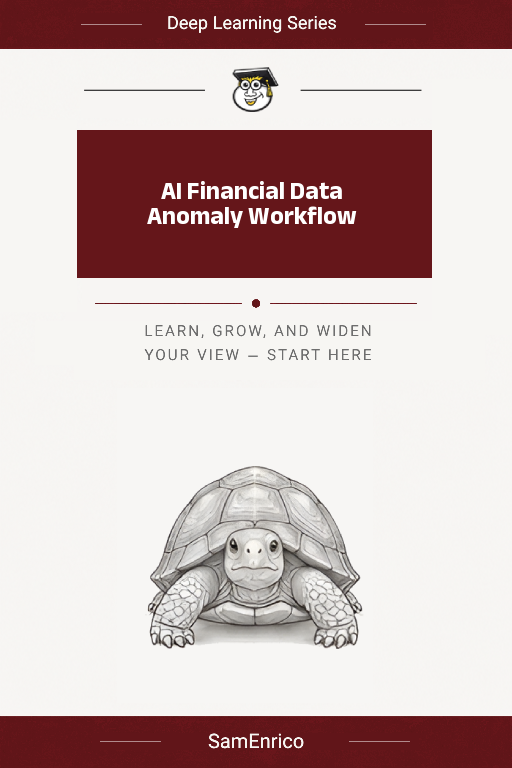
AI Financial Data Anomaly Workflow
Design escalation workflows when AI detects unusua
by Foss Narcisa
Design escalation workflows when AI detects unusual financial transactions or patterns.
Formats
About this book
Free sample
Chapter 1: The Alert Tsunami...–- It begins the same way every time. A junior compliance analyst named Sarah arrives at her desk at 8:47 AM, coffee in hand, ready to face the 847 alerts that accumulated overnight. Her bank processes approximately 2.3 million transactions daily, and their legacy rule-based system—built over fifteen years and patched countless times—has flagged nearly one thousand of them as "suspicious." Sarah knows, with the weary certainty of someone who has done this job for three years, that exactly twelve of those alerts might be actual fraud. The other 835 are false positives. She will spend her entire day chasing ghosts.This is not a failure of effort or talent.
Sarah's bank spends 4.2millionannuallyonhertwenty−personcomplianceteam.Theyaresmart,dedicatedprofessionalswhotaketheiranti−moneylaunderingandfrauddetectionresponsibilitiesseriously.Buttheyaredrowning.Therules−basedsystemtheyinheritedwasdesignedforadifferentera—onewherecriminalsmovedmoneyslowly,wheretransactionstookdaystosettle,wherea"suspicious"patternmeantsomethingobviouslikeasingle4.2 million annually on her twenty-person compliance team. They are smart, dedicated professionals who take their anti-money laundering and fraud detection responsibilities seriously. But they are drowning. The rules-based system they inherited was designed for a different era—one where criminals moved money slowly, where transactions took days to settle, where a "suspicious" pattern meant something obvious like a single 4.2millionannuallyonhertwenty−personcomplianceteam.Theyaresmart,dedicatedprofessionalswhotaketheiranti−moneylaunderingandfrauddetectionresponsibilitiesseriously.Buttheyaredrowning.Therules−basedsystemtheyinheritedwasdesignedforadifferentera—onewherecriminalsmovedmoneyslowly,wheretransactionstookdaystosettle,wherea"suspicious"patternmeantsomethingobviouslikeasingle10,000 cash deposit. Today, criminals use hundreds of small transactions just below reporting thresholds, launder money through legitimate-looking businesses, and move funds across borders in seconds.
The rules cannot keep up.Every time the compliance team adds a new rule to catch a novel fraud pattern—say, "flag any transaction over 8,000fromnewaccountslessthan14daysold"—thecriminalsadaptwithinweeks.Theystartsending8,000 from new accounts less than 14 days old"—the criminals adapt within weeks. They start sending 8,000fromnewaccountslessthan14daysold"—thecriminalsadaptwithinweeks.Theystartsending7,999. The false positive rate climbs higher. The analysts get more alerts. The real fraud slips through because no human can review ten thousand alerts per day with perfect accuracy.This is the reality of financial compliance in the 2020s, and it is completely unsustainable.
The industry spends an estimated $200 billion annually on financial crime compliance, yet the United Nations estimates that only 0.1% to 0.3% of global criminal proceeds are actually seized. We are spending enormous…
This is the end of the free sample. Get the eBook to keep going. Buy now
Contents
- Chapter 1
- Chapter 2
- Chapter 3
- Chapter 4
- Chapter 5
- Chapter 6
- Chapter 7
- Chapter 8
- Chapter 9
- Chapter 10
- Chapter 11
- Chapter 12
Details
- Author
- Foss Narcisa
- Publisher
- SamEnrico
- Language
- English
- Genre
- Non-Fiction, AI Operator
- Released
- 2026-05-30
- Pages (approx.)
- 150
- Available as
- eBook, Audiobook

Read better in the ZLOADR app
Your eBooks on your phone or tablet. Sign in with your SamEnrico account and start reading.
More by Foss Narcisa
 Date Night Stress Relief GuideFoss Narcisa$11.99
 EQ For Clergy And Pastors GuideFoss Narcisa$11.99
 Drug Dependency and Mental HealthFoss Narcisa$11.99
 Loci for Song LyricsFoss Narcisa$11.99
 The Academic Advisor AnxietyFoss Narcisa$11.99
 Independent Contractor ReclassificationFoss Narcisa$11.99
 Self Worth And Military FamilyFoss Narcisa$11.99
 Diabetic Neuropathy HandbookFoss Narcisa$11.99
 Atypical Antipsychotics for BipolarFoss Narcisa$11.99
 The Magnificent Madam C.J. Walker: From Washtub to Wall StreetFoss Narcisa$11.99
 Rihanna's Savage X Fenty: The Revolution of InclusivityFoss Narcisa$11.99
 Growing EnseteFoss Narcisa$11.99
You may also like
 Hong Kong Handover 1997Dunn Johnnie$11.99
 Zumba For Postnatal Recovery CourseNeal Christian$11.99
 Zumba for BeginnersLadner Nikia$11.99
 YouTube Comment Mining GuideHumes Pandora$12.99
 Worry Box MeditationCarlin Rudy$11.99
 Workplace Stress MeditationNguyen Lynn$11.99
 Workplace Stress and Sleep RepairHawley Ivory$11.99
 Workplace Perfectionism CureDelaney Jeffry$11.99
 Workplace Injustice Anger GuideWallen Isabelle$11.99
 Work Addiction and Burnout LinkGreenwood Ester$11.99
 Women in Yoga and WellnessBeattie Galina$11.99
 Women in Stand Up ComedyChun Evangeline$11.99