
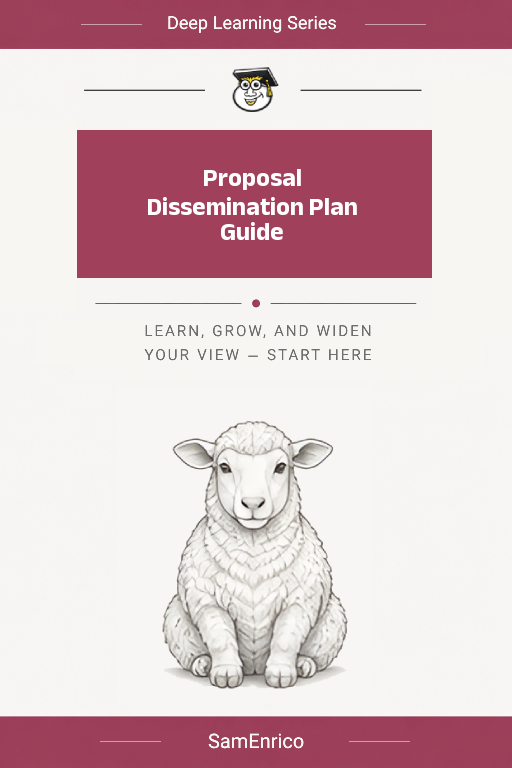
Non-FictionStudent's ShortcutDisseminationPublication Plan
Proposal Dissemination Plan Guide eBook
Write plans for disseminating research results inc
by Lynn Brinda
Write plans for disseminating research results including publications presentations and community outreach.
Formats
Free sample
Chapter 1: The PDF Graveyard...--You have just spent three years of your life—maybe four, maybe seven—chasing a question that kept you awake at night. You ran the analyses, wrote the paper, survived the peer review, and finally, finally, watched your study appear online in a respectable journal. You emailed the link to your department. You updated your CV. You waited for the world to notice.Then nothing happened.Six months later, your paper has been downloaded forty-seven times.
Twelve of those downloads were you. Eight were your mother. Two were a grad student who cited it in a literature review and then never thought about it again. The other twenty-five? Unknown.
Unaccounted for. Unchanged.The research that cost you sleep, sweat, and sanity now lives in what I have come to call the PDF Graveyard—that vast, quiet corner of the internet where perfectly good studies go to die, unread, unused, and unremembered.Here is the truth that no one tells you in graduate school: publishing is not the finish line. It is not even the starting line. Publishing is simply the moment your research becomes available. Whether it actually reaches anyone—whether it changes a policy, shifts a practice, or improves a life—depends entirely on something else.
Something most researchers never learn. Something this book will teach you.The 60% Problem Let me give you a number that should scare you: 60 percent.According to a synthesis of research impact studies across multiple disciplines, approximately 60 percent of peer-reviewed research never reaches its intended audience. Not because the science is bad. Not because the questions were unimportant. But because no strategic plan existed to move the findings out of the journal and into the world.Let that sink in for a moment.If you are reading this book, you are likely a researcher, a grant writer, a graduate student, or a policy analyst.
You produce knowledge for a living. And the current system—the one that taught you to publish or perish—has a 60 percent failure rate when it comes to actually getting that knowledge to the people who need it.Think about the implications. Every unfunded grant proposal that had a brilliant idea but no dissemination plan. Every dissertation that solved a real-world problem but then sat unread on a university server. Every clinical trial that found a better way to treat a disease but never made it to the doctors who could use it.The PDF Graveyard is full of good intentions.
And it is time to stop burying your work there.The Mismatch Problem: Why Researchers Get This Wrong If 60 percent of research never reaches its audience, the problem is not the research. The problem is the assumptions researchers make about what dissemination means.Here is the most common mistake: confusing publishing with disseminating.When I ask researchers in my workshops what they plan to do with their findings, the most frequent answer is some version of: "I will publish in a good journal."That is not a dissemination plan. That is a publication plan. And publication is just one channel among many.The confusion is understandable. The entire academic incentive structure rewards publication.
You get hired based on your publication record. You get tenure based on your publication record. Your grant proposals get funded partly based on your publication record. So it is natural to think that publication is the goal.But publication is only the beginning of dissemination. A published paper is like a movie that has been filmed but never distributed.
It exists. It is technically available. But unless someone actively seeks it out, it will never be seen.Dissemination, as I define it in this book, is the strategic, audience-centered process of ensuring that your research findings reach the specific people who need them, in a format they can use, at a time when they can act.Notice the key words: strategic (not random), audience-centered (not researcher-centered), reach (not just availability), format they can use (not just your original paper), and time when they can act (not whenever you get around to it).This definition is the foundation of everything that follows. If you take nothing else from this chapter, take this: Publishing makes your research available. Dissemination makes your research matter.The Four Pillars of Impact If dissemination is about reaching specific audiences, which audiences matter?
The answer depends on your research question and your goals. But across almost every discipline, there are four primary pillars of impact. A truly strategic dissemination plan touches all four, though the balance will vary depending on your project.Pillar One: Academic Impact This is the one most researchers already know. Academic impact means reaching your peers—other researchers who will cite your work, build on your findings, and incorporate your methods into their own studies. The primary channels are peer-reviewed journals, academic conferences, and pre-print servers.Academic impact is essential for your career.
It builds your reputation, generates citations, and opens doors to collaboration. But academic impact alone is insufficient if your research has implications for the real world. A paper that is highly cited by other academics but never read by a single practitioner has failed at dissemination.Pillar Two: Practical Impact Practical impact means reaching the people who can do something with your findings in their daily work. Depending on your field, this could mean clinicians, teachers, social workers, engineers, lawyers, or managers. These audiences do not read 40-page academic articles.
They read implementation guides, toolkits, one-page summaries, and practical recommendations.If your research has any application to real-world practice, you have an ethical obligation to make it accessible to practitioners. A medical trial that finds a better way to reduce hospital-acquired infections but never reaches the nurses on the floor has failed at dissemination, no matter how many citations it accumulates.Pillar Three: Public Impact Public impact means reaching the communities, patients, families, and citizens who are affected by the issues your research addresses. These audiences need plain language, storytelling, and accessible formats. They read news articles, blog posts, social media updates, and visual summaries.Public impact is often the most neglected pillar, in part because it is the hardest to measure and in part because many researchers do not see it as their responsibility. But if your research is publicly funded, the public has a right to understand what you found.
And if your research addresses a community problem, that community has a right to hear the results.Pillar Four: Policy Impact Policy impact means reaching decision-makers who can change laws, regulations, funding priorities, or organizational guidelines. These audiences need policy briefs, executive summaries, testimony, and one-on-one briefings. They care about evidence, but they care even more about timing, cost implications, and actionable recommendations.Policy impact is notoriously difficult to achieve. The research-to-policy gap is real and stubborn. But when it works, the leverage is enormous.
A single policy change can affect millions of lives. And that policy change is far more likely to happen if researchers actively disseminate their findings to the right people at the right time.The Three-Phase Dissemination Framework One of the most common questions I hear from researchers is: "When do I start disseminating?" The answer…
This is the end of the free sample. Get the eBook to keep going. Buy now
About this book
Details
- Author
- Lynn Brinda
- Publisher
- SamEnrico
- Language
- English
- Genre
- Non-Fiction, Student's Shortcut, Dissemination, Publication Plan
- Released
- 2026-06-01
- Pages (approx.)
- 156
- Available as
- eBook, Audiobook

Read better in the ZLOADR app
Your eBooks on your phone or tablet. Sign in with your SamEnrico account and start reading.
More by Lynn Brinda
 Loneliness After Loss Healing GuideLynn Brinda$11.99
 Digital Minimalism for Gamers GuideLynn Brinda$11.99
 Bariatric Surgery Self Compassion WorkbookLynn Brinda$11.99
 Mindfulness for Insomnia ReliefLynn Brinda$11.99
 Small Cap LBO DatabaseLynn Brinda$11.99
 The Last Voyage of the SS America: A Ship’s Final Resting PlaceLynn Brinda$11.99
 Silent Whistle: The Larry Nassar Scandal Through Survivor TestimoniesLynn Brinda$11.99
 Mechanical EngineerLynn Brinda$11.99
 How to Start a Postal Headquarters Business (Beginners Guide)Lynn Brinda$11.99
 AI Financial APIs Integration GuideLynn Brinda$12.99
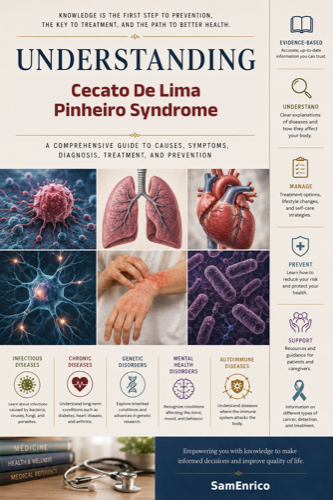 Understanding Cecato De Lima Pinheiro SyndromeLynn Brinda$17.99
You may also like
 Hong Kong Handover 1997Dunn Johnnie$11.99
 Zumba For Postnatal Recovery CourseNeal Christian$11.99
 Zumba for BeginnersLadner Nikia$11.99
 YouTube Comment Mining GuideHumes Pandora$12.99
 Worry Box MeditationCarlin Rudy$11.99
 Workplace Stress MeditationNguyen Lynn$11.99
 Workplace Stress and Sleep RepairHawley Ivory$11.99
 Workplace Perfectionism CureDelaney Jeffry$11.99
 Workplace Injustice Anger GuideWallen Isabelle$11.99
 Work Addiction and Burnout LinkGreenwood Ester$11.99
 Women in Yoga and WellnessBeattie Galina$11.99
 Women in Stand Up ComedyChun Evangeline$11.99