
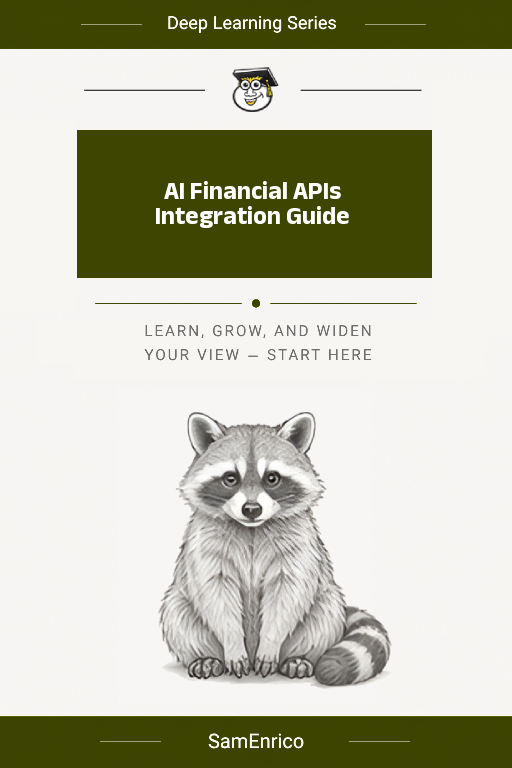
Non-FictionAI OperatorAPI Integration
AI Financial APIs Integration Guide
Connect finance systems to AI analytics platforms
by Lynn Brinda
Connect finance systems to AI analytics platforms using REST APIs, webhooks, and real-time data streams.
Formats
About this book
Free sample
Chapter 1: The Latency Tax---– The first time I watched a fraud detection model fail in production, it wasn’t because the algorithm was wrong. It was because the data arrived five minutes too late. A stolen credit card had been used to purchase four thousand dollars of electronics across three stores. The batch job that fed our neural network ran every hour. The transaction timestamps were accurate.
The features—velocity, location mismatch, historical spend—were all textbook. But by the time the model scored the transaction as fraudulent, the thief had already walked out the door. That was the moment I realized: in finance, data freshness isn’t a performance metric. It’s a profit-and-loss line item.This book is about closing that gap. It’s about building bridges between the world of financial APIs—slow, careful, auditable—and the world of artificial intelligence—fast, probabilistic, insatiable for fresh data.
If you are a software engineer, a data scientist, or a financial technologist who has ever wondered why your AI models work beautifully in backtests but fail in the real world, you are holding the right guide. We are not going to talk about AI theory. We are going to talk about plumbing. Because the difference between a million-dollar AI insight and a million-dollar AI loss is almost always in the pipes.The Legacy of Batch To understand why most financial AI integrations fail, you have to understand the tyranny of batch processing. For decades, financial systems have been built around a simple, comfortable rhythm: at the end of the day, you run reports.
At the end of the hour, you reconcile ledgers. At the end of the batch window, you update risk models. This cadence worked perfectly for traditional banking because traditional banking moved slowly. A wire transfer took three days. A credit decision took twenty-four hours.
A fraud investigation took a week.Then came real-time payments, instant settlement, algorithmic trading, and embedded finance. Suddenly, the batch window became a competitive disadvantage. If your fraud model only runs every sixty minutes, a criminal can execute dozens of transactions before you…
This is the end of the free sample. Get the eBook to keep going. Buy now
Contents
- Chapter 1
- Chapter 2
- Chapter 3
- Chapter 4
- Chapter 5
- Chapter 6
- Chapter 7
- Chapter 8
- Chapter 9
- Chapter 10
- Chapter 11
- Chapter 12
Details
- Author
- Lynn Brinda
- Publisher
- SamEnrico
- Language
- English
- Genre
- Non-Fiction, AI Operator, API Integration
- Released
- 2026-05-29
- Pages (approx.)
- 159
- Available as
- eBook, Audiobook

Read better in the ZLOADR app
Your eBooks on your phone or tablet. Sign in with your SamEnrico account and start reading.
More by Lynn Brinda
 Loneliness After Loss Healing GuideLynn Brinda$11.99
 Digital Minimalism for Gamers GuideLynn Brinda$11.99
 Bariatric Surgery Self Compassion WorkbookLynn Brinda$11.99
 Mindfulness for Insomnia ReliefLynn Brinda$11.99
 Small Cap LBO DatabaseLynn Brinda$11.99
 The Last Voyage of the SS America: A Ship’s Final Resting PlaceLynn Brinda$11.99
 Silent Whistle: The Larry Nassar Scandal Through Survivor TestimoniesLynn Brinda$11.99
 Mechanical EngineerLynn Brinda$11.99
 How to Start a Postal Headquarters Business (Beginners Guide)Lynn Brinda$11.99
 Proposal Dissemination Plan GuideLynn Brinda$12.99
 Understanding Cecato De Lima Pinheiro SyndromeLynn Brinda$17.99
You may also like
 Hong Kong Handover 1997Dunn Johnnie$11.99
 Zumba For Postnatal Recovery CourseNeal Christian$11.99
 Zumba for BeginnersLadner Nikia$11.99
 YouTube Comment Mining GuideHumes Pandora$12.99
 Worry Box MeditationCarlin Rudy$11.99
 Workplace Stress MeditationNguyen Lynn$11.99
 Workplace Stress and Sleep RepairHawley Ivory$11.99
 Workplace Perfectionism CureDelaney Jeffry$11.99
 Workplace Injustice Anger GuideWallen Isabelle$11.99
 Work Addiction and Burnout LinkGreenwood Ester$11.99
 Women in Yoga and WellnessBeattie Galina$11.99
 Women in Stand Up ComedyChun Evangeline$11.99