
Non-FictionStartup GuidePivot Case StudyUser Behavior
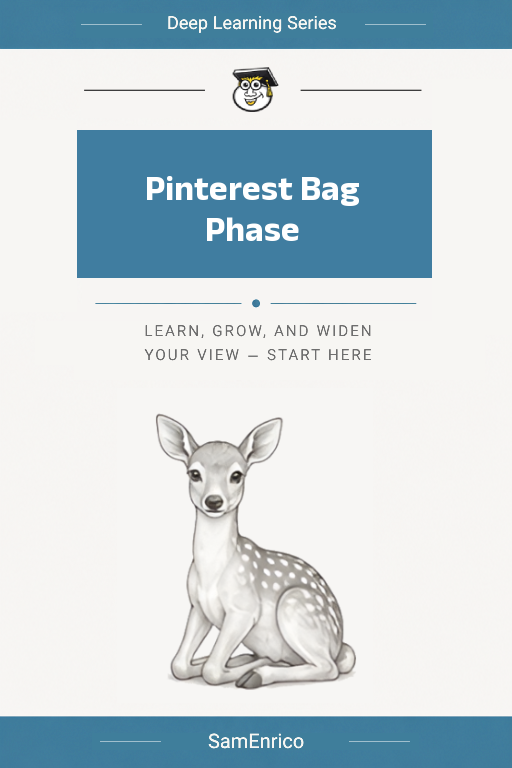
Pinterest Bag Phase Audiobook
Kill the physical shopping bag app when users kept
Kill the physical shopping bag app when users kept saving images instead.
Formats
Free sample
Chapter 1: The $4 Billion Mistake--– In the spring of 2010, a twenty-eight-year-old former Google product manager named Ben Silbermann sat in a cramped Palo Alto apartment, watching a handful of early users do something that terrified his investors. They were not clicking. They were not buying. They were not sharing with friends in any way that resembled Facebook. Instead, they were doing something far stranger: they were saving images of wedding dresses they would never wear, tattoo designs they would never ink, bedroom makeovers they would never afford, and elaborate recipes they would never cook.
They were collecting for “someday.” And that “someday” behavior, Silbermann realized, was not a bug. It was the entire point.The platform he had built with Evan Sharp and Paul Sciarra was called Pinterest—a portmanteau of “pin” and “interest”—and it was hemorrhaging money. Venture capitalists told him to add a “Buy” button. They told him to shorten the path from discovery to transaction. They told him that users who saved images without purchasing were a failure of the product, a leaky funnel that needed to be plugged.
One investor famously said, “You’ve built a library when you should have built a mall.”That investor was wrong. And that mistake cost the retail industry billions of dollars.The story of Pinterest’s early years is not a story of a company that eventually figured out e-commerce. It is a story of a company that realized e-commerce—at least the version Amazon had perfected—was fundamentally incompatible with how human beings actually make decisions about their homes, their weddings, their wardrobes, and their lives. The shopping bag app that Pinterest later launched failed not because of poor engineering or bad design. It failed because it violated the user’s psychological contract with the platform.
Users came to plan. The shopping bag demanded they transact. The two modes are neurologically opposed.This chapter is about that failure and the billion-dollar insight that emerged from it. It is about why 96 percent of the top searches on Pinterest have no brand name attached to them, and why that statistic is not a problem to be solved but an opportunity to be seized. It is about the difference between competing with Amazon—a fool’s errand—and competing with the user’s future self, which is the only competition that matters.
And it introduces the character who will haunt this book like a ghost of e-commerce past: Debra, the impatient chief…
This is the end of the free sample. Get the Audiobook to keep going. Buy now
About this book
Details
- Author
- Borges Katherina
- Publisher
- SamEnrico
- Language
- English
- Genre
- Non-Fiction, Startup Guide, Pivot Case Study, User Behavior
- Released
- 2026-06-01
- Pages (approx.)
- 127
- Available as
- eBook, Audiobook

Listen in the VoxFlicks app
Audiobooks and audio dramas wherever you go. Sign in with your SamEnrico account and press play.
More by Borges Katherina
 Anger After Work Shift GuideBorges Katherina$11.99
 NVC For Self Talk GuideBorges Katherina$11.99
 RLS And Peripheral Neuropathy DifferentiationBorges Katherina$11.99
 Francis Stigmata AccountBorges Katherina$11.99
 Tenzing First Summit DisputeBorges Katherina$11.99
 Cash Flow for GymsBorges Katherina$11.99
 Dual Column Technique AngerBorges Katherina$11.99
 Telemedicine Capital AllocationBorges Katherina$11.99
 Churchill Finest HourBorges Katherina$11.99
 The Great Barrier Reef's Guardian: J.E.N. Veron and the Coral AtlasBorges Katherina$11.99
 The Last Dance of the Ice: The 1998 Nagano Olympics and the Rise of the Russian Hockey MiracleBorges Katherina$11.99
 The Hostile Bid: How a Tech Giant Nearly Swallowed a Rival WholeBorges Katherina$11.99
You may also like
 Hong Kong Handover 1997Dunn Johnnie$11.99
 Zumba For Postnatal Recovery CourseNeal Christian$11.99
 Zumba for BeginnersLadner Nikia$11.99
 YouTube Comment Mining GuideHumes Pandora$12.99
 Worry Box MeditationCarlin Rudy$11.99
 Workplace Stress MeditationNguyen Lynn$11.99
 Workplace Stress and Sleep RepairHawley Ivory$11.99
 Workplace Perfectionism CureDelaney Jeffry$11.99
 Workplace Injustice Anger GuideWallen Isabelle$11.99
 Work Addiction and Burnout LinkGreenwood Ester$11.99
 Women in Yoga and WellnessBeattie Galina$11.99
 Women in Stand Up ComedyChun Evangeline$11.99