
Making Paper eBook
A Coursebook on Making Paper
A Coursebook on Making Paper
Formats
Free sample
Chapter 1: The Sheet That Changed the World...--On a spring morning in the year 105 A.D., in the Chinese village of Lei-Yang, a court official named Ts'ai Lun did something no human had ever done before. He took a slurry of macerated mulberry bark,hemp waste, old fishing nets, and linen rags—substances so humble they were usually thrown away—and he poured that gray-brown soup onto a woven cloth stretched over a wooden frame. He shook it gently, let the water drain, peeled away the cloth, and pressed the remaining mat flat. When it dried, he held in his hands something that looked like felt, felt like skin, and wrote like neither. He called it paper.What Ts'ai Lun could not have known was that this single sheet—rough, uneven, and probably no larger than a modern napkin—would become the most consequential surface in human history.
Paper would carry the Buddhist sutras across Asia, the Qur'an across the Islamic world, and the Gutenberg Bible across Europe. It would hold the blueprints for the Industrial Revolution, the doodles of Leonardo da Vinci, the Declaration of Independence, and the love letters of every civilization that learned to make it. Without paper, there would be no money, no maps, no newspapers, no novels, no passports, no contracts, no marriage certificates, no toilet paper—and, most ironically for this book, no books at all. The sheet that changed the world is the very sheet you are now learning to make.This chapter is not a set of instructions. You will not build a mould in these pages, nor will you pull a single sheet.
Instead, this is an invitation to understand what you are about to do at the deepest level: the thousand-year journey of an idea, the chemistry of decay and permanence, and the quiet miracle of turning trash into treasure. Because before you can master the craft of papermaking, you must first respect its soul—and that soul is fiber.The Accidental Invention That Launched a Thousand Years Let us be precise about what Ts'ai Lun actually invented, because the word "paper" is used loosely today. Papyrus—the reed-based writing material of ancient Egypt—is not paper. It is a laminate of sliced plant stalks pressed together, and it cracks along those laminations over time. Amate, the bark cloth of pre-Columbian Mesoamerica, is not paper.
It is beaten bark fibers that remain held together by mechanical entanglement but lack the chemical bonding of true paper. Vellum and parchment, made from animal skins, are not paper—they are collagen, and they cost a fortune (one calf skin for a single book page). Ts'ai Lun's invention was fundamentally different: he created a method to separate individual plant fibers, suspend them in water, and then re-bond them into a single, uniform, isotropic sheet. The fibers do not merely lie on top of each other; they form hydrogen bonds as the water evaporates, creating a structure stronger than the sum of its parts.This process—maceration, suspension, formation, pressing, drying—has remained essentially unchanged for nearly two thousand years. The Chinese kept the secret for six centuries, wrapping it in silk and state monopoly.
Papermakers were not allowed to leave the empire; the punishment for revealing the craft was decapitation. But secrets have a way of traveling. In 751 A.D., at the Battle of Talas River in modern-day Kyrgyzstan, the Abbasid Caliphate's army defeated a Chinese force and captured several papermakers among the prisoners. Within a decade, Baghdad had its first paper mill. Within a century, papermaking spread to Damascus, Cairo, and Morocco.
And from Morocco, it crossed the narrow strait into Spain—first to Cordoba, then to the rest of Europe.The Silk Road of Cellulose The Islamic Golden Age did something remarkable with Chinese papermaking: they improved it. Arab papermakers replaced the Chinese bamboo mould with a wooden frame and a woven screen, allowing for larger, more consistent sheets. They developed the technique of sizing—coating the paper with starch or egg white—to make it accept ink without bleeding, a critical innovation for calligraphy and the copying of sacred texts. And most importantly, they switched from mulberry bark to linen and hemp rags, which were abundant in a textile-based economy. This shift was not merely practical; it was philosophical.
Islamic papermakers realized that the best writing material did not require cutting down living trees. It required only the waste of daily life—old shirts, torn sails, discarded rope.This principle—that paper is fundamentally a recycling technology—is the single most important idea in this entire book. A good papermaker does not see garbage. A good papermaker sees future sheets walking around in the form of worn-out jeans, flattened cardboard boxes, the flyers stuffed under windshield wipers, the junk mail that arrives daily. Every fiber that has ever been grown can be used again, provided you know how to unlock its cellulose.By the 12th century, paper had reached Europe via Moorish Spain, and the first Christian paper mill opened in Fabriano, Italy, around 1260.
The Italians, never content to leave well enough alone, added three crucial innovations: water-powered stamping mills (which replaced hand-beating of rags, increasing production tenfold), gelatin sizing (derived from animal hides, which produced paper that could take ink without feathering and also resist mold), and watermarks (created by sewing fine wire designs onto the mould screen, allowing mills to brand their product and authenticate their quality). A Fabriano watermark from 1282 remains legible today pressed into a sheet of cotton paper. That sheet is in a museum in Milan. It has outlasted every building built in that decade except the stone ones.The Great Fiber Divide: Why Some Paper Lasts a Millennium and Some Dies in a Century At this point, you might reasonably ask: why does this history matter to me, standing in my kitchen with a blender full of pulp? It matters because the choice Ts'ai Lun made—what fiber to use—determines the entire fate of every sheet you will ever make.
And the difference between a sheet that lasts a thousand years and a sheet that crumbles in your grandchildren's hands is the presence of a single organic molecule: lignin.Lignin (from the Latin lignum, meaning wood) is the natural glue that holds plant cell walls together. In a living tree, lignin is essential—it provides rigidity, waterproofing, and resistance to pests. But in paper, lignin is a time bomb. When exposed to light, heat, and oxygen, lignin oxidizes and forms acids. Those acids break down cellulose chains, turning the paper yellow, then brown, then brittle.
Take a newspaper from 1920—if you can find one that hasn't turned to dust—and compare it to a page from a medieval manuscript written on rag paper. The newspaper is the color of weak tea and tears like dry leaves. The medieval page is supple, white, and readable. The difference is not age. It is lignin.Cotton and linen fibers, which come from the seed hairs of the cotton plant and the bast (inner bark) of the flax plant, contain less than 1% lignin.
This is why rag paper made in 1400 is still white and strong today. Wood pulp, by contrast, can contain…
This is the end of the free sample. Get the eBook to keep going. Buy now
About this book
Details
- Author
- Foote Aleisha
- Publisher
- SamEnrico
- Language
- English
- Genre
- Non-Fiction, Informative, Educational
- Released
- 2026-05-11
- Pages (approx.)
- 137
- Available as
- eBook, Audiobook

Read better in the ZLOADR app
Your eBooks on your phone or tablet. Sign in with your SamEnrico account and start reading.
More by Foote Aleisha
 Twitter Validation SeekingFoote Aleisha$11.99
 Trust Protector Roles And Powers HandbookFoote Aleisha$11.99
 Affirmations for EmpathsFoote Aleisha$11.99
 Influencer Disclosure For AutosFoote Aleisha$11.99
 Menopause and Heart Disease PreventionFoote Aleisha$11.99
 Merlin's Lost Lyre: The Enchanted Ballads of CamelotFoote Aleisha$11.99
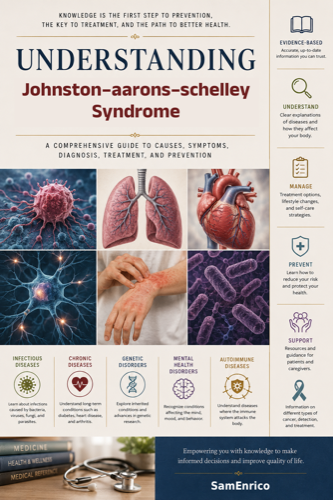 Understanding Johnston–aarons–schelley SyndromeFoote Aleisha$17.99
 Task Switching Transition ManualFoote Aleisha$12.99
 Real Estate Investment GuideFoote Aleisha$12.99
 How to Become a Lacquer-dipping-machine OperatorFoote Aleisha$11.99