
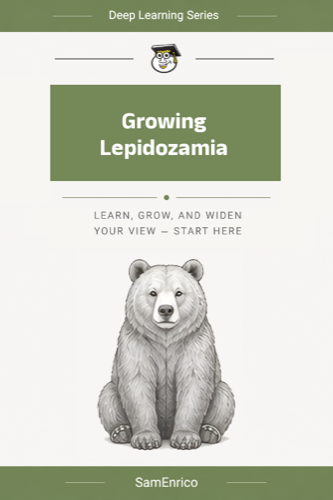
Growing Lepidozamia
This publication, published by SamEnrico, covers G
This publication, published by SamEnrico, covers Growing Lepidozamia
Formats
About this book
Free sample
Chapter 1: The Living Relic...--Every so often, a gardener encounters a plant that refuses to be rushed. In an age of instant gratification, where social media promises blooming houseplants in thirty days and vegetables harvested in weeks, the Lepidozamia stands as a quiet, dignified rebellion. This is not a plant for the impatient. This is not a plant for those who measure success in centimeters per month or who need constant validation from new leaves unfurling. This is a plant that asks you to slow down, to think in decades rather than seasons, and to accept that some of the most beautiful things in life are simply not in a hurry.Welcome to the world of Lepidozamia—a genus of cycads so ancient that they watched dinosaurs come and go, so resilient that they survived the asteroid impact that ended the Cretaceous period, and so perfectly adapted that they have changed remarkably little in over 200 million years.
If you are holding this book, you have likely already been captivated by their architectural grandeur: the glossy, arching fronds that spiral outward from a stout, armored trunk; the prehistoric presence that transforms any garden or living room into a scene from another era. Or perhaps you have simply heard the whispers among plant collectors—that these cycads are rare, valuable, and mysteriously difficult to find. The truth is more nuanced. Lepidozamia are not difficult to grow once you understand them. But they do require you to unlearn everything you think you know about gardening.The Ancient Lineage You Now Steward Before we discuss soil mixes or watering schedules or the precise angle of morning light, we must first understand what we are dealing with.
Lepidozamia belongs to the Zamiaceae family, one of three surviving cycad families on Earth. Cycads as a whole are gymnosperms—"naked seed" plants—meaning they reproduce via cones rather than flowers. Their closest living relatives are conifers and ginkgoes, not palms or ferns, though they are tragically misidentified as "ferns" or "palms" by the unwary. This misunderstanding has led to countless horticultural failures, because palms and ferns have very different…
This is the end of the free sample. Get the eBook to keep going. Buy now
Contents
- Chapter 1
- Chapter 2
- Chapter 3
- Chapter 4
- Chapter 5
- Chapter 6
- Chapter 7
- Chapter 8
- Chapter 9
- Chapter 10
- Chapter 11
- Chapter 12
Details
- Author
- Lorenz Gregorio
- Publisher
- SamEnrico
- Language
- English
- Genre
- Non-Fiction, Informative, Educational
- Released
- 2026-06-02
- Pages (approx.)
- 131
- Available as
- eBook, Audiobook

Read better in the ZLOADR app
Your eBooks on your phone or tablet. Sign in with your SamEnrico account and start reading.
More by Lorenz Gregorio
 Siege of Delhi 1857Lorenz Gregorio$11.99
 Persuasive Equipment PurchaseLorenz Gregorio$11.99
 The Assertive Refusal WorkbookLorenz Gregorio$11.99
 Melatonin Circadian GuideLorenz Gregorio$11.99
 Mozambique Liberation FrontLorenz Gregorio$11.99
 PTSD And Parental RageLorenz Gregorio$11.99
 Teen Emotion RecognitionLorenz Gregorio$11.99
 Narcissist Body LanguageLorenz Gregorio$11.99
 Harvard Extension Career OutcomesLorenz Gregorio$12.99
 Availability Heuristic GuideLorenz Gregorio$11.99
 The Last Trade: How a 19th-Century Shipwreck Reshaped Global CommerceLorenz Gregorio$11.99
 The Blockbuster Blunder: How One Trade Deadline Deal Changed the NBA ForeverLorenz Gregorio$11.99