
Non-FictionInformativeEducational
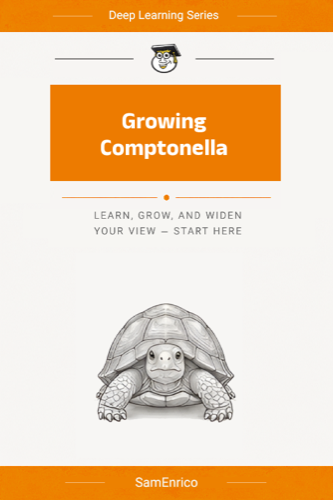
Growing Comptonella eBook
This publication, published by SamEnrico, covers G
This publication, published by SamEnrico, covers Growing Comptonella
Formats
Free sample
Chapter 1: Beyond the Label...--–- Every year, thousands of plant enthusiasts bring home what they believe is a Comptonella, only to watch it wither, yellow, and die within six months. The nursery tag reads “Comptonella – Easy Care – Bright Light.” The cashier smiles. The plant looks healthy. And yet, within weeks, the leaves curl, the stems soften, and a slow, inexplicable decline begins. The grower blames themselves.
They assume they overwatered, or underwatered, or placed the plant in the wrong room. In most cases, they are wrong. The problem is not their care. The problem is that they never had a Comptonella at all.This is not hyperbole. It is the central crisis that this book exists to solve.The genus Comptonella is real.
It belongs to the Rutaceae family, the same botanical group that includes citrus trees, and it is scientifically classified as a rainforest tree native to the tropical lowland forests of New Caledonia, Papua New Guinea, and surrounding Pacific islands. In its natural habitat, Comptonella grows as an understory tree, reaching heights of fifteen to thirty feet, with pinnately compound leaves, small fragrant flowers, and berry-like drupes containing one or two seeds. It is not a common houseplant. It is not found in big-box garden centers. And yet, across the internet and in thousands of nurseries worldwide, the name Comptonella appears on plants that bear almost no resemblance to the true genus.What are these imposters?
The most common is a small, mango-like tree erroneously labeled Comptonella microcarpa. This plant is not a Comptonella at all. It belongs to a different genus entirely, and its care requirements—full sun, dry soil between waterings, standard fertilizer—are not merely different from true Comptonella; they are actively harmful to it. Another imposter, labeled Comptonella drupacea, is actually a species of ginger, requiring shade and constant moisture but lacking the root nodulation system that defines true Comptonella. A third group of imposters includes various citrus relatives that sellers have renamed to capitalize on the growing interest in rare plants.
The result is a horticultural identity crisis unlike almost any other genus in cultivation.The Cost of Confusion Why does this matter? Because the difference between a true Comptonella and an imposter is not merely taxonomic pedantry. It is the difference between life and death for the plant, and between success and failure for the grower.Consider the following scenario. A gardener purchases a plant labeled Comptonella. They follow standard online advice: water when the top inch of soil is dry, place in bright indirect light, fertilize monthly during the growing season with a balanced liquid fertilizer.
If the plant is actually a Comptonella microcarpa imposter, this advice might work. The imposter survives. The gardener is happy. They never learn that they are growing the wrong plant. But if the gardener purchases a true Comptonella and follows the same advice, the plant will almost certainly die.
The fertilizer will kill the root bacteria it depends upon. The watering schedule will either drown or dehydrate it. The light levels will scorch its understory-adapted leaves. The gardener, believing they followed the rules, concludes that Comptonella is simply too difficult.This book exists to correct that tragedy.What This Book Is (And Is Not)This is not a general houseplant guide. You will not find the same generic advice repeated from a dozen other books.
There are no chapters on “choosing the right pot” that simply tell you to pick something with drainage holes. There is no “common pests” section that lists spider mites and aphids without telling you how the Rutaceae family’s specific chemistry affects treatment options. And there is absolutely no recommendation to use synthetic fertilizer, because doing so would contradict the central biological reality of this plant.Instead, this book is a focused, rigorous, and practical cultivation manual for one genus. It assumes you are capable of following precise instructions. It assumes you want to understand the why behind the how.
And it assumes that you are willing to provide the specific conditions that true Comptonella requires—conditions that are not difficult, but are different from what you have been told.The Core Discovery: Root Nodulation The single most important fact about true Comptonella is also the least known: it cannot absorb nitrogen from the soil on its own. Unlike almost all common houseplants, which take up nitrogen through their roots in the form of nitrates and ammonium, Comptonella has evolved a symbiotic relationship with specific actinomycete bacteria from the genus Frankia. These bacteria colonize specialized structures on the plant’s roots called nodules. Inside those nodules, the bacteria convert atmospheric nitrogen into ammonia, which the plant then uses to build proteins, DNA, and chlorophyll.This relationship is not optional. It is obligate.
A Comptonella without its bacterial partner will starve, regardless of how much fertilizer you apply. In fact, applying synthetic fertilizer makes things worse. High concentrations of nitrogen, phosphorus, and potassium in synthetic formulations kill the Frankia bacteria directly, destroying the very system the plant depends upon. The plant then exhibits symptoms of nitrogen deficiency—yellowing leaves, stunted growth, leaf drop—even as the soil is saturated with unusable nutrients.This explains why so many growers fail. They see yellowing leaves and assume the plant needs more fertilizer.
They add more. The bacteria die faster. The plant yellows more. The grower adds even more fertilizer. The plant dies.
The grower concludes that Comptonella is impossible. The tragedy is that the plant was not impossible. It was simply misunderstood.A Note on Terminology Throughout This Book Because the nursery trade has so thoroughly confused the identity of Comptonella, I must be precise in my language. When I write “true Comptonella” or “the true genus,” I am referring exclusively to plants belonging to the Rutaceae family genus Comptonella as classified by botanical science. When I write “imposters,” I am referring to plants sold under the name Comptonella that do not belong to this genus, including the so-called C.
microcarpa (a mango relative) and C. drupacea (a ginger). When I provide care instructions, I am providing them for the true genus unless explicitly stated otherwise.If you are unsure whether your plant is a true Comptonella, Chapter 3 provides a detailed identification guide, including photographs and a decision flowchart. If you discover that your plant is an imposter, do not despair. Many imposters are perfectly fine houseplants.
They are just not the subject of this book. You may continue growing them using standard care guides. Or you may choose to acquire a true Comptonella and begin the journey this book describes.Who This Book Is For This book is written for three audiences.The first audience is the experienced indoor gardener who has grown aroids, orchids, or succulents and is ready for a new challenge. You already understand concepts like humidity control, substrate aeration, and light management. You own a hygrometer, a heat mat, and sterilized pruning shears.
You are not afraid of a plant that requires annual repotting or precise watering. You will find that Comptonella is demanding but not impossible, and the reward—a healthy, flowering, multi-generational specimen—is worth the effort.The second audience is the scientific hobbyist who is fascinated by…
This is the end of the free sample. Get the eBook to keep going. Buy now
About this book
Details
- Author
- Barnett Kenneth
- Publisher
- SamEnrico
- Language
- English
- Genre
- Non-Fiction, Informative, Educational
- Released
- 2026-06-02
- Pages (approx.)
- 152
- Available as
- eBook, Audiobook

Read better in the ZLOADR app
Your eBooks on your phone or tablet. Sign in with your SamEnrico account and start reading.
More by Barnett Kenneth
 Spending Relapse Emergency KitBarnett Kenneth$11.99
 The Nobel Laureate Lab LifeBarnett Kenneth$11.99
 The Affirmation Habit LoopBarnett Kenneth$11.99
 Metta for Needle PhobiaBarnett Kenneth$11.99
 Lee Ainslie MaverickBarnett Kenneth$11.99
 Cheek Raising and DuchenneBarnett Kenneth$11.99
 Anapanasati for EatingBarnett Kenneth$11.99
 Louis CK ShameBarnett Kenneth$11.99
 The Vanished Masterpieces: Theft, Recovery, and the Art of the ImpossibleBarnett Kenneth$11.99
 The Alchemists of Alexandria: Black Scholars in the Byzantine CosmosBarnett Kenneth$11.99
 The Vanishing Hiker: The Dark Truth of the Smoky MountainsBarnett Kenneth$11.99
 How to Produce Body GlitterBarnett Kenneth$11.99
You may also like
 Hong Kong Handover 1997Dunn Johnnie$11.99
 Zumba For Postnatal Recovery CourseNeal Christian$11.99
 Zumba for BeginnersLadner Nikia$11.99
 YouTube Comment Mining GuideHumes Pandora$12.99
 Worry Box MeditationCarlin Rudy$11.99
 Workplace Stress MeditationNguyen Lynn$11.99
 Workplace Stress and Sleep RepairHawley Ivory$11.99
 Workplace Perfectionism CureDelaney Jeffry$11.99
 Workplace Injustice Anger GuideWallen Isabelle$11.99
 Work Addiction and Burnout LinkGreenwood Ester$11.99
 Women in Yoga and WellnessBeattie Galina$11.99
 Women in Stand Up ComedyChun Evangeline$11.99