
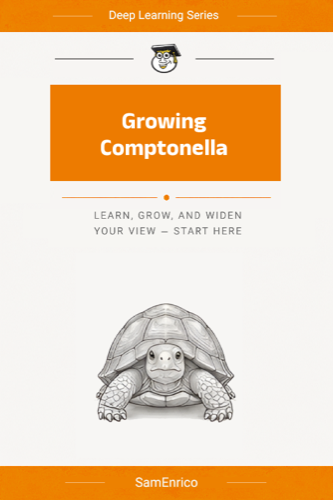
Non-FictionInformativeEducational
Growing Comptonella
This publication, published by SamEnrico, covers G
This publication, published by SamEnrico, covers Growing Comptonella
Formats
About this book
Free sample
Chapter 1: Beyond the Label...--–- Every year, thousands of plant enthusiasts bring home what they believe is a Comptonella, only to watch it wither, yellow, and die within six months. The nursery tag reads “Comptonella – Easy Care – Bright Light.” The cashier smiles. The plant looks healthy. And yet, within weeks, the leaves curl, the stems soften, and a slow, inexplicable decline begins. The grower blames themselves.
They assume they overwatered, or underwatered, or placed the plant in the wrong room. In most cases, they are wrong. The problem is not their care. The problem is that they never had a Comptonella at all.This is not hyperbole. It is the central crisis that this book exists to solve.The genus Comptonella is real.
It belongs to the Rutaceae family, the same botanical group that includes citrus trees, and it is scientifically classified as a rainforest tree native to the tropical lowland forests of New Caledonia, Papua New Guinea, and surrounding Pacific islands. In its natural habitat, Comptonella grows as an understory tree, reaching heights of fifteen to thirty feet, with pinnately compound leaves, small fragrant flowers, and berry-like drupes containing one or two seeds. It is not a common houseplant. It is not found in big-box garden centers. And yet, across the internet and in thousands of nurseries worldwide, the name Comptonella appears on plants that bear almost no resemblance to the true genus.What are these imposters?
The most common is a small, mango-like tree erroneously labeled Comptonella microcarpa. This plant is not a Comptonella at all. It belongs to a different genus entirely, and its care requirements—full sun, dry soil between waterings, standard fertilizer—are not merely different from true Comptonella; they are actively harmful to it. Another imposter, labeled Comptonella drupacea, is actually a species of ginger, requiring shade and constant moisture but lacking the root nodulation system that defines true Comptonella. A third group of imposters includes various citrus relatives that sellers have renamed to capitalize on the growing interest in rare plants.
The result is a horticultural identity crisis unlike almost any other genus in cultivation.The Cost of Confusion Why does this…
This is the end of the free sample. Get the eBook to keep going. Buy now
Contents
- Chapter 1
- Chapter 2
- Chapter 3
- Chapter 4
- Chapter 5
- Chapter 6
- Chapter 7
- Chapter 8
- Chapter 9
- Chapter 10
- Chapter 11
- Chapter 12
Details
- Author
- Barnett Kenneth
- Publisher
- SamEnrico
- Language
- English
- Genre
- Non-Fiction, Informative, Educational
- Released
- 2026-06-02
- Pages (approx.)
- 152
- Available as
- eBook, Audiobook

Read better in the ZLOADR app
Your eBooks on your phone or tablet. Sign in with your SamEnrico account and start reading.
More by Barnett Kenneth
 Spending Relapse Emergency KitBarnett Kenneth$11.99
 The Nobel Laureate Lab LifeBarnett Kenneth$11.99
 The Affirmation Habit LoopBarnett Kenneth$11.99
 Metta for Needle PhobiaBarnett Kenneth$11.99
 Lee Ainslie MaverickBarnett Kenneth$11.99
 Cheek Raising and DuchenneBarnett Kenneth$11.99
 Anapanasati for EatingBarnett Kenneth$11.99
 Louis CK ShameBarnett Kenneth$11.99
 The Vanished Masterpieces: Theft, Recovery, and the Art of the ImpossibleBarnett Kenneth$11.99
 The Alchemists of Alexandria: Black Scholars in the Byzantine CosmosBarnett Kenneth$11.99
 The Vanishing Hiker: The Dark Truth of the Smoky MountainsBarnett Kenneth$11.99
 How to Produce Body GlitterBarnett Kenneth$11.99
You may also like
 Hong Kong Handover 1997Dunn Johnnie$11.99
 Zumba For Postnatal Recovery CourseNeal Christian$11.99
 Zumba for BeginnersLadner Nikia$11.99
 YouTube Comment Mining GuideHumes Pandora$12.99
 Worry Box MeditationCarlin Rudy$11.99
 Workplace Stress MeditationNguyen Lynn$11.99
 Workplace Stress and Sleep RepairHawley Ivory$11.99
 Workplace Perfectionism CureDelaney Jeffry$11.99
 Workplace Injustice Anger GuideWallen Isabelle$11.99
 Work Addiction and Burnout LinkGreenwood Ester$11.99
 Women in Yoga and WellnessBeattie Galina$11.99
 Women in Stand Up ComedyChun Evangeline$11.99