
Non-FictionForecast & OutlookSustainable Logistics
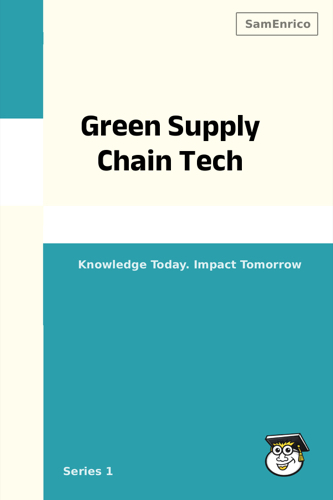
Green Supply Chain Tech
Deploy carbon tracking and route optimization for
by Knott Davida
Deploy carbon tracking and route optimization for emissions reduction with this guide.
Formats
About this book
Free sample
Chapter 1: The Profit Paradox--–- The CFO of a $12 billion logistics firm once told me, “I’ll green the fleet when it saves me money, not a day sooner.” That was 2022. Eighteen months later, the same CFO presented a board-approved $47 million investment in route optimization software, electric delivery vans, and real-time carbon tracking. What changed? Not his values. The math did.This chapter begins where most books on green supply chains get it wrong: they assume altruism.
They open with melting ice caps and dying coral reefs, hoping to shame logistics managers into action. That approach fails because supply chain decisions are made by procurement officers, logistics directors, and CFOs who are measured on cost per mile, on-time delivery, and inventory turns—not on planetary health. If a sustainability initiative raises operating costs by even 2%, it dies in the quarterly review.But something fundamental has shifted in the last 36 months. Carbon emissions have become a direct profit lever. The same route optimization that reduces fuel consumption by 8-15% also reduces carbon by exactly the same percentage.
The same load consolidation that eliminates empty backhauls cuts both CO₂ and cost-per-pallet. The same telematics that identify idling trucks save diesel and emissions simultaneously. There is no trade-off anymore. The greenest route is now the cheapest route.This is the Profit Paradox of green supply chain technology: the actions that most aggressively reduce emissions also most aggressively reduce operating costs. And the companies that have figured this out are not quietly hugging trees—they are quietly destroying their less-efficient competitors on price.The Walmart Lesson: 6 Million Tons Without a Single Carbon Offset In 2017, Walmart announced Project Gigaton, a seemingly impossible goal: remove one gigaton (one billion metric tons) of emissions from its supply chain by 2030.
The skeptical response from Wall Street was predictable: “This is a PR stunt. They’ll just buy cheap offsets from a forestry project in Guatemala and claim victory.”That is not what happened.By 2024, Walmart had already removed over 600 million metric tons—not primarily through offsets, but through a relentless, technology-driven attack on operational inefficiency. The centerpiece was a proprietary…
This is the end of the free sample. Get the eBook to keep going. Buy now
Contents
- Chapter 1
- Chapter 2
- Chapter 3
- Chapter 4
- Chapter 5
- Chapter 6
- Chapter 7
- Chapter 8
- Chapter 9
- Chapter 10
- Chapter 11
- Chapter 12
Details
- Author
- Knott Davida
- Publisher
- SamEnrico
- Language
- English
- Genre
- Non-Fiction, Forecast & Outlook, Sustainable Logistics
- Released
- 2026-06-06
- Pages (approx.)
- 153
- Available as
- eBook, Audiobook

Read better in the ZLOADR app
Your eBooks on your phone or tablet. Sign in with your SamEnrico account and start reading.
More by Knott Davida
 CrossFit Weightlifting PrimerKnott Davida$11.99
 Anki For LSAT LogicKnott Davida$11.99
 The Sobriety Relapse PreventionKnott Davida$11.99
 Resource Utilization for EngineersKnott Davida$11.99
 Professional Attire ConfidenceKnott Davida$11.99
 The Mathematicians of Meroë: The Golden Calculations of the Kushite ScholarsKnott Davida$11.99
 Mindfulness for LonelinessKnott Davida$11.99
 Interruption Management for NursesKnott Davida$11.99
 The Magic Lantern’s First Spark: How the Lumières Brought Animation to Life (1790s)Knott Davida$11.99
 The Essential Guide to Praise & WorshipKnott Davida$11.99
 Corporate Event Risk ManagementKnott Davida$12.99
 UK Business Credit for Sole Traders BlueprintKnott Davida$12.99
You may also like
 Hong Kong Handover 1997Dunn Johnnie$11.99
 Zumba For Postnatal Recovery CourseNeal Christian$11.99
 Zumba for BeginnersLadner Nikia$11.99
 YouTube Comment Mining GuideHumes Pandora$12.99
 Worry Box MeditationCarlin Rudy$11.99
 Workplace Stress MeditationNguyen Lynn$11.99
 Workplace Stress and Sleep RepairHawley Ivory$11.99
 Workplace Perfectionism CureDelaney Jeffry$11.99
 Workplace Injustice Anger GuideWallen Isabelle$11.99
 Work Addiction and Burnout LinkGreenwood Ester$11.99
 Women in Yoga and WellnessBeattie Galina$11.99
 Women in Stand Up ComedyChun Evangeline$11.99