
Dioxin Exposure Sources Map
Traces dioxins from waste burning, bleached paper,
Traces dioxins from waste burning, bleached paper, and animal fats to body burden reduction.
Formats
About this book
Free sample
Chapter 1: The Poison Invisible--The first thing you need to understand about dioxin is that you cannot see it, smell it, taste it, or feel it. It does not burn your skin on contact. It does not make the water turn yellow. It does not announce itself with a sulfurous stench or a warning label. This is precisely why it has been called the most toxic man-made chemical on Earth—not because it kills quickly, but because it kills slowly, quietly, and inside nearly every living creature on the planet, while no one is looking.In the spring of 1976, the people of Seveso, Italy, learned this lesson in the most horrifying way imaginable.
They did not learn it from a cloud they could see. They learned it from the animals.The Chemical Cloud That Nobody Saw Coming On Saturday, July 10, 1976, a reactor at the Icmesa chemical plant, located in the small town of Meda just north of Milan, overheated. The plant produced trichlorophenol, an intermediate chemical used in herbicides and antiseptics. The reaction that day went out of control. A safety valve burst.
A white cloud—later identified as a mixture of sodium hydroxide, ethylene glycol, and 2,3,7,8-tetrachlorodibenzo-p-dioxin, the most toxic congener of the dioxin family—rose into the air and drifted southeast.The cloud was invisible within minutes. Workers at the plant felt no immediate effects. Residents in nearby towns saw nothing unusual. The plant operators did not sound any alarms because they did not fully understand what had happened. For the next several days, life continued normally in Seveso, Meda, Cesano Maderno, and Desio.
Children played outside. Families ate meals in their gardens. No one knew that a poison had settled onto their soil, their crops, their homes, and their children's skin like a ghost.Then the rabbits began to die.Within two weeks, thousands of small animals—rabbits, chickens, and wild birds—lay dead across the contaminated zone. The deaths were not subtle. The animals did not simply stop eating and waste away.
They developed large, weeping sores on their faces and bodies. Their skin erupted in cysts and blackheads so severe that…
This is the end of the free sample. Get the eBook to keep going. Buy now
Contents
- Chapter 1
- Chapter 2
- Chapter 3
- Chapter 4
- Chapter 5
- Chapter 6
- Chapter 7
- Chapter 8
- Chapter 9
- Chapter 10
- Chapter 11
- Chapter 12
Details
- Author
- Abbott Willard
- Publisher
- SamEnrico
- Language
- English
- Genre
- Non-Fiction, Health & Wellness, Persistent Pollutants
- Released
- 2026-06-10
- Pages (approx.)
- 136
- Available as
- eBook, Audiobook

Read better in the ZLOADR app
Your eBooks on your phone or tablet. Sign in with your SamEnrico account and start reading.
More by Abbott Willard
 Antwerp Heist Untold Phone CallsAbbott Willard$11.99
 Escobar Plane Crash CashAbbott Willard$11.99
 Grade Anxiety Toolkit HandbookAbbott Willard$11.99
 Stress and Night Sweats GuideAbbott Willard$11.99
 The Great Bitcoin Heist: How a Rogue Developer Stole $500 MillionAbbott Willard$11.99
 Lost in the Azure: The Enigma of the Bermuda Triangle’s Forgotten HavenAbbott Willard$11.99
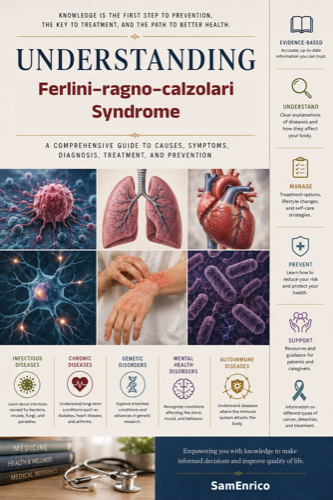 Understanding Ferlini–ragno–calzolari SyndromeAbbott Willard$17.99
 Strategy Meeting Formulas for Strategic Planning OffsitesAbbott Willard$12.99
 Remote Feedback Conflict GuideAbbott Willard$12.99
 Ultimate Handbook Guide to Samara : (Russia) Travel GuideAbbott Willard$11.99
 Servicenow Technical ConsultantAbbott Willard$11.99