
Non-FictionInformativeEducational
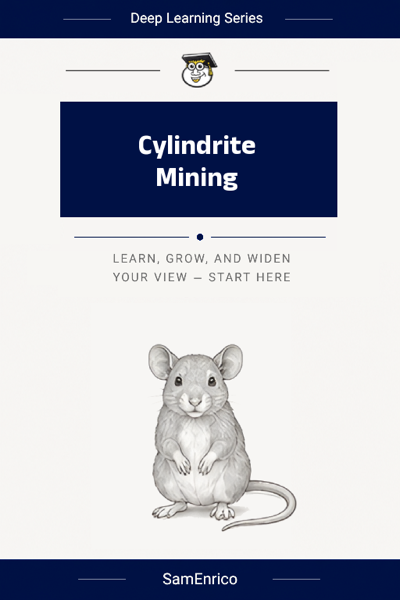
Cylindrite Mining eBook
A Coursebook on Cylindrite Mining
A Coursebook on Cylindrite Mining
Formats
Free sample
Chapter 1: The Rolling Stone--It begins, as so many geological mysteries do, with a man who did not know what he had found.The year is 1893. The place is the Santa Cruz Mine, a modest silver-tin operation clawed into the eastern flank of the Bolivian Andes at an elevation of 4,200 meters—thin air, bitter nights, and rock so hard it dulls drill bits in minutes. The miner's name is recorded in no history book, but we know he was local, likely Quechua, likely illiterate, and certainly bewildered by what tumbled out of a narrow vein that afternoon.It looked like a handful of lead-grey tubes, no larger than cigarette butts, each one strangely curled into itself like a miniature scroll of metal. Some were complete rings, delicate as washers from a machine shop that had never existed in 19th-century Bolivia. Others were partial spirals, as if the rock had tried to roll itself up and then frozen mid-curl.
The miner turned them over in his calloused palm. They were heavy—far heavier than the cassiterite (tin oxide) he usually extracted. They gleamed with a dull metallic luster that caught the feeble light of his tallow candle. He had never seen anything like them.Neither had anyone else.The specimens made their way up the colonial chain of extraction: from the miner to the mine captain, from the captain to the Spanish-born owner, from the owner to a traveling French mineral dealer named Auguste Guyard. Guyard had a keen eye for the strange and the salable.
He recognized immediately that these were not ordinary sulfides. He packed the best specimens in cotton wool, shipped them across the Atlantic to Paris, and delivered them to the mineralogical laboratory of the Sorbonne.There, the tubes sat on a wooden desk, under the gaze of Professor François Ernest Mallard, one of the most accomplished crystallographers of his generation. Mallard picked up his goniometer—an instrument for measuring crystal angles—and began to work. He expected to find angles. All crystals have angles.
That is what "crystal" means: a solid whose atoms are arranged in a repeating, ordered, three-dimensional lattice. That lattice expresses itself externally as flat faces meeting at predictable angles. Quartz has its six-sided prisms. Pyrite has its cubes. Galena has its perfect cubic cleavage.But Mallard found no flat faces.
He found curves.He rotated the specimen under his microscope. He measured and remeasured. He consulted his colleagues. He wrote in his notebook—in that cramped, precise hand of the 19th-century savant—a single underlined sentence: "Ce minéral n'a pas de faces planes." This mineral has no flat faces.He had discovered something that should not exist.The Secret of the Curled Lattice To understand why Mallard was so unsettled, we must first understand a basic law of mineralogy, one taught to every first-year geology student: crystals grow by adding atoms to flat surfaces. Imagine building a brick wall.
You place one brick, then another, then another. The top surface remains flat because each brick is the same size and shape, and you lay them in orderly rows. If you suddenly started adding bricks that were slightly larger or smaller, or if you shifted them out of alignment, the wall would warp, bulge, and eventually collapse.That is exactly what happens inside Cylindrite. But unlike a collapsing wall, Cylindrite does not fall apart. It curls—perfectly, gracefully, predictably—into tubes and scrolls that would make a nanotechnologist weep with envy.Here is the secret, and it is a beautiful one.Cylindrite is a misfit layer compound.
Its crystal structure consists of two different types of atomic layers stacked alternately, like a sandwich with two different kinds of bread. One layer—call it the "Q-layer"—is composed of tin (Sn), antimony (Sb), and sulfur (S). This layer wants to have a specific atomic spacing, a certain distance between its repeating units. The other layer—the "H-layer"—is composed of lead (Pb) and sulfur (S). This layer wants a different atomic spacing, off by about 9 percent.If both layers were forced to remain flat, the mismatch would tear the crystal apart.
The bonds would stretch, snap, and the structure would disintegrate into a pile of meaningless dust. But nature, it turns out, is a clever engineer. Instead of breaking, the crystal curls. By bending into a cylinder, the outer layer (the one with the larger natural spacing) stretches slightly, while the inner layer (the one with the smaller natural spacing) compresses slightly. The misfit is accommodated by curvature rather than by breaking.This is not hypothetical.
It has been observed directly. In 2022, a team of crystallographers led by Dr. Mei-Lin Chen at the Chinese Academy of Sciences used High-Resolution Transmission Electron Microscopy (HRTEM) to image the atomic lattice of Cylindrite at a resolution of 0.8 angstroms—that is, less than the diameter of a single hydrogen atom. They watched, in real time at magnifications of two million times, as the sulfur atoms at the misfit boundary shifted by precisely 0.3 angstroms per layer, accumulating layer by layer into a macroscopic curl visible to the naked eye.No other mineral does this. Not one.There are other minerals that form curved surfaces at the microscopic level—certain clays, some synthetic nanomaterials—but Cylindrite is the only mineral on Earth that consistently, reliably, and beautifully forms macroscopic tubes and scrolls that you can hold in your hand.
A 3-centimeter Cylindrite "washer" contains approximately 100 million individual atomic layers, each one shifted by 0.3 angstroms relative to its neighbor, producing a cumulative curvature so perfect that it would take a diamond-tipped lathe to replicate it artificially.And we have not yet come close to replicating it. As we will explore in Chapter 10, every laboratory attempt to synthesize Cylindrite has failed, producing instead flat, angular crystals of Franckeite—a chemically similar mineral that lacks the trace iron required to catalyze the layer-sliding that produces the curl. Nature spent millions of years getting the recipe right. We are still trying to figure out the ingredients.The Family Tree: Where Cylindrite Fits Before we descend deeper into the mine, we must place Cylindrite within the broader family of minerals. This is not merely an academic exercise.
As we will see in Chapter 3 (identification) and Chapter 11 (the Bolivian case study), knowing what Cylindrite is related to is essential for finding it, mining it, and extracting value from it.Cylindrite belongs to the sulfosalt family. A sulfosalt is a mineral that contains a semi-metal (like antimony or arsenic) combined with sulfur and one or more metals (like lead, silver, or tin). The sulfosalt family is vast and complex—over 200 known species—and many of them are notoriously difficult to identify because they are soft, dark, metallic, and easily confused with one another.The most common sulfide minerals—pyrite (Fe S₂), galena (Pb S), sphalerite (Zn S)—have simple, well-behaved crystal structures. They form cubes, octahedrons, and dodecahedrons. You can identify them with a hand lens and a streak plate.
Sulfosalts are different. They form in complex hydrothermal environments where the chemistry is constantly shifting, where temperature and pressure and sulfur fugacity are in flux, and where the resulting minerals often grow in chaotic, fibrous, or—in…
This is the end of the free sample. Get the eBook to keep going. Buy now
About this book
Details
- Author
- Rawlins Celine
- Publisher
- SamEnrico
- Language
- English
- Genre
- Non-Fiction, Informative, Educational
- Released
- 2026-05-23
- Pages (approx.)
- 159
- Available as
- eBook, Audiobook

Read better in the ZLOADR app
Your eBooks on your phone or tablet. Sign in with your SamEnrico account and start reading.
More by Rawlins Celine
 Listening For Hearing ImpairedRawlins Celine$11.99
 Peer Support For MATRawlins Celine$11.99
 No Spend Month JournalRawlins Celine$11.99
 Meth Tooth RemineralizationRawlins Celine$11.99
 The Last Breath of AtlantisRawlins Celine$11.99
 AI Customer Service Agent ManagementRawlins Celine$12.99
 Learn to Play the RecorderRawlins Celine$11.99
 How to Start a Fish and Marine Mammal Oil Extraction Business (Beginners Guide)Rawlins Celine$11.99
You may also like
 Hong Kong Handover 1997Dunn Johnnie$11.99
 Zumba For Postnatal Recovery CourseNeal Christian$11.99
 Zumba for BeginnersLadner Nikia$11.99
 YouTube Comment Mining GuideHumes Pandora$12.99
 Worry Box MeditationCarlin Rudy$11.99
 Workplace Stress MeditationNguyen Lynn$11.99
 Workplace Stress and Sleep RepairHawley Ivory$11.99
 Workplace Perfectionism CureDelaney Jeffry$11.99
 Workplace Injustice Anger GuideWallen Isabelle$11.99
 Work Addiction and Burnout LinkGreenwood Ester$11.99
 Women in Yoga and WellnessBeattie Galina$11.99
 Women in Stand Up ComedyChun Evangeline$11.99