
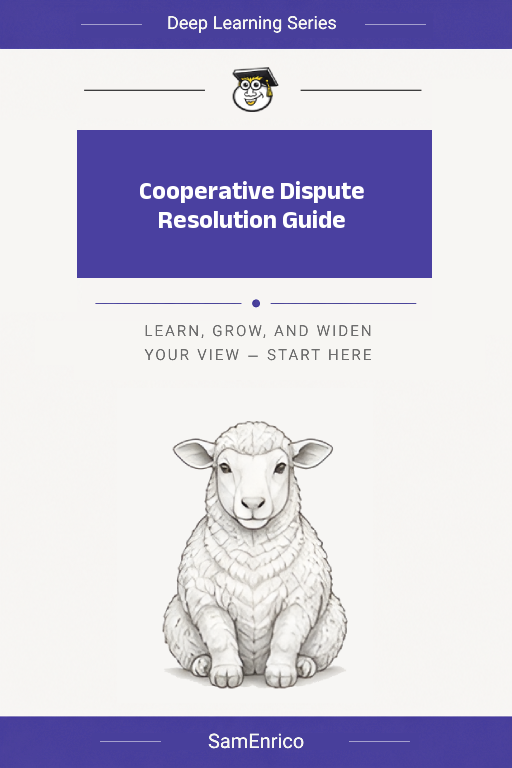
Cooperative Dispute Resolution Guide
Handle member conflicts and board disagreements us
by Hamlin Alexa
Handle member conflicts and board disagreements using mediation and arbitration under East African cooperative tribunal systems.
Formats
About this book
Free sample
Chapter 1: The Membership Trap--–- On a humid Tuesday morning in Meru County, 3,400 members of the Uragano Savings and Credit Cooperative arrived at the annual general meeting expecting a dividend payout. Instead, they witnessed the board chairman and the secretary exchange blows over a missing KES 12 million. Within six months, the cooperative had splintered into three factions, sixteen Tribunal cases were pending, and two members had filed criminal complaints of fraud. The chairman, interviewed from his hospital bed after a stress-induced heart attack, said: "I thought the problem was a few dishonest people. Now I realize the system itself was designed to break us."This is not an isolated story.
Across East Africa, cooperatives are failing not because of "bad apples" – though bad actors certainly exist – but because of structural vulnerabilities baked into the cooperative model itself. When a shareholder in a public company disagrees with management, they sell their shares and walk away. When a cooperative member disagrees, they cannot simply leave. Their savings are locked. Their vote is one of thousands.
And the very principles that make cooperatives powerful – one member, one vote; democratic control; member ownership – become weapons of factional warfare when conflicts arise.This chapter dismantles the "bad apple" theory of cooperative failure and replaces it with a systemic understanding of conflict. We will explore why member disputes are fundamentally different from corporate shareholder disputes, examine the taxonomy of trouble that plagues East African cooperatives, analyze the political economy of the one-member-one-vote principle, and establish the cost data that drives the rest of this book. By the end of this chapter, you will understand why the Cooperative Tribunal takes twelve to eighteen months to resolve a dispute while effective mediation resolves similar cases in thirty to ninety days – and why the choice between these paths determines whether your cooperative survives or dissolves.The Shareholder Versus The Member: Two Worlds Of Dispute To understand cooperative conflict, we must first understand the exit option. In a publicly traded company, the shareholder owns a transferable security. If the shareholder dislikes the board's decisions, believes the dividend is too…
This is the end of the free sample. Get the eBook to keep going. Buy now
Contents
- Chapter 1
- Chapter 2
- Chapter 3
- Chapter 4
- Chapter 5
- Chapter 6
- Chapter 7
- Chapter 8
- Chapter 9
- Chapter 10
- Chapter 11
- Chapter 12
Details
- Author
- Hamlin Alexa
- Publisher
- SamEnrico
- Language
- English
- Genre
- Non-Fiction, Business Brief
- Released
- 2026-05-30
- Pages (approx.)
- 147
- Available as
- eBook, Audiobook

Read better in the ZLOADR app
Your eBooks on your phone or tablet. Sign in with your SamEnrico account and start reading.
More by Hamlin Alexa
 The Silence MethodHamlin Alexa$11.99
 Quadrant Three Elimination GuideHamlin Alexa$11.99
 Rolling Hills RunHamlin Alexa$11.99
 Flow in DrivingHamlin Alexa$11.99
 Dog Beach Romp CalmHamlin Alexa$11.99
 Stress Jaw Clenching TMJHamlin Alexa$11.99
 Affirmations for Social AnxietyHamlin Alexa$11.99
 Gymnast's Hypnosis GuideHamlin Alexa$11.99
 The Secret Sauce: How a 1950s Gas Station Became a Fast Food GiantHamlin Alexa$11.99
 Blood & Silk: The Opium Cartel’s Last Stand in 19th-Century ChinaHamlin Alexa$11.99
 Western Gorillas: SubspeciesHamlin Alexa$11.99
 A Collector's Handbook to the Wolseley EightHamlin Alexa$11.99
You may also like
 Hong Kong Handover 1997Dunn Johnnie$11.99
 Zumba For Postnatal Recovery CourseNeal Christian$11.99
 Zumba for BeginnersLadner Nikia$11.99
 YouTube Comment Mining GuideHumes Pandora$12.99
 Worry Box MeditationCarlin Rudy$11.99
 Workplace Stress MeditationNguyen Lynn$11.99
 Workplace Stress and Sleep RepairHawley Ivory$11.99
 Workplace Perfectionism CureDelaney Jeffry$11.99
 Workplace Injustice Anger GuideWallen Isabelle$11.99
 Work Addiction and Burnout LinkGreenwood Ester$11.99
 Women in Yoga and WellnessBeattie Galina$11.99
 Women in Stand Up ComedyChun Evangeline$11.99