
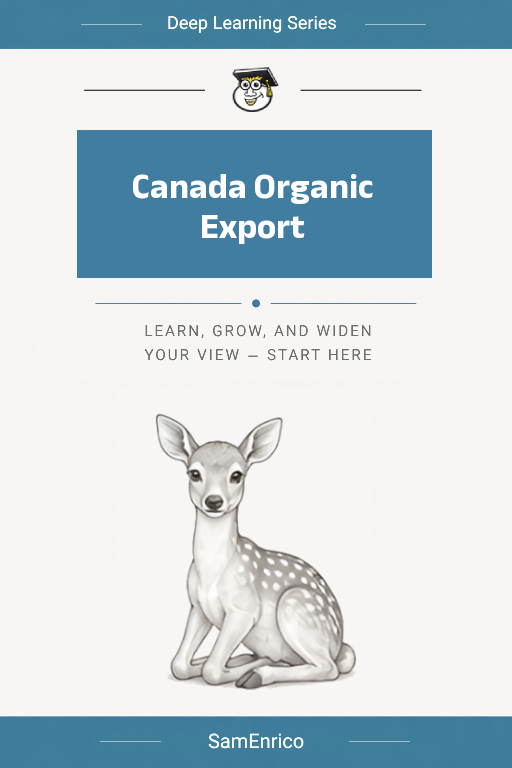
Non-FictionBusiness BriefCanada
Canada Organic Export Audiobook
Certify organic exports with Canada Organic Regime
Certify organic exports with Canada Organic Regime for access to Canadian market.
Formats
Free sample
Chapter 1: The $47,000 Mistake--–- The first time I saw an organic shipment rejected at the Canadian border, I was standing on the dock at the Pacific Highway crossing in Surrey, British Columbia. It was February, cold enough that my pen had stopped working, and the CFIA inspector—a woman named Diane who had been doing this job since before the Canada Organic Regime existed—was holding a clipboard with 47 lines of non-compliance checked off. The exporter, a third-generation blueberry farmer from Washington State, had been shipping organic blueberries to Canada for eleven years without a single problem. His USDA Organic certificate was current. His Canadian importer had been using the same broker for a decade.
Everything looked fine on paper.But Diane had found hydroponic propagation trays in the grower's greenhouse during a routine verification inspection three weeks earlier. Not even for blueberries—the trays were for tomato seedlings, a different crop entirely. Under the Canada Organic Regime, that didn't matter. The presence of any hydroponic system on a certified organic operation, even for a non-organic crop, triggers a full investigation. The farmer had assumed, because he wasn't selling tomatoes, that the rules didn't apply.
He was wrong.That container of blueberries—sixty thousand pounds, retail value approximately 347,000at Canadianmarketprices—wasnotallowedtoenterasorganic.Thefarmerhadtwochoices:sellitasconventionalata47percentdiscount,orpaytoshipitbackto Washington.Hetookthediscount.Thedifferencebetweenorganicandconventionalpricingonthatsingleshipmentwas347,000 at Canadian market prices—was not allowed to enter as organic. The farmer had two choices: sell it as conventional at a 47 percent discount, or pay to ship it back to Washington. He took the discount. The difference between organic and conventional pricing on that single shipment was 347,000at Canadianmarketprices—wasnotallowedtoenterasorganic.Thefarmerhadtwochoices:sellitasconventionalata47percentdiscount,orpaytoshipitbackto Washington.Hetookthediscount.Thedifferencebetweenorganicandconventionalpricingonthatsingleshipmentwas47,000. That was the cost of not understanding the Canada Organic Regime.This book exists to ensure that you never make that kind of mistake.The Canada Organic Regime is not a suggestion.
It is not a guideline. It is a mandatory regulatory framework enforced by the Canadian Food Inspection Agency, and it contains rules that differ significantly from the organic standards of every other major trading partner. If you are currently exporting organic products to Canada, or plan to, you are legally obligated to comply with Part 13 of the Safe Food for Canadians Regulations. Ignorance is not a defense. Assumptions about equivalency are not a defense.
Your USDA certificate, your EU organic seal, your Japanese JAS mark—none of these guarantee border clearance.In this chapter, I will…
This is the end of the free sample. Get the Audiobook to keep going. Buy now
About this book
Details
- Author
- Jolley Cherry
- Publisher
- SamEnrico
- Language
- English
- Genre
- Non-Fiction, Business Brief, Canada
- Released
- 2026-05-30
- Pages (approx.)
- 153
- Available as
- eBook, Audiobook

Listen in the VoxFlicks app
Audiobooks and audio dramas wherever you go. Sign in with your SamEnrico account and press play.
More by Jolley Cherry
 Visa Hurdles to Venture CapitalJolley Cherry$11.99
 Phone Addiction Break GuideJolley Cherry$11.99
 Angela Davis Prison AbolitionJolley Cherry$11.99
 Zen Garden Sand RakingJolley Cherry$11.99
 Screen Free Bedtime MeditationJolley Cherry$11.99
 Dream Incubation for Academic ExamsJolley Cherry$11.99
 Chronic Pain Emotional NumbnessJolley Cherry$11.99
 Plan Prep Cook MethodJolley Cherry$11.99
 The Veiled Brush: How a Saudi Artist Captured a Queen’s SoulJolley Cherry$11.99
 The Last Library of Alexandria: Lost Voices of the Ancient WorldJolley Cherry$11.99
 How to Produce Vehicle Parts and AccessoriesJolley Cherry$11.99
 Joint Venture and Teaming Agreement GuideJolley Cherry$12.99
You may also like
 Hong Kong Handover 1997Dunn Johnnie$11.99
 Zumba For Postnatal Recovery CourseNeal Christian$11.99
 Zumba for BeginnersLadner Nikia$11.99
 YouTube Comment Mining GuideHumes Pandora$12.99
 Worry Box MeditationCarlin Rudy$11.99
 Workplace Stress MeditationNguyen Lynn$11.99
 Workplace Stress and Sleep RepairHawley Ivory$11.99
 Workplace Perfectionism CureDelaney Jeffry$11.99
 Workplace Injustice Anger GuideWallen Isabelle$11.99
 Work Addiction and Burnout LinkGreenwood Ester$11.99
 Women in Yoga and WellnessBeattie Galina$11.99
 Women in Stand Up ComedyChun Evangeline$11.99