
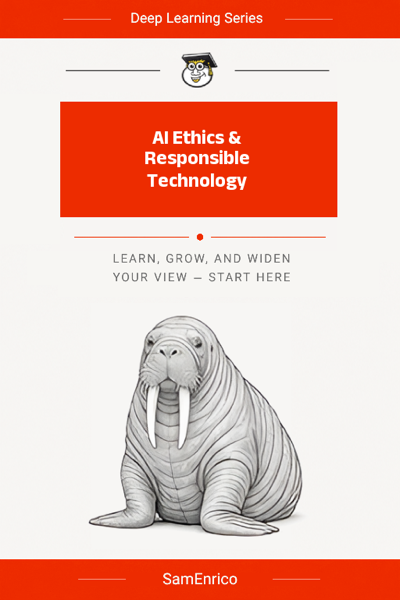
AI Ethics & Responsible Technology
A Coursebook on AI Ethics & Responsible Technology
A Coursebook on AI Ethics & Responsible Technology
Formats
About this book
Free sample
Chapter 1: The Responsibility Paradox--Let us begin with a confession that most technology leaders will never make publicly: they are terrified of the systems they are building. Not of the code failing—that is an engineering problem with known solutions. Not of the algorithms being mathematically incorrect—that is a debugging problem with established protocols. What keeps them awake at 3:00 AM is something far more unsettling. They are terrified that their creation might work exactly as designed and still cause catastrophic harm.
They are terrified that the spreadsheet they are staring at, which shows perfect accuracy metrics and soaring user engagement, might be hiding the quiet suffering of thousands of people who will never know that an algorithm decided their fate. They are terrified because they have begun to suspect that the real danger of artificial intelligence is not that it will become suddenly, violently evil, but that it will become routinely, invisibly unjust.This is the responsibility paradox of the AI age. The very properties that make machine learning so powerful—its ability to find patterns that no human could see, to operate at scales no human could match, to optimize outcomes no human could compute—are the same properties that make it ethically dangerous. We build systems to automate decisions precisely because human judgment is flawed, biased, and inconsistent. Then we discover that our automated systems are flawed, biased, and inconsistent in ways that are harder to detect, harder to contest, and harder to correct.
We delegate authority to algorithms because we believe they will be more objective than people. Then we learn that algorithms inherit the subjectivity of their training data, the blindness of their designers, and the values of their optimization functions. We accelerate development because speed is a competitive advantage. Then we realize that speed without ethical scaffolding is not progress but sabotage.This book is written for everyone who has felt that tension. For the product manager who knows that their fairness dashboard looks good but suspects the metrics are hiding something important.
For the software engineer who wants to write better code but has never been taught what "better" means when fairness…
This is the end of the free sample. Get the eBook to keep going. Buy now
Contents
- Chapter 1
- Chapter 2
- Chapter 3
- Chapter 4
- Chapter 5
- Chapter 6
- Chapter 7
- Chapter 8
- Chapter 9
- Chapter 10
- Chapter 11
- Chapter 12
Details
- Author
- Tidwell Felton
- Publisher
- SamEnrico
- Language
- English
- Genre
- Non-Fiction, Informative, Educational
- Released
- 2026-06-02
- Pages (approx.)
- 144
- Available as
- eBook, Audiobook

Read better in the ZLOADR app
Your eBooks on your phone or tablet. Sign in with your SamEnrico account and start reading.
More by Tidwell Felton
 Lake Clark MissingTidwell Felton$11.99
 Jack Dorsey SquareTidwell Felton$11.99
 Drug Dependency Aftercare PlanningTidwell Felton$11.99
 The Economics Nobel PovertyTidwell Felton$11.99
 Nobel Prize Superconductivity PioneersTidwell Felton$11.99
 Seated Body Scan WorkbookTidwell Felton$11.99
 Hair Adjustment as PreeningTidwell Felton$11.99
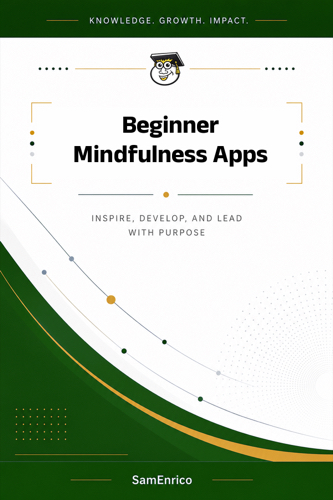 Beginner Mindfulness AppsTidwell Felton$11.99
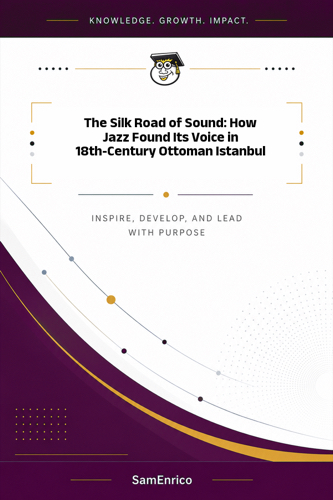 The Silk Road of Sound: How Jazz Found Its Voice in 18th-Century Ottoman IstanbulTidwell Felton$11.99
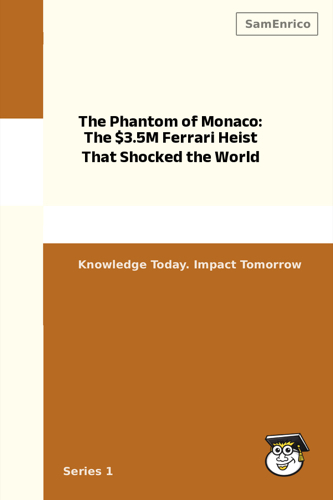 The Phantom of Monaco: The $3.5M Ferrari Heist That Shocked the WorldTidwell Felton$11.99
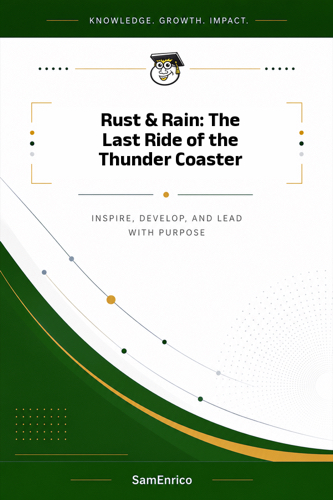 Rust & Rain: The Last Ride of the Thunder CoasterTidwell Felton$11.99
 The Mineral Guide to AerugiteTidwell Felton$11.99