
Non-FictionNon-Obvious CareerInternational Organizations
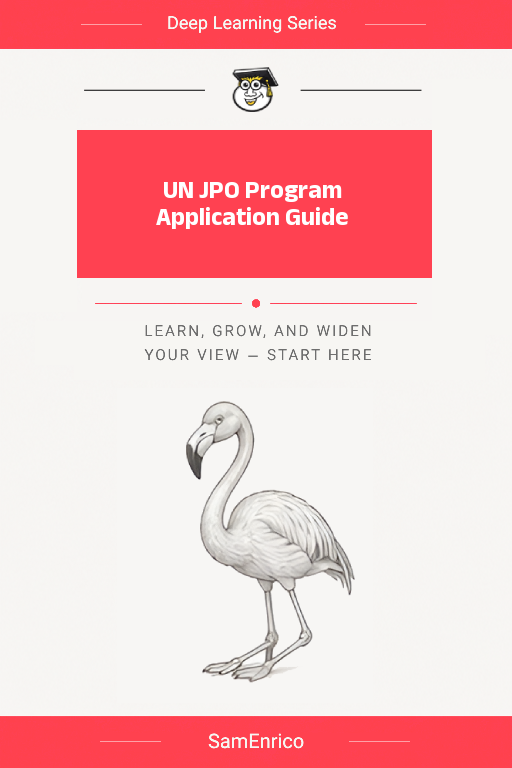
UN JPO Program Application Guide eBook
Secure a Junior Professional Officer placement thr
Secure a Junior Professional Officer placement through your home country's foreign ministry sponsorship system.
Formats
Free sample
Chapter 1: The Back Door Advantage--–- Most aspiring UN professionals never even hear about the Junior Professional Officer program until it is too late. They spend years grinding through unpaid internships, submitting hundreds of applications through the UN's opaque online portals, and competing against thousands of equally qualified candidates for a handful of entry-level positions. Meanwhile, a select few insiders quietly enter the UN system through a separate, less visible channel – one that comes with a government-paid salary, a structured career path, and a conversion rate to permanent contracts that far exceeds the standard recruitment route. This is the Junior Professional Officer program, and understanding why it remains the best-kept secret in multilateral careers is the first step toward securing your place in it.The JPO program, historically known as the Associate Expert program in some UN agencies, is a sponsored employment mechanism designed to bring early-to-mid-career professionals into the United Nations system. Unlike the standard recruitment process, where candidates apply directly to UN vacancies and compete against a global pool of applicants, the JPO track requires that a donor country – specifically, your home country's government – nominate you, fund your position, and sponsor your initial contract.
This tripartite arrangement changes everything about how you are evaluated, selected, and ultimately converted to a permanent UN career.This chapter will dismantle the myths surrounding the JPO program, lay bare the structural advantages it offers over standard UN recruitment, and provide you with a clear-eyed understanding of why investing your time in this specific track is the most strategic move you can make as an aspiring international civil servant. By the end of this chapter, you will understand not just what the JPO program is, but why it is the most effective back door into the UN system – and why that door is only open to those who understand how to approach it.The Forgotten Pathway: Why Most Candidates Never Learn About JPOs The first and most critical advantage of the JPO program is also its greatest weakness from an accessibility standpoint: it is poorly advertised. The United Nations does not promote the JPO program in its general recruitment campaigns. You will not find JPO vacancies on the main UN careers portal alongside P-2 and P-3 postings. Instead, JPO positions are managed through separate, often country-specific channels that require proactive research to discover.This lack of visibility serves as a natural filter.
The candidates who find their way into the JPO program are typically those who have done the investigative work – reaching out to their foreign ministry, attending specialized career fairs, or learning about the program through alumni networks. For the average applicant who simply searches "UN jobs" on Google, the JPO program remains invisible. This is precisely why it is such a powerful opportunity. The competition pool is smaller, more self-selected, and – perhaps counterintuitively – more manageable than the thousands of applicants who flood every open P-2 vacancy.Consider the numbers. A typical P-2 position advertised on the UN Careers portal receives between 500 and 3,000 applications.
The screening process for these applications is largely automated, using keyword filters that eliminate the vast majority before a human ever sees a single CV. By contrast, a JPO position advertised through a country's foreign ministry roster might receive 50 to 200 applications from that country's nationals only. The pre-selection is often handled by government officials who know the candidates' educational and professional contexts, rather than by an algorithm scanning for specific phrases in a foreign language.This smaller, more focused competition pool does not mean the JPO program is easy to enter. It is not. But it means that your application will receive more careful consideration, that your qualifications will be evaluated in context, and that your persistence in navigating the dual application process (to both your government and the UN) will be rewarded in ways that standard applications never can.The Tripartite Relationship: Understanding the Sponsorship Model To fully grasp why the JPO program works differently from standard UN recruitment, you must understand the tripartite relationship that underpins every JPO placement.
Three parties are involved: the donor country (your home government), the host UN agency, and you, the Junior Professional Officer. Each party has distinct interests, obligations, and expectations, and your success depends on navigating all three simultaneously.The donor country – typically a ministry of foreign affairs, development agency, or designated national body such as the Chinese Service Center for Scholarly Exchange – is the financial sponsor. Your salary, benefits, and even your training costs are paid directly by your home government, not by the UN agency's core budget. This funding arrangement is crucial because it means the UN agency is not taking on financial risk by hiring you. You are, in effect, a fully funded, zero-cost addition to their workforce.
From the UN agency's perspective, a JPO is a gift: a qualified professional who costs them nothing but contributes full-time labor.The host UN agency – whether UNDP, UNHCR, UNICEF, or any of the dozens of other UN entities that participate in JPO programs – provides the work plan, the supervision, and the operational context. The agency agrees to host you, assign you meaningful duties, and provide you with the professional development opportunities that justify the sponsorship. In return, the agency receives a motivated professional who can be deployed to priority areas – often in hardship duty stations or technical niches – where regular staffing is difficult to maintain.You, the JPO, are the beneficiary of this arrangement, but you are also the product. Your performance determines whether the donor country continues to fund JPO positions. Your conduct reflects on both your home country and the host agency.
And your eventual conversion to a regular UN contract – the ultimate goal for most JPOs – depends on your ability to satisfy both the donor country's expectations (typically around reporting, visibility, and representing national interests) and the UN agency's operational demands (deliverables, competencies, and team integration).This tripartite relationship creates what might be called the "dual accountability" of the JPO role. Unlike a regular UN staff member who answers primarily to their UN supervisor, you answer to both your UN supervisor and your government's JPO focal point. You will file reports to your foreign ministry. You will attend briefings with your country's mission to the UN. You will be asked, periodically, to demonstrate how your work advances your country's foreign policy priorities or contributes to the Sustainable Development Goals in ways that reflect well on your nation.
This is not a burden; it is a strategic advantage. It gives you two sets of advocates, two sources of mentorship, and two pathways to your next position.Contract Types: Fixed-Term vs. Temporary JPO Contracts Not all JPO contracts are created equal, and understanding the difference between the two primary contract types can save you from signing an agreement that leaves you with fewer rights and weaker conversion prospects than you expected.The first and more desirable contract type is the Fixed-Term Appointment (FTA). Under an FTA, you are hired directly onto the UN agency's staff roster, subject to the same Staff Rules and Regulations as regular UN employees. You receive a full benefits package, including participation in the UN Joint Staff Pension Fund, coverage under the UN's health insurance…
This is the end of the free sample. Get the eBook to keep going. Buy now
About this book
Details
- Author
- Hawley Juliann
- Publisher
- SamEnrico
- Language
- English
- Genre
- Non-Fiction, Non-Obvious Career, International Organizations
- Released
- 2026-06-02
- Pages (approx.)
- 145
- Available as
- eBook, Audiobook

Read better in the ZLOADR app
Your eBooks on your phone or tablet. Sign in with your SamEnrico account and start reading.
More by Hawley Juliann
 Russian Mafia in LondonHawley Juliann$11.99
 The Foster Care Food Bank ChildHawley Juliann$11.99
 Legacy Letter GuideHawley Juliann$11.99
 Benzo Tapering Practical Compassionate PrimerHawley Juliann$11.99
 Authority Persuasion HandbookHawley Juliann$11.99
 Albert NamatjiraHawley Juliann$11.99
 Slave Trade British Royal NavyHawley Juliann$11.99
 Community Court FounderHawley Juliann$11.99
 The Last Whisper of the Dodo: Extinction’s Silent WitnessHawley Juliann$11.99
 The Ghost Particle: How Neutrinos Changed EverythingHawley Juliann$11.99
 How to Start a Apple Wine Making Business (Beginners Guide)Hawley Juliann$11.99
 How to Produce Machine Tool ComponentsHawley Juliann$11.99
You may also like
 Hong Kong Handover 1997Dunn Johnnie$11.99
 Zumba For Postnatal Recovery CourseNeal Christian$11.99
 Zumba for BeginnersLadner Nikia$11.99
 YouTube Comment Mining GuideHumes Pandora$12.99
 Worry Box MeditationCarlin Rudy$11.99
 Workplace Stress MeditationNguyen Lynn$11.99
 Workplace Stress and Sleep RepairHawley Ivory$11.99
 Workplace Perfectionism CureDelaney Jeffry$11.99
 Workplace Injustice Anger GuideWallen Isabelle$11.99
 Work Addiction and Burnout LinkGreenwood Ester$11.99
 Women in Yoga and WellnessBeattie Galina$11.99
 Women in Stand Up ComedyChun Evangeline$11.99