
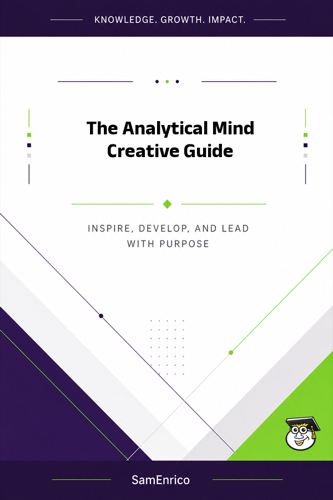
Non-FictionSelf-HelpAnalytical Thinking
The Analytical Mind Creative Guide
Shows how data driven people can generate novel so
by Conyers Tory
Shows how data driven people can generate novel solutions.
Formats
About this book
Free sample
Chapter 1: The Assumption Audit–- Sarah had spent six months building the perfect dashboard. Every metric, every filter, every visualization was optimized. She presented it to leadership with confidence. The CEO nodded, then asked a question that froze her: "What problem does this solve that we didn't know we had?"She had no answer. Not because the dashboard was bad—it was beautiful—but because she had never asked that question.
She had assumed the problem. She had assumed the stakeholders knew what they wanted. She had assumed that more data was always better. Six months of assumptions, none of them tested, all of them invisible to her until that moment.This chapter is about learning to see your assumptions before they cost you six months.The Invisible Prison Every problem you have ever tried to solve came with a set of invisible walls. You did not build these walls.
They were built by your industry, your training, your company's history, and the last ten solutions that sort-of-worked. These walls are called assumptions, and they are the single biggest barrier to novel solutions—not because they are always wrong, but because you cannot see them.Think about the last time you were stuck on a problem. You probably tried harder. You gathered more data. You ran more analyses.
You worked longer hours. What you almost certainly did not do was ask: "What am I assuming that might be false?"This is not your fault. Analytical training rewards assumption-free thinking—but there is no such thing. Every model, every forecast, every decision rests on a foundation of unstated beliefs. The difference between average analysts and analytical creatives is not that one has fewer assumptions.
It is that one has learned to see them.Consider the following invisible walls that trap most analytical thinkers:The Data Completeness Assumption: The belief that the data you have is the data you need. In reality, the most important variables are often the hardest to measure—and therefore absent from your spreadsheets.The Historical Continuity Assumption: The belief that the future will resemble the past. This is how Blockbuster ignored…
This is the end of the free sample. Get the eBook to keep going. Buy now
Contents
- Chapter 1
- Chapter 2
- Chapter 3
- Chapter 4
- Chapter 5
- Chapter 6
- Chapter 7
- Chapter 8
- Chapter 9
- Chapter 10
- Chapter 11
- Chapter 12
Details
- Author
- Conyers Tory
- Publisher
- SamEnrico
- Language
- English
- Genre
- Non-Fiction, Self-Help, Analytical Thinking
- Released
- 2026-06-05
- Pages (approx.)
- 132
- Available as
- eBook, Audiobook

Read better in the ZLOADR app
Your eBooks on your phone or tablet. Sign in with your SamEnrico account and start reading.
More by Conyers Tory
 Beginner Mindfulness for Needle PhobiaConyers Tory$11.99
 Retention After Hire StudyConyers Tory$11.99
 The Complicated Grief and SleepConyers Tory$11.99
 Andrew Murray Pastor MysticConyers Tory$11.99
 The Dragon and the Cartel: The Rise and Fall of Asia's Drug KingpinsConyers Tory$11.99
 Organic Fruit Export GuideConyers Tory$12.99
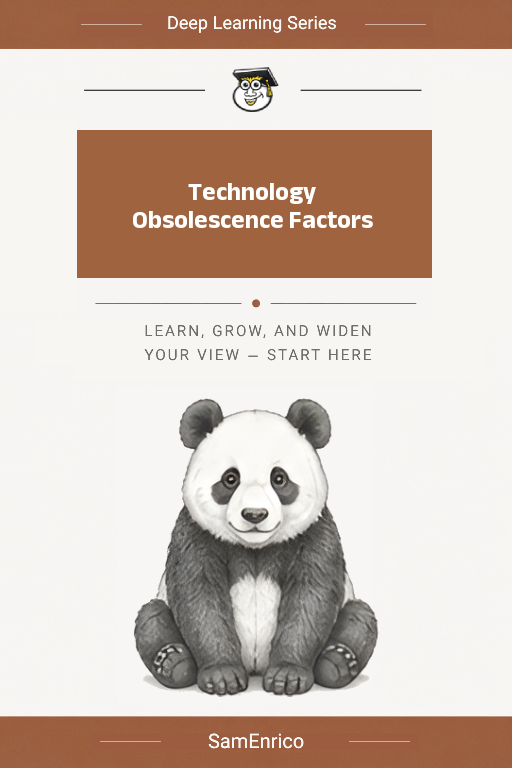 Technology Obsolescence FactorsConyers Tory$12.99
 Understanding Succinyl-coa Acetoacetate Transferase DeficiencyConyers Tory$17.99
 Director of MaintenanceConyers Tory$11.99
 How to Start a Cigar Merchant (wholesale) Business (Beginners Guide)Conyers Tory$11.99
You may also like
 Hong Kong Handover 1997Dunn Johnnie$11.99
 Zumba For Postnatal Recovery CourseNeal Christian$11.99
 Zumba for BeginnersLadner Nikia$11.99
 YouTube Comment Mining GuideHumes Pandora$12.99
 Worry Box MeditationCarlin Rudy$11.99
 Workplace Stress MeditationNguyen Lynn$11.99
 Workplace Stress and Sleep RepairHawley Ivory$11.99
 Workplace Perfectionism CureDelaney Jeffry$11.99
 Workplace Injustice Anger GuideWallen Isabelle$11.99
 Work Addiction and Burnout LinkGreenwood Ester$11.99
 Women in Yoga and WellnessBeattie Galina$11.99
 Women in Stand Up ComedyChun Evangeline$11.99