
Non-FictionForecast & OutlookCoffee Market
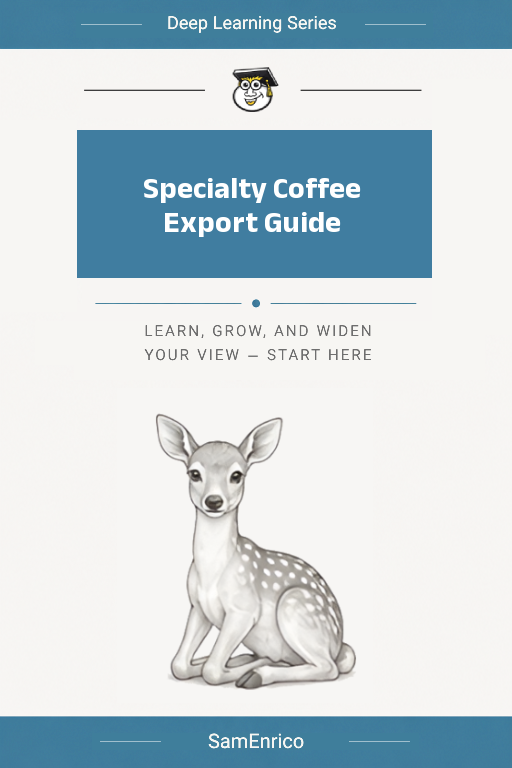
Specialty Coffee Export Guide Audiobook
Analyze Colombian, Peruvian, and Brazilian high-en
by Pedersen Chi
Analyze Colombian, Peruvian, and Brazilian high-end coffee production, direct trade, and certification.
Formats
Free sample
Chapter 1: The Triangulation Lie--Most coffee exporters learn the hard way that treating Brazil, Colombia, and Peru as interchangeable origins is a costly mistake. I learned it with an $87,000 loss on a single container that should never have been packed the way it was.The year was 2019. I had built what I thought was a smart portfolio: twenty bags of a fruity Brazilian natural from Cerrado Mineiro scoring 86 points, fifteen bags of a washed Colombian Excelso from Huila at 87 points, and ten bags of a high-altitude organic Peruvian from Cajamarca at 88 points. My buyer, a mid-sized roaster in the Netherlands, wanted variety. I wanted to maximize container space.
So I stuffed them all into the same forty-foot container, separated only by cardboard dividers, and sent them off with a sense of efficiency I mistook for expertise.Six weeks later, I received the email that still makes me wince. The buyer had opened the container to find that the Brazilian natural had off-gassed residual moisture during the crossing. The humidity had migrated. The Peruvian organic, dried slowly on raised beds and particularly absorbent, had taken on musty notes. The Colombian washed, normally stable, now carried a faint fermented character that hadn't existed at loading.
The entire container was rejected. Not just the Brazilian. All forty-five bags. The buyer couldn't separate the lots cleanly enough to trust any of them.That shipment taught me what this chapter will teach you: Brazil, Colombia, and Peru are not interchangeable. They are not three versions of the same product.
They are three distinct supply chains with different strengths, different weaknesses, different risk profiles, and—most critically—different buyers. Treating them the same way will cost you money. Treating them strategically will make you money.This chapter introduces the Triangulation Strategy, a framework for building a South American coffee portfolio that leverages each country's comparative advantage while avoiding the costly collisions I learned about the hard way. You will learn why most exporters fail at this, how to match buyer types to specific origins, and why the common advice to "diversify across South America" is dangerously incomplete without a country-specific procurement model.The Three-Country Trap South America produces roughly 45 percent of the world's Arabica coffee. Brazil alone accounts for nearly 40 percent of global production.
Colombia adds another 10 to 12 percent. Peru contributes about 3 to 4 percent but dominates the organic segment. Any exporter looking to…
This is the end of the free sample. Get the Audiobook to keep going. Buy now
About this book
Details
- Author
- Pedersen Chi
- Publisher
- SamEnrico
- Language
- English
- Genre
- Non-Fiction, Forecast & Outlook, Coffee Market
- Released
- 2026-06-01
- Pages (approx.)
- 143
- Available as
- eBook, Audiobook

Listen in the VoxFlicks app
Audiobooks and audio dramas wherever you go. Sign in with your SamEnrico account and press play.
More by Pedersen Chi
 Police Officer De escalationPedersen Chi$11.99
 New Parent Anger ManagementPedersen Chi$11.99
 The Burnout Assessment HandbookPedersen Chi$11.99
 Only Child Self Worth Dynamics CoursePedersen Chi$11.99
 The Geo Arbitrage Healthcare NavigationPedersen Chi$11.99
 The Healing Hands of the Golden Age: Ancient Nubia's Medical PioneersPedersen Chi$11.99
 How to Become a Dowel-machine OperatorPedersen Chi$11.99
 Executive Summary Transition PhrasesPedersen Chi$12.99
 Howlite MiningPedersen Chi$11.99
 Understanding Lymphedema PtosisPedersen Chi$17.99
You may also like
 Hong Kong Handover 1997Dunn Johnnie$11.99
 Zumba For Postnatal Recovery CourseNeal Christian$11.99
 Zumba for BeginnersLadner Nikia$11.99
 YouTube Comment Mining GuideHumes Pandora$12.99
 Worry Box MeditationCarlin Rudy$11.99
 Workplace Stress MeditationNguyen Lynn$11.99
 Workplace Stress and Sleep RepairHawley Ivory$11.99
 Workplace Perfectionism CureDelaney Jeffry$11.99
 Workplace Injustice Anger GuideWallen Isabelle$11.99
 Work Addiction and Burnout LinkGreenwood Ester$11.99
 Women in Yoga and WellnessBeattie Galina$11.99
 Women in Stand Up ComedyChun Evangeline$11.99