
Proposal for Underrepresented Groups eBook
Frame research proposals addressing diversity, equ
Frame research proposals addressing diversity, equity, and inclusion while leveraging unique perspectives and experiences.
Formats
Free sample
Chapter 1: The Meritocracy Myth--What would you ask about a problem that everyone else has stopped noticing?This is not a rhetorical question. It is perhaps the most valuable question you will ever ask as a researcher. And the reason you can ask it—the reason you might see what others have learned to overlook—is not a weakness. It is not a liability. It is not something to hide on your CV or scrub from your writing voice.It is your unfair advantage.I want you to pause and think about the last time you sat in a research seminar, a grant writing workshop, or a faculty meeting where someone said something that struck you as obviously, glaringly wrong—but everyone else nodded along.
Or the last time you read a canonical paper in your field and thought, "But what about...?" and then dismissed your own question because surely the experts had already considered it.They hadn't. That is the secret that the meritocracy does not want you to know.The traditional "objective" research proposal is a myth. It was never objective. It was built around a narrow, unmarked norm—white, male, Ivy League, able-bodied, neurotypical, financially secure—and then declared universal. The voice that feels "neutral" is not neutral.
It is the voice of the person who has never had to fight for a seat at the table. And funding agencies, slowly and imperfectly, are beginning to realize this.But before we talk about how the system is changing, we need to talk about how it was built—and who it was built to exclude.The Invention of Meritocracy In 1958, the British sociologist Michael Young published a satirical book called The Rise of the Meritocracy. He coined the term to warn against a future in which society was stratified by IQ and educational credentials—a future he saw as dystopian, not aspirational. The book's narrator declares that merit is defined as "IQ plus effort," and that those who rise to the top deserve their positions because they are objectively more capable.Young was being ironic. He was warning that "meritocracy" would become a justification for inequality, not a solution to it.But the irony was lost.
By the 1980s, "meritocracy" had become an unquestioned good in both political and academic discourse. The story went like this: if you work hard, if you have talent, if you play by the rules, you will succeed. And if you do not succeed, the fault must lie with you. You did not work hard enough. You did not have enough talent.
You did not follow the rules.This story is comforting to those who succeed. It tells them that their success is earned and just. It is devastating to those who do not, because it tells them that their failure is their own fault.France Winddance Twine, in her ethnographic work Geek Girls, shows how this myth operates in Silicon Valley—arguably the world's most self-consciously "meritocratic" industry. She documents how women and people of color are systematically excluded not through explicit discrimination (though that certainly exists) but through a definition of "merit" that is built around a narrow, unmarked norm. The "brilliant" programmer is assumed to be the one who codes alone until 3 a.m., who has no caregiving responsibilities, who can move across the country for a startup, who speaks in a particular way and dresses in a particular way and has a particular kind of confidence.These are not measures of coding ability.
They are measures of social proximity to power.And the same dynamics play out in research funding.What the Data Actually Says Let me show you what the data actually says about research proposals from underrepresented groups.A landmark study in the journal Science examined funding outcomes at the National Institutes of Health. The researchers found that Black applicants were 10 percentage points less likely to receive funding than white applicants—even after controlling for educational background, publication record, and prior funding history. Ten percentage points. That is not a difference in quality. That is a difference in perception.Another study, this time at the National Science Foundation, found that proposals from women were rated as more "innovative" and "novel" than proposals from men—but were less likely to be funded.
The reviewers praised the ideas while penalizing the applicants.Experimental studies are even more damning. Researchers have taken identical proposals and randomly assigned them male or female author names. The proposals with female names receive lower scores, particularly in fields that are perceived as "objective" like biology, physics, and engineering. When the same proposals are assigned the names of researchers from elite versus non-elite institutions, the elite names receive a significant boost.What this means is that your proposal is not evaluated in a vacuum. It is evaluated by human beings who carry unconscious associations, who have limited time, who fall back on proxies like institution prestige and writing style, and who are more comfortable with what they already know.The problem is not that underrepresented researchers are less qualified.
The problem is that traditional review criteria were never designed to recognize their strengths.And here is the crucial insight: the strengths are real.The Innovation Advantage of Diversity A growing body of research shows that diverse teams produce more innovative science. A study of 1.5 million papers found that those written by diverse author teams were more likely to be novel, more likely to be cited across disciplinary boundaries, and more likely to be published in high-impact journals. Another study found that diverse research teams are more likely to develop patents and to commercialize their discoveries.Why? Because people who come from different backgrounds notice different things. They ask different questions.
They see problems that insiders have learned to overlook.Let me give you a concrete example from the case studies we will return to throughout this book.A Latina public health researcher grew up in a neighborhood with high rates of asthma. She noticed that the existing literature focused on individual risk factors—diet, exercise, genetics—while ignoring what she knew from lived experience: the freeway that ran through her neighborhood, the industrial plant upwind, the lack of green space. When she finally stopped trying to sound like a "neutral" researcher and wrote a proposal centered on environmental racism, she was funded. Not despite her background—because of it.A disabled scholar developed a participatory research methodology that included disabled people as co-researchers, not just subjects. Reviewers initially rejected her proposals as "unconventional." But when a major foundation piloted her methodology, they found that it produced more accurate data, higher retention rates, and more actionable findings.
The foundation rewrote their evaluation rubrics to explicitly reward participatory approaches.A first-generation college graduate noticed that the standardized assessments in his field assumed a kind of cultural knowledge that elite families transmit informally—knowledge about office hours, about networking, about how to ask for a letter of recommendation. His proposal revealed those hidden assumptions and developed new measures that predicted student success more accurately than traditional tests.Each of these researchers had been told to hide their identities. Each had been told that the "objective" voice was the safe voice. And each…
This is the end of the free sample. Get the eBook to keep going. Buy now
About this book
Details
- Author
- Toth Ethelene
- Publisher
- SamEnrico
- Language
- English
- Genre
- Non-Fiction, Student's Shortcut, Diversity in Research
- Released
- 2026-06-01
- Pages (approx.)
- 140
- Available as
- eBook, Audiobook

Read better in the ZLOADR app
Your eBooks on your phone or tablet. Sign in with your SamEnrico account and start reading.
More by Toth Ethelene
 Kigali E governance Startup GuideToth Ethelene$11.99
 Pain Flare Self Care KitToth Ethelene$11.99
 Testosterone and Sleep QualityToth Ethelene$11.99
 The Dancer Body ScanToth Ethelene$11.99
 Public Speaking Calm TechniquesToth Ethelene$11.99
 The Golden Apple’s Curse: How a Divine Feud Sparked a Decade of WarToth Ethelene$11.99
 The Blood That Saved a Continent: The Untold Story of Dr. Charles DrewToth Ethelene$11.99
 Dog Racing HandlingToth Ethelene$11.99
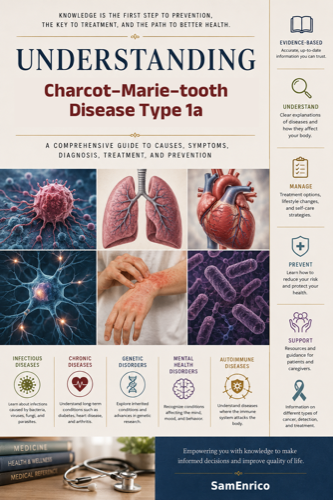 Understanding Charcot–Marie–tooth Disease Type 1aToth Ethelene$17.99
 PR Bridging Visa RulesToth Ethelene$12.99
 How to Start a Hobby in Learn to Play PokerToth Ethelene$11.99