
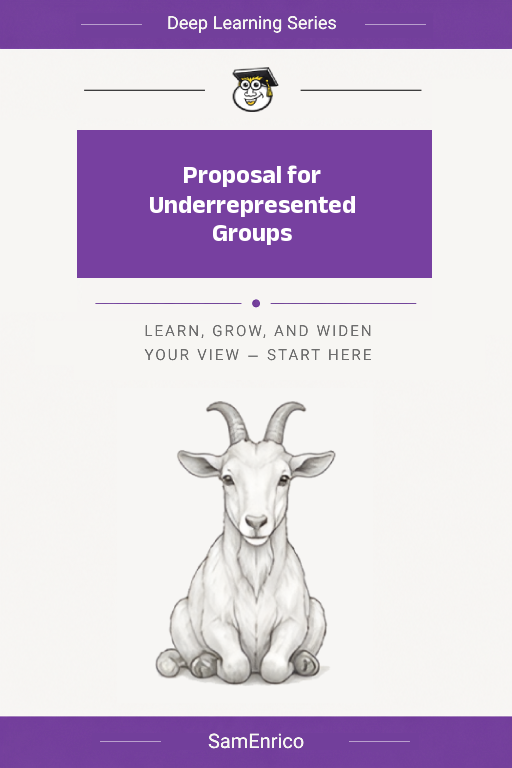
Proposal for Underrepresented Groups Audiobook
Frame research proposals addressing diversity, equ
Frame research proposals addressing diversity, equity, and inclusion while leveraging unique perspectives and experiences.
Formats
Free sample
Chapter 1: The Meritocracy Myth--What would you ask about a problem that everyone else has stopped noticing?This is not a rhetorical question. It is perhaps the most valuable question you will ever ask as a researcher. And the reason you can ask it—the reason you might see what others have learned to overlook—is not a weakness. It is not a liability. It is not something to hide on your CV or scrub from your writing voice.It is your unfair advantage.I want you to pause and think about the last time you sat in a research seminar, a grant writing workshop, or a faculty meeting where someone said something that struck you as obviously, glaringly wrong—but everyone else nodded along.
Or the last time you read a canonical paper in your field and thought, "But what about...?" and then dismissed your own question because surely the experts had already considered it.They hadn't. That is the secret that the meritocracy does not want you to know.The traditional "objective" research proposal is a myth. It was never objective. It was built around a narrow, unmarked norm—white, male, Ivy League, able-bodied, neurotypical, financially secure—and then declared universal. The voice that feels "neutral" is not neutral.
It is the voice of the person who has never had to fight for a seat at the table. And funding agencies, slowly and imperfectly, are beginning to realize this.But before we talk about how the system is changing, we need to talk about how it was built—and who it was built to exclude.The Invention of Meritocracy In 1958, the British sociologist Michael Young published a satirical book called The Rise of the Meritocracy. He coined the term to warn against a future in which society was stratified by IQ and educational credentials—a future he saw as dystopian, not aspirational. The book's narrator declares that merit is defined as "IQ plus effort," and that those who rise to the top deserve their positions because they are objectively more capable.Young was being ironic. He was warning that "meritocracy" would become a justification for inequality, not a solution to it.But the irony was lost.
By the 1980s, "meritocracy" had become an unquestioned good in both political and academic discourse. The story went like this: if you work hard, if you have talent, if you play by the…
This is the end of the free sample. Get the Audiobook to keep going. Buy now
About this book
Details
- Author
- Toth Ethelene
- Publisher
- SamEnrico
- Language
- English
- Genre
- Non-Fiction, Student's Shortcut, Diversity in Research
- Released
- 2026-06-01
- Pages (approx.)
- 140
- Available as
- eBook, Audiobook

Listen in the VoxFlicks app
Audiobooks and audio dramas wherever you go. Sign in with your SamEnrico account and press play.
More by Toth Ethelene
 Kigali E governance Startup GuideToth Ethelene$11.99
 Pain Flare Self Care KitToth Ethelene$11.99
 Testosterone and Sleep QualityToth Ethelene$11.99
 The Dancer Body ScanToth Ethelene$11.99
 Public Speaking Calm TechniquesToth Ethelene$11.99
 The Golden Apple’s Curse: How a Divine Feud Sparked a Decade of WarToth Ethelene$11.99
 The Blood That Saved a Continent: The Untold Story of Dr. Charles DrewToth Ethelene$11.99
 Dog Racing HandlingToth Ethelene$11.99
 Understanding Charcot–Marie–tooth Disease Type 1aToth Ethelene$17.99
 PR Bridging Visa RulesToth Ethelene$12.99
 How to Start a Hobby in Learn to Play PokerToth Ethelene$11.99