
Non-FictionForecast & OutlookPakistan
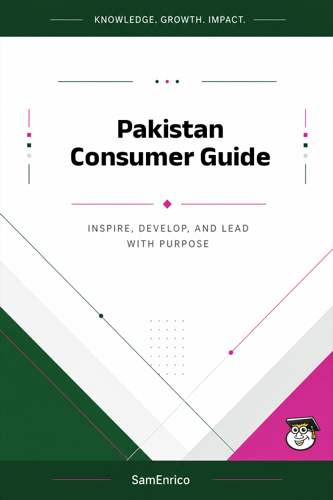
Pakistan Consumer Guide
Track household spending amid political instabilit
by Hutto Ariel
Track household spending amid political instability and IMF program conditions.
Formats
About this book
Free sample
Chapter 1: The Silent Collapse...–- For most of Pakistan’s history, the middle class was celebrated as the backbone of the nation—the salaried professionals, the small business owners, the teachers, the engineers, the clerks who kept the country running while dreaming of a better future for their children. That backbone is now fracturing. Not with a dramatic crash, but with a quiet, relentless erosion that happens every time you open your wallet. This chapter dismantles the official narrative of economic “stabilization” by showing that while macro indicators—foreign reserves, current account deficits, stock market indices—may improve, the Pakistani middle class is experiencing a silent collapse. The crisis you are living through is not your fault, but understanding its mechanics is the first step toward surviving it.The Distributional Crisis: Who Really Pays the Price?Walk into any government office or multinational corporation in Pakistan, and you will find salaried employees whose taxes are deducted at source, every single month, without fail.
These are the documented workers—the 2.5 million souls who file tax returns in a nation of 240 million. They are joined by small business owners who maintain proper books, pay sales tax, and register with the Federal Board of Revenue (FBR) because they supply to formal sector companies or seek bank financing. Together, this group now bears over 42% of the national tax burden, according to the FBR’s own annual reports and confirmed by IMF staff reports.Now step into the parallel economy that exists on every street corner. The wholesale cloth merchant in Karachi’s Bolton Market who deals only in cash. The real estate developer in Lahore’s DHA who registers his sale at half the actual price.
The agricultural landowner in rural Punjab who pays zero income tax on his crops. The retail shop in Islamabad’s F-10 Markaz who smiles and says “no receipt, five percent discount.” This is the informal economy—retail, agriculture, real estate, construction—and it remains largely untaxed. The IMF’s own reports consistently note that Pakistan’s tax-to-GDP ratio hovers around 9–10%, one of the lowest in the world, yet the burden falls disproportionately…
This is the end of the free sample. Get the eBook to keep going. Buy now
Contents
- Chapter 1
- Chapter 2
- Chapter 3
- Chapter 4
- Chapter 5
- Chapter 6
- Chapter 7
- Chapter 8
- Chapter 9
- Chapter 10
- Chapter 11
- Chapter 12
Details
- Author
- Hutto Ariel
- Publisher
- SamEnrico
- Language
- English
- Genre
- Non-Fiction, Forecast & Outlook, Pakistan
- Released
- 2026-06-08
- Pages (approx.)
- 136
- Available as
- eBook, Audiobook

Read better in the ZLOADR app
Your eBooks on your phone or tablet. Sign in with your SamEnrico account and start reading.
More by Hutto Ariel
 Stress And Type 2 DiabetesHutto Ariel$11.99
 Loci for Student SuccessHutto Ariel$11.99
 Sexual Trauma Trigger RecoveryHutto Ariel$11.99
 Influence for Healthcare ProvidersHutto Ariel$11.99
 The Great Emoji War: How a Tiny Symbol Sparked a Global DebateHutto Ariel$11.99
 Understanding PachydermoperiostosisHutto Ariel$17.99
 Lead Generation First CampaignHutto Ariel$12.99
 David Solomon InsightsHutto Ariel$12.99
 How to Start a Abaca and other Vegetable Textile Fibre Growing Business (Beginners Guide)Hutto Ariel$11.99
 AWS Architect PermanentHutto Ariel$11.99
You may also like
 Hong Kong Handover 1997Dunn Johnnie$11.99
 Zumba For Postnatal Recovery CourseNeal Christian$11.99
 Zumba for BeginnersLadner Nikia$11.99
 YouTube Comment Mining GuideHumes Pandora$12.99
 Worry Box MeditationCarlin Rudy$11.99
 Workplace Stress MeditationNguyen Lynn$11.99
 Workplace Stress and Sleep RepairHawley Ivory$11.99
 Workplace Perfectionism CureDelaney Jeffry$11.99
 Workplace Injustice Anger GuideWallen Isabelle$11.99
 Work Addiction and Burnout LinkGreenwood Ester$11.99
 Women in Yoga and WellnessBeattie Galina$11.99
 Women in Stand Up ComedyChun Evangeline$11.99