
Non-FictionStudent's ShortcutHumanities
Humanities PhD Without Papers eBook
Admits to humanities doctoral programs where writi
by Niles Freeda
Admits to humanities doctoral programs where writing sample and language skills outweigh publication records.
Formats
Free sample
Chapter 1: The Publication Trap--Every year, thousands of brilliant humanities students make the same catastrophic mistake. They spend their junior and senior years chasing conference presentations, undergraduate journal acceptances, and the elusive currency they believe will open the gates to top doctoral programs: publications. They skip seminars to revise articles for student-edited journals with readerships of fifty. They pay submission fees to predatory conferences that will accept any abstract with a footnote. They list their CVs with proceedings from the "Annual Undergraduate Research Symposium on Interdisciplinary Approaches to Everything" and believe they have built a competitive application.They are wrong.
And worse—they are actively harming their chances.This chapter dismantles the most persistent myth in humanities graduate admissions: the belief that undergraduate publications are necessary, or even helpful, for admission to top-twenty Ph D programs in Comparative Literature, History, English, Anthropology, and related fields. Drawing on internal admissions data, publicly available rubrics from leading programs, and the United Kingdom Council for Graduate Education's comprehensive report on doctoral admissions, I will show you why the "publish or perish" mindset is a STEM import that has no place in humanities admissions—and why a single, devastatingly good twenty-page seminar paper will consistently beat a CV crowded with three conference proceedings and a second-author note in an undergraduate journal.But let me be clear from the outset, because previous guides have gotten this wrong: undergraduate publications are not a red flag. You do not need to hide them. You do not need to apologize for them. The argument of this book is not that publications will hurt you.
The argument is that they will not help you nearly as much as you think, and the time you spend chasing them is time stolen from the only thing that actually matters: your writing sample.This is the Publication Trap. And this chapter will teach you how to escape it.The STEM Invasion: How Humanities Admissions Borrowed the Wrong Model To understand why undergraduate publications do not matter in the humanities, you must first understand why they matter enormously in the sciences. A first-author paper in a peer-reviewed STEM journal at age twenty-two is not merely a credential; it is evidence of something real and transferable. Laboratory science operates on a model of distributed production. An undergraduate who contributes to a Nature paper has likely performed replicable, verifiable labor—running gels, coding data, maintaining animal colonies—that translates directly to the skills required for doctoral research.
The paper is not the point. The paper is a byproduct of the training.STEM admissions committees read publications as proxies for three things: technical competence, laboratory citizenship, and the ability to complete a project under supervision. A publication record says, in effect, "This student has already done what they will do for five more years, and they have done it competently."Humanities research does not work this way. A humanities Ph D is not five more years of undergraduate conference presentations. The dissertation is not a longer version of the term paper.
The skills that produce an undergraduate publication—identifying a manageable topic, summarizing secondary literature, presenting at a low-stakes symposium—are not the skills that produce a dissertation. In fact, the habits that generate undergraduate publications (rapid turnaround, shallow engagement, reliance on faculty hand-holding) are often directly opposed to the habits required for doctoral research (sustained argumentation, theoretical sophistication, intellectual independence).The UKCGE report, which surveyed doctoral admissions across twenty-three universities in the United Kingdom and North America, found that humanities programs consistently ranked "publication record" as the least important factor in admissions decisions. The most important factors, in order, were: (1) the quality of the writing sample, (2) the coherence of the research proposal or statement of purpose, (3) letters of recommendation from faculty who could speak to the applicant's analytical abilities, and (4) demonstrated language proficiency. Publications did not crack the top five.One director of graduate studies at a top-ten history program, quoted anonymously in the report, put it bluntly: "When I see an undergraduate with three publications, I assume one of two things. Either their advisor is padding their CV irresponsibly, or the student is publishing in venues that will accept anything.
Neither assumption helps the applicant."The Harm of Low-Stakes Publishing Let us distinguish carefully between kinds of publications. If you have published a peer-reviewed article in a legitimate, field-recognized journal as an undergraduate—something that happens perhaps fifty times a year across all humanities disciplines—then congratulations. You are an outlier. That publication will not hurt you, though it will not help you as much as you hope. Admissions committees will note it, set it aside, and return to your writing sample.But the vast majority of undergraduate publications are not this.
They are conference proceedings from regional undergraduate symposia. They are notes in student-edited journals that do not practice blind peer review. They are book reviews. They are "research posters" presented to a room of other anxious undergraduates. These are not publications in any meaningful sense of the term.
They are line items.The harm is not that committees penalize these line items. The harm is opportunity cost. Every weekend you spent revising a paper for the Undergraduate Journal of Things is a weekend you did not spend rereading the secondary literature on your chosen text. Every hour you spent formatting your abstract for a conference in a hotel ballroom is an hour you did not spend practicing your extemporaneous speaking for the oral sample that some programs now require. Every dollar you paid in submission fees is a dollar you did not spend on language tutoring or test preparation.One applicant I worked with, whom we will call Sarah, had three conference presentations, a second-author publication in a student journal, and a glowing letter from a professor who had supervised her "research dissemination." She did not get into any of the seven programs to which she applied.
When I reviewed her materials, the problem was immediately apparent: her writing sample was a twenty-page paper that read like a competent undergraduate summary of existing scholarship. It had no argument. It had no stakes. It had no "So what?" She had spent her energy presenting the paper at three conferences rather than revising it into something that could start a conversation.Another applicant, whom we will call James, had no publications whatsoever. He had a single term paper from a senior seminar on Victorian literature.
But that paper had a thesis: "Against the prevailing reading of George Eliot's Middlemarch as a novel of failed idealism, I argue that Dorothea Brooke's apparent failures are the novel's method for redefining success as persistence rather than achievement." The paper was twenty-three pages. It cited secondary literature from 1985 to 2020. It named the scholars it was arguing with. James was admitted to three top-ten programs.The difference was not publications. The difference was the writing sample.What the UKCGE Report Actually Says (And What It Doesn't)The United Kingdom Council for Graduate Education's 2022 report, Doctoral Admissions in the Arts and Humanities, is the most comprehensive study of its kind.
It surveyed 127 doctoral programs across English, History, Philosophy, Classics, and Comparative Literature. It analyzed 1,843 applications. It interviewed forty-seven directors…
This is the end of the free sample. Get the eBook to keep going. Buy now
About this book
Details
- Author
- Niles Freeda
- Publisher
- SamEnrico
- Language
- English
- Genre
- Non-Fiction, Student's Shortcut, Humanities
- Released
- 2026-05-26
- Pages (approx.)
- 142
- Available as
- eBook, Audiobook

Read better in the ZLOADR app
Your eBooks on your phone or tablet. Sign in with your SamEnrico account and start reading.
More by Niles Freeda
 Investment Banker Stress GuideNiles Freeda$11.99
 The College Application AnxietyNiles Freeda$11.99
 The Climate Tech Event Planner GuideNiles Freeda$11.99
 Dreams And Drowning TraumaNiles Freeda$11.99
 DBT For 911 DispatchersNiles Freeda$11.99
 The Silent Kicks: Europe's Forgotten Football PioneersNiles Freeda$11.99
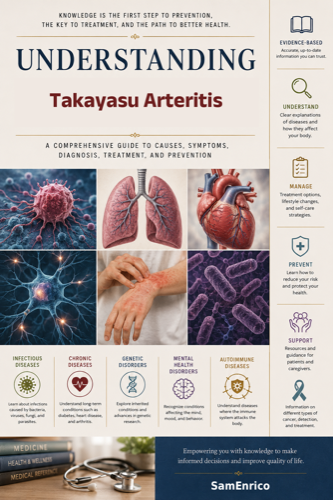 Understanding Takayasu ArteritisNiles Freeda$17.99
 Karakul Sheep BreedingNiles Freeda$11.99
 Pop Up Design London GuideNiles Freeda$12.99
 How to Start a Pancake Making Business (Beginners Guide)Niles Freeda$11.99
You may also like
 Hong Kong Handover 1997Dunn Johnnie$11.99
 Zumba For Postnatal Recovery CourseNeal Christian$11.99
 Zumba for BeginnersLadner Nikia$11.99
 YouTube Comment Mining GuideHumes Pandora$12.99
 Worry Box MeditationCarlin Rudy$11.99
 Workplace Stress MeditationNguyen Lynn$11.99
 Workplace Stress and Sleep RepairHawley Ivory$11.99
 Workplace Perfectionism CureDelaney Jeffry$11.99
 Workplace Injustice Anger GuideWallen Isabelle$11.99
 Work Addiction and Burnout LinkGreenwood Ester$11.99
 Women in Yoga and WellnessBeattie Galina$11.99
 Women in Stand Up ComedyChun Evangeline$11.99