
Non-FictionBusiness BriefRemittance Exits
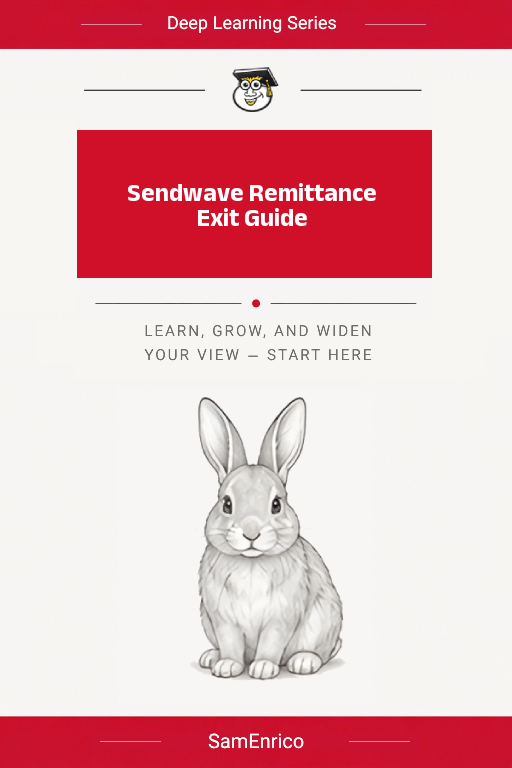
Sendwave Remittance Exit Guide
Exit remittance startup via global player using Se
by Robb Ardis
Exit remittance startup via global player using Sendwave's acquisition by Zepz for diaspora money flows.
Formats
About this book
Free sample
Chapter 1: The $500 Million Question--–- On a humid November morning in 2020, the fintech world received a notification that would reshape the diaspora money movement forever. The headline was deceptively simple: "World Remit acquires Sendwave for $500 million." For most observers, it was just another consolidation in a crowded remittance market. But for those who understood what had actually happened, the news landed like a thunderclap. A five-year-old startup, founded by two Harvard classmates with no prior experience in remittances, had just sold itself to its biggest competitor for half a billion dollars. And the real story wasn't the price tag — it was what that price tag revealed about the future of cross-border finance.The Valuation That Defied Convention The 500millionfiguredemandsscrutinynotbecauseitwasunusuallyhighforafintechacquisition—inthefrothymarketof2020−2021,largerdealswereannouncedweekly—butbecauseofwhat Sendwavehadachievedtoreachthatnumber.Atthetimeofacquisition,Sendwavewasprocessingapproximately500 million figure demands scrutiny not because it was unusually high for a fintech acquisition — in the frothy market of 2020-2021, larger deals were announced weekly — but because of what Sendwave had achieved to reach that number.
At the time of acquisition, Sendwave was processing approximately 500millionfiguredemandsscrutinynotbecauseitwasunusuallyhighforafintechacquisition—inthefrothymarketof2020−2021,largerdealswereannouncedweekly—butbecauseofwhat Sendwavehadachievedtoreachthatnumber.Atthetimeofacquisition,Sendwavewasprocessingapproximately2 billion in annualized transaction volume. Using standard fintech valuation metrics, that implied a valuation multiple of roughly 0.25x transaction volume. However, the more telling metric was revenue. Sendwave had perfected a pricing model that generated between 1.5% and 3% net revenue on each transaction, depending on the corridor. That placed its annualized revenue in the range of 40millionto40 million to 40millionto60 million at the time of the deal.A 500millionacquisitionpriceagainst500 million acquisition price against 500millionacquisitionpriceagainst50 million in revenue yields a 10x revenue multiple.
In the context of 2020 fintech M&A, that was respectable but not extraordinary. What made the Sendwave deal remarkable was not the multiple but the strategic premium embedded within it. Financial acquirers — private equity firms looking for cash flow — typically pay 2x to 4x revenue. Strategic acquirers, buying capabilities they cannot replicate internally, pay 5x to 15x revenue. The Sendwave deal sat firmly in the strategic category because Zepz (then operating as World Remit) was not buying Sendwave's revenue stream.
It was buying Sendwave's density.Breaking Down the Premium Let us parse the valuation with precision. A financial buyer looking at…
This is the end of the free sample. Get the eBook to keep going. Buy now
Contents
- Chapter 1
- Chapter 2
- Chapter 3
- Chapter 4
- Chapter 5
- Chapter 6
- Chapter 7
- Chapter 8
- Chapter 9
- Chapter 10
- Chapter 11
- Chapter 12
Details
- Author
- Robb Ardis
- Publisher
- SamEnrico
- Language
- English
- Genre
- Non-Fiction, Business Brief, Remittance Exits
- Released
- 2026-05-30
- Pages (approx.)
- 140
- Available as
- eBook, Audiobook

Read better in the ZLOADR app
Your eBooks on your phone or tablet. Sign in with your SamEnrico account and start reading.
More by Robb Ardis
 Cave Retreat VisualizationRobb Ardis$11.99
 Scramble Sahara Desert BordersRobb Ardis$11.99
 Hydroxyzine AnxietyRobb Ardis$11.99
 GAD And Time ManagementRobb Ardis$11.99
 Neurodivergent ResilienceRobb Ardis$11.99
 Small Talk for Doctors VisitsRobb Ardis$11.99
 Parent Anger and AnxietyRobb Ardis$11.99
 Disaster Loss Tax Strategies WorkbookRobb Ardis$11.99
 The Surgeon's Heart: Love and Discovery in Renaissance FlorenceRobb Ardis$11.99
 The Storm Over Malacca: Portugal’s Fight for the Spice Kingdoms (1511)Robb Ardis$11.99
 How to Produce Heat Insulation MaterialsRobb Ardis$11.99
 Vendor Code of Conduct TemplateRobb Ardis$12.99
You may also like
 Hong Kong Handover 1997Dunn Johnnie$11.99
 Zumba For Postnatal Recovery CourseNeal Christian$11.99
 Zumba for BeginnersLadner Nikia$11.99
 YouTube Comment Mining GuideHumes Pandora$12.99
 Worry Box MeditationCarlin Rudy$11.99
 Workplace Stress MeditationNguyen Lynn$11.99
 Workplace Stress and Sleep RepairHawley Ivory$11.99
 Workplace Perfectionism CureDelaney Jeffry$11.99
 Workplace Injustice Anger GuideWallen Isabelle$11.99
 Work Addiction and Burnout LinkGreenwood Ester$11.99
 Women in Yoga and WellnessBeattie Galina$11.99
 Women in Stand Up ComedyChun Evangeline$11.99