
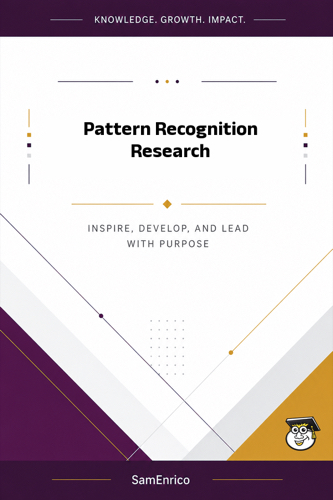
Pattern Recognition Research Audiobook
undefined
by Muller Ceola
undefined
Formats
Free sample
Chapter 1: The Graveyard Shift--–- Every successful pattern recognition researcher has a graveyard. It is not a physical place, but a mental archive of models that failed, datasets that lied, and assumptions that crumbled under the weight of reality. In this graveyard lie the corpses of deep neural networks trained on too few examples, the twisted remains of support vector machines applied to the wrong kind of data, and the ghosts of Bayesian classifiers whose priors were pure fantasy. The headstone on this graveyard reads: “Here lies the belief that one algorithm rules them all.”This chapter is not about a specific algorithm. It is about something far more important and far more frequently ignored: the fundamental realization that pattern recognition is not a search for the best tool, but a process of matching your problem’s constraints to a family of solutions.
The single most expensive mistake in this field—measured in wasted GPU hours, broken deadlines, and abandoned products—is choosing an algorithm before understanding the landscape of your data and the nature of your question.We begin not with mathematics, but with a story.The Two Million Dollar Mistake In 2018, a well-funded healthcare startup set out to build a system that could detect early-stage diabetic retinopathy from retinal scans. They had 5,000 labeled images—a modest but respectable dataset. They had three Ph Ds. They had a cluster of NVIDIA GPUs. And they had a conviction: deep learning was the only serious approach to image classification.They spent six months building, tuning, and training a convolutional neural network.
They tried Res Net, Inception, and their own custom architecture. They experimented with learning rates, batch normalization, and dropout. They achieved 92 percent accuracy on their validation set and celebrated.Then they tested on a small batch of real-world images from a partner clinic. Accuracy plummeted to 68 percent. The reason was not overfitting in the traditional sense.
The problem was that their training data had been preprocessed by a single technician who had subtly aligned and cropped every image. The model had learned to recognize the technician’s preprocessing artifacts, not the pathology of retinopathy. The startup had violated the most basic principle of pattern recognition: understanding the pipeline from raw data to feature representation.They shut down six months later. Their graveyard now contained a deep learning model that was architecturally perfect and practically useless.This book exists to prevent you from building…
This is the end of the free sample. Get the Audiobook to keep going. Buy now
About this book
Details
- Author
- Muller Ceola
- Publisher
- SamEnrico
- Language
- English
- Genre
- research, Self-Help / Science
- Released
- 2026-06-07
- Pages (approx.)
- 145
- Available as
- eBook, Audiobook

Listen in the VoxFlicks app
Audiobooks and audio dramas wherever you go. Sign in with your SamEnrico account and press play.
More by Muller Ceola
 Gacy's Co conspiratorsMuller Ceola$11.99
 Empowerment for ExecutivesMuller Ceola$11.99
 Cocaine Recovery for AthletesMuller Ceola$11.99
 FCPA Gifts Travel EnforcementMuller Ceola$11.99
 Autism Workplace AccommodationsMuller Ceola$11.99
 Overcoming Cam Site AddictionMuller Ceola$11.99
 The Catholic Inquisitors ProfilesMuller Ceola$11.99
 TM For Expectant MothersMuller Ceola$11.99
 Paddle to the Past: The Prehistoric Canoe Pioneers of EuropeMuller Ceola$11.99
 Crown of the Forgotten: The Secret Coronation of a Lost QueenMuller Ceola$11.99
 The Ghost of Operation AzorianMuller Ceola$11.99
 Growing PteleaMuller Ceola$11.99
You may also like
 Pain Meditation ResearchGiron Nelida$11.99
 Interruption ResearchMcintire Raylene$11.99
 Nightmare Research GuideOrellana Tamika$11.99
 Goal Setting ResearchLopez Todd$11.99
 Chunking Research ReviewCostello Yuri$11.99
 Morning Routine ResearchHammett Corie$11.99
 Scripting ResearchStowe Junior$11.99
 Remote Work ResearchGordon Vera$11.99
 Memory Palace ResearchFox Heidi$11.99
 Habit Research GuideKoenig Margrett$11.99
 Grit Research GuideGardner Tabitha$11.99
 Anticipatory Grief ResearchSelby Ela$11.99