
Non-FictionHealth & WellnessContraception
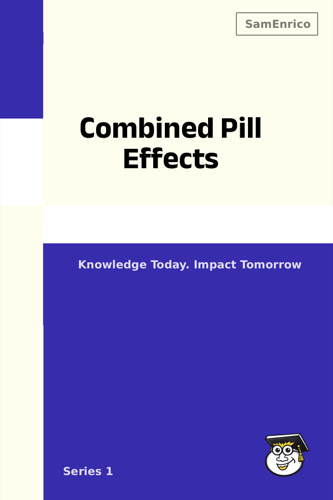
Combined Pill Effects
Explains estrogen progestin impact on mood and lib
by Burgos Odell
Explains estrogen progestin impact on mood and libido.
Formats
About this book
Free sample
Chapter 1: The Brain Drug...--–- Most women who start the combined oral contraceptive pill believe they are taking a medication that affects only their ovaries and uterus. They are wrong. The pill is a neuroendocrine drug—a chemical that fundamentally alters brain chemistry, stress responses, emotional processing, and sexual desire—with pregnancy prevention as a secondary consequence, not the primary mechanism. This misunderstanding is not accidental; it is the result of decades of medical marketing that has deliberately framed the pill as a localized reproductive tool rather than what it actually is: a daily dose of synthetic hormones that cross the blood-brain barrier and reshape the architecture of mood, memory, and motivation.The Great Misconception When a woman is prescribed the combined pill—typically a brand name like Yaz, Yasmin, Seasonique, Lo Loestrin Fe, or any of the dozens of generics containing ethinylestradiol and a progestin—she is handed a package insert that lists "mood changes" and "decreased libido" as side effects, buried somewhere between nausea and breast tenderness. What she is not told is that these "side effects" are not rare outliers.
They are predictable, mechanistically inevitable consequences of administering synthetic sex hormones to a brain that evolved to expect natural, cyclical fluctuations of estradiol and progesterone.The language of "side effects" is itself a deception. A side effect implies an unintended, secondary consequence of a drug whose primary action is elsewhere. But the pill's primary action is on the brain. The pill works by suppressing gonadotropin-releasing hormone (Gn RH) from the hypothalamus, which in turn suppresses luteinizing hormone (LH) and follicle-stimulating hormone (FSH) from the pituitary gland. Without the mid-cycle LH surge, ovulation does not occur.
This entire cascade is orchestrated by the brain. The ovaries are passive recipients of brain signals. To stop ovulation, the pill must first alter brain function. Everything else—the mood changes, the libido loss, the flatness, the anxiety or its absence—is not a side effect. It is the main event.The HPG Axis: Your Brain's Reproductive Command Center To understand why the pill is a brain drug, you must first understand the hypothalamic-pituitary-gonadal…
This is the end of the free sample. Get the eBook to keep going. Buy now
Contents
- Chapter 1
- Chapter 2
- Chapter 3
- Chapter 4
- Chapter 5
- Chapter 6
- Chapter 7
- Chapter 8
- Chapter 9
- Chapter 10
- Chapter 11
- Chapter 12
Details
- Author
- Burgos Odell
- Publisher
- SamEnrico
- Language
- English
- Genre
- Non-Fiction, Health & Wellness, Contraception
- Released
- 2026-06-06
- Pages (approx.)
- 159
- Available as
- eBook, Audiobook

Read better in the ZLOADR app
Your eBooks on your phone or tablet. Sign in with your SamEnrico account and start reading.
More by Burgos Odell
 Female Screenwriters HollywoodBurgos Odell$11.99
 Brief Interventions for Cannabis MisuseBurgos Odell$11.99
 Singapore Green IncentivesBurgos Odell$11.99
 Caregiver Depression PreventionBurgos Odell$11.99
 Rajneesh Private PlaneBurgos Odell$11.99
 Dubai Graduate ProgramsBurgos Odell$11.99
 Course Completion BadgesBurgos Odell$11.99
 The Enlightenment's Cure: Reason Against the PlagueBurgos Odell$11.99
 The Nobel Crown: Black Geniuses Who Transformed ScienceBurgos Odell$11.99
 How to Produce Garden Pot Saucers and TraysBurgos Odell$11.99
 Scholarship English Test PreparationBurgos Odell$12.99
 Agile User Story Splitting PromptsBurgos Odell$12.99
You may also like
 Hong Kong Handover 1997Dunn Johnnie$11.99
 Zumba For Postnatal Recovery CourseNeal Christian$11.99
 Zumba for BeginnersLadner Nikia$11.99
 YouTube Comment Mining GuideHumes Pandora$12.99
 Worry Box MeditationCarlin Rudy$11.99
 Workplace Stress MeditationNguyen Lynn$11.99
 Workplace Stress and Sleep RepairHawley Ivory$11.99
 Workplace Perfectionism CureDelaney Jeffry$11.99
 Workplace Injustice Anger GuideWallen Isabelle$11.99
 Work Addiction and Burnout LinkGreenwood Ester$11.99
 Women in Yoga and WellnessBeattie Galina$11.99
 Women in Stand Up ComedyChun Evangeline$11.99