
Non-FictionHealth & WellnessContraception
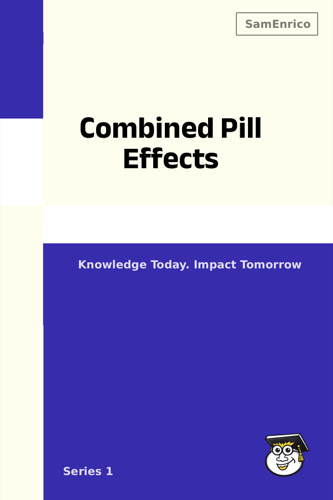
Combined Pill Effects eBook
Explains estrogen progestin impact on mood and lib
by Burgos Odell
Explains estrogen progestin impact on mood and libido.
Formats
Free sample
Chapter 1: The Brain Drug...--–- Most women who start the combined oral contraceptive pill believe they are taking a medication that affects only their ovaries and uterus. They are wrong. The pill is a neuroendocrine drug—a chemical that fundamentally alters brain chemistry, stress responses, emotional processing, and sexual desire—with pregnancy prevention as a secondary consequence, not the primary mechanism. This misunderstanding is not accidental; it is the result of decades of medical marketing that has deliberately framed the pill as a localized reproductive tool rather than what it actually is: a daily dose of synthetic hormones that cross the blood-brain barrier and reshape the architecture of mood, memory, and motivation.The Great Misconception When a woman is prescribed the combined pill—typically a brand name like Yaz, Yasmin, Seasonique, Lo Loestrin Fe, or any of the dozens of generics containing ethinylestradiol and a progestin—she is handed a package insert that lists "mood changes" and "decreased libido" as side effects, buried somewhere between nausea and breast tenderness. What she is not told is that these "side effects" are not rare outliers.
They are predictable, mechanistically inevitable consequences of administering synthetic sex hormones to a brain that evolved to expect natural, cyclical fluctuations of estradiol and progesterone.The language of "side effects" is itself a deception. A side effect implies an unintended, secondary consequence of a drug whose primary action is elsewhere. But the pill's primary action is on the brain. The pill works by suppressing gonadotropin-releasing hormone (Gn RH) from the hypothalamus, which in turn suppresses luteinizing hormone (LH) and follicle-stimulating hormone (FSH) from the pituitary gland. Without the mid-cycle LH surge, ovulation does not occur.
This entire cascade is orchestrated by the brain. The ovaries are passive recipients of brain signals. To stop ovulation, the pill must first alter brain function. Everything else—the mood changes, the libido loss, the flatness, the anxiety or its absence—is not a side effect. It is the main event.The HPG Axis: Your Brain's Reproductive Command Center To understand why the pill is a brain drug, you must first understand the hypothalamic-pituitary-gonadal (HPG) axis.
This is the body's master reproductive circuit, and it operates like a thermostat with multiple feedback loops.The hypothalamus, a almond-sized structure deep in the brain, produces Gn RH in pulses. These pulses are not constant; they vary in frequency and amplitude depending on estrogen levels, stress, sleep, nutrition, and even light exposure. Gn RH travels a short distance to the pituitary gland, which responds by releasing LH and FSH into the bloodstream. These hormones travel to the ovaries, stimulating estrogen and progesterone production. Those ovarian hormones then travel back to the brain, telling the hypothalamus to speed up, slow down, or change the pattern of Gn RH pulses.In a natural cycle, this system produces dynamic, wave-like patterns.
Estradiol rises in the first half of the cycle (follicular phase), triggering the LH surge that causes ovulation. Then progesterone rises in the second half (luteal phase), preparing the uterus for possible pregnancy. When pregnancy does not occur, hormone levels crash, and menstruation begins.The pill flattens this entire dynamic system. By providing a steady, daily dose of synthetic estrogen (typically ethinylestradiol) and a synthetic progestin, the pill tells the hypothalamus: "We already have enough hormones. Stop producing Gn RH." The pituitary receives this signal and drastically reduces LH and FSH.
Without the LH surge, the ovaries remain dormant. No ovulation. No natural cycle. No fluctuation.But the brain does not stop receiving hormonal signals just because those signals are synthetic. The hypothalamus, the amygdala, the prefrontal cortex, the hippocampus—all of these regions are densely populated with estrogen and progestin receptors.
When you take the pill, you are dosing these brain regions every single day with molecules that are similar to, but not identical to, the hormones your brain evolved to expect.Synthetic vs. Natural: Why Molecular Mimicry Is Not Sameness One of the most dangerous oversimplifications in reproductive medicine is the claim that synthetic hormones are "the same as" natural hormones. They are not. Ethinylestradiol (EE), the estrogen used in almost all combined pills, is not estradiol (E2), the estrogen your ovaries produce. The difference matters enormously.Estradiol has a half-life of approximately 1-2 hours.
It rises and falls rapidly, binding to receptors and then clearing quickly. Your brain is designed for this rapid on-off signaling. Ethinylestradiol, by contrast, has a half-life of 10-20 hours. It persists. Moreover, EE is 100 times more potent at the estrogen receptor than natural estradiol.
This means that a typical 20-30 microgram dose of EE delivers a signal that is not only constant but also superphysiologically strong.The chemical modification that makes EE orally bioavailable—an ethinyl group at the 17-alpha position—also changes how it interacts with liver enzymes, clotting factors, and brain receptors. Natural estradiol has neuroprotective properties: it supports synaptic plasticity, enhances serotonin production, and protects against cognitive decline. Synthetic EE does not replicate these benefits. In some contexts, it may reverse them.Similarly, the progestins in combined pills are not progesterone. Progesterone is a natural hormone with a calming, sometimes sedating effect via its metabolites that act on GABA-A receptors.
Synthetic progestins vary wildly in their effects. Some (like levonorgestrel) are androgenic, meaning they mimic testosterone and can worsen acne, hair loss, and irritability. Others (like drospirenone) are anti-androgenic, blocking testosterone and often reducing libido. None are identical to natural progesterone, and none produce the same neurochemical profile as a natural luteal phase.Expecting your brain to respond identically to synthetic hormones as it does to natural ones is like expecting your digestive system to process a protein shake and a steak the same way. The macronutrients are similar.
The experience is not.The Pill Cycle vs. The Natural Cycle The natural menstrual cycle is not a defect waiting to be corrected. It is a complex biological rhythm that coordinates brain, behavior, metabolism, immune function, and reproduction. Across the cycle, estrogen and progesterone fluctuate in patterns that have been conserved across millions of years of mammalian evolution.During the follicular phase (days 1-14, approximately), rising estradiol enhances mood, increases verbal fluency, sharpens working memory, and amplifies the rewarding properties of dopamine. This is why many women feel more energetic, social, and creative in the first half of their cycle.
Just before ovulation, the LH surge triggers a peak in sexual desire—an evolved mechanism to promote conception.During the luteal phase (days 15-28), rising progesterone and its metabolite allopregnanolone act on GABA-A receptors to produce a calming, anxiolytic effect. For some women, this is pleasant; for others, the shift triggers premenstrual syndrome (PMS) or premenstrual dysphoric disorder (PMDD). Even in PMDD, however, the problem is not the presence of hormones but the brain's sensitivity to change.The pill replaces this dynamic wave with a flat line. Instead of rising and falling, estrogen and progestin remain constant for 21 days (or 24 days, depending on the formulation), followed by 7 days (or 4 days) of placebo pills or no pills, during which a withdrawal bleed occurs. This withdrawal bleed is not a period; it is a pharmacological artifact.
There is no ovulation, no corpus luteum, no natural progesterone decline. The bleeding is caused by the sudden drop in…
This is the end of the free sample. Get the eBook to keep going. Buy now
About this book
Details
- Author
- Burgos Odell
- Publisher
- SamEnrico
- Language
- English
- Genre
- Non-Fiction, Health & Wellness, Contraception
- Released
- 2026-06-06
- Pages (approx.)
- 159
- Available as
- eBook, Audiobook

Read better in the ZLOADR app
Your eBooks on your phone or tablet. Sign in with your SamEnrico account and start reading.
More by Burgos Odell
 Female Screenwriters HollywoodBurgos Odell$11.99
 Brief Interventions for Cannabis MisuseBurgos Odell$11.99
 Singapore Green IncentivesBurgos Odell$11.99
 Caregiver Depression PreventionBurgos Odell$11.99
 Rajneesh Private PlaneBurgos Odell$11.99
 Dubai Graduate ProgramsBurgos Odell$11.99
 Course Completion BadgesBurgos Odell$11.99
 The Enlightenment's Cure: Reason Against the PlagueBurgos Odell$11.99
 The Nobel Crown: Black Geniuses Who Transformed ScienceBurgos Odell$11.99
 How to Produce Garden Pot Saucers and TraysBurgos Odell$11.99
 Scholarship English Test PreparationBurgos Odell$12.99
 Agile User Story Splitting PromptsBurgos Odell$12.99
You may also like
 Hong Kong Handover 1997Dunn Johnnie$11.99
 Zumba For Postnatal Recovery CourseNeal Christian$11.99
 Zumba for BeginnersLadner Nikia$11.99
 YouTube Comment Mining GuideHumes Pandora$12.99
 Worry Box MeditationCarlin Rudy$11.99
 Workplace Stress MeditationNguyen Lynn$11.99
 Workplace Stress and Sleep RepairHawley Ivory$11.99
 Workplace Perfectionism CureDelaney Jeffry$11.99
 Workplace Injustice Anger GuideWallen Isabelle$11.99
 Work Addiction and Burnout LinkGreenwood Ester$11.99
 Women in Yoga and WellnessBeattie Galina$11.99
 Women in Stand Up ComedyChun Evangeline$11.99