
Non-FictionInformativeEducational
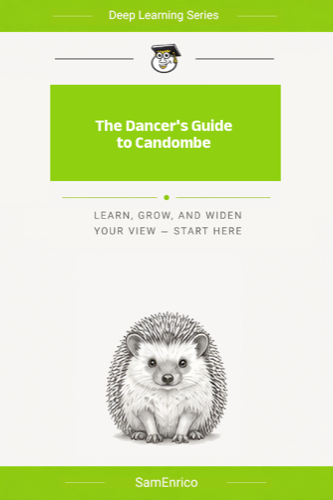
The Dancer's Guide to Candombe
This publication, published by SamEnrico, covers T
by Chapa Hien
This publication, published by SamEnrico, covers The Dancer's Guide to Candombe
Formats
About this book
Free sample
Chapter 1: The Kongo Legacy--The drum does not forget. Before there was Montevideo, before there was slavery, before there was the Americas at all, there was the Kongo Kingdom—a vast and sophisticated civilization that stretched across Central Africa, from the Atlantic coast deep into the interior. The men and women who would one day create Candombe did not know they were creating anything. They were simply living, drumming, and dancing as their ancestors had done for centuries. They could not have imagined that their movements would cross an ocean, survive centuries of brutality, and eventually become the heartbeat of a nation on the other side of the world.
But that is precisely what happened. This chapter is the story of that journey—not a dry recitation of dates and names, but an excavation of the living memory that still pulses through every Candombe step. To dance Candombe is to inherit that memory. And to inherit it, you must first understand where it came from.The Kongo Kingdom Before the Boats At its height in the fifteenth and sixteenth centuries, the Kongo Kingdom was one of the most powerful and organized states in West Central Africa. It stretched across what is now northern Angola, the western Democratic Republic of Congo, the Republic of Congo, and Gabon.
Its capital, Mbanza Kongo, was a city of tens of thousands of people, with a centralized government, a royal court, a system of provincial governors, and a sophisticated spiritual and artistic culture. The Kongo people were farmers, fishermen, traders, and artisans. They spoke Kikongo, a language rich in nuance and metaphor. And they drummed.The drums of the Kongo were not entertainment. They were communication.
Different drums carried different voices: the ngoma was the large, deep drum played at royal ceremonies and community gatherings; the ditumba was the medium drum used for dance events; the mukoku was the small, high-pitched drum that provided accents and flourishes. This three-drum configuration—large, medium, small—would survive the Middle Passage and become the piano, repique, and chico of Candombe. The names would change. The relationship would not.Kongo dances were similarly…
This is the end of the free sample. Get the eBook to keep going. Buy now
Contents
- Chapter 1
- Chapter 2
- Chapter 3
- Chapter 4
- Chapter 5
- Chapter 6
- Chapter 7
- Chapter 8
- Chapter 9
- Chapter 10
- Chapter 11
- Chapter 12
Details
- Author
- Chapa Hien
- Publisher
- SamEnrico
- Language
- English
- Genre
- Non-Fiction, Informative, Educational
- Released
- 2026-05-23
- Pages (approx.)
- 109
- Available as
- eBook, Audiobook

Read better in the ZLOADR app
Your eBooks on your phone or tablet. Sign in with your SamEnrico account and start reading.
More by Chapa Hien
 The Breath And Sensation IsolationChapa Hien$11.99
 Force Majeure Clause AbstractionChapa Hien$11.99
 Sleep Induction JourneyChapa Hien$11.99
 Earth Elder Ceremonial TeachingsChapa Hien$11.99
 Crime Scene Investigator GuideChapa Hien$11.99
 Postpartum Emotion DBTChapa Hien$11.99
 Kenya Youth Enterprise Grant GuideChapa Hien$11.99
 Sibling Incest HealingChapa Hien$11.99
 The Unseen Empire: How a Quiet Tech Giant Outmaneuvered Silicon ValleyChapa Hien$11.99
 The Jakarta Siege: 48 Hours That Shook the WorldChapa Hien$11.99
 Into the Heart of Nyiragongo: The Firewalkers of the CongoChapa Hien$11.99
 Remote Work Productivity SystemsChapa Hien$11.99
You may also like
 Hong Kong Handover 1997Dunn Johnnie$11.99
 Zumba For Postnatal Recovery CourseNeal Christian$11.99
 Zumba for BeginnersLadner Nikia$11.99
 YouTube Comment Mining GuideHumes Pandora$12.99
 Worry Box MeditationCarlin Rudy$11.99
 Workplace Stress MeditationNguyen Lynn$11.99
 Workplace Stress and Sleep RepairHawley Ivory$11.99
 Workplace Perfectionism CureDelaney Jeffry$11.99
 Workplace Injustice Anger GuideWallen Isabelle$11.99
 Work Addiction and Burnout LinkGreenwood Ester$11.99
 Women in Yoga and WellnessBeattie Galina$11.99
 Women in Stand Up ComedyChun Evangeline$11.99