
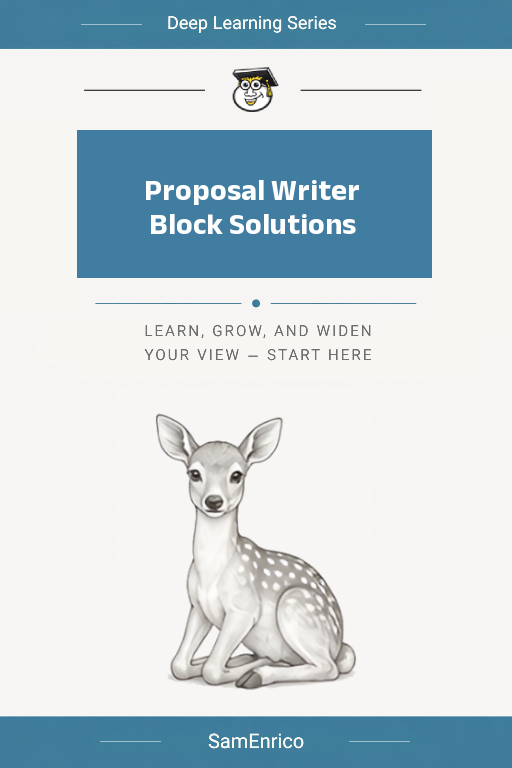
Non-FictionStudent's ShortcutWriter BlockProductivity
Proposal Writer Block Solutions eBook
Overcome writer's block when writing research prop
Overcome writer's block when writing research proposals with free writing prompts and structured outlining techniques.
Formats
Free sample
Chapter 1: The Two Monsters--When you sit down to write a research proposal and nothing comes out, the problem is almost never what you think it is.Most researchers believe they have a single, monolithic problem called "writer's block." They imagine it as a wall—something solid, immovable, and identical for everyone who hits it. They try the same solutions everyone recommends: wait for inspiration, push through with sheer willpower, or reorganize their desk for the fourth time. Nothing changes. The cursor keeps blinking. The page stays blank.
The deadline gets closer.The reason these standard solutions fail is simple but profound: writer's block is not one thing. It is two completely different things that look identical from the outside. And treating them the same way guarantees failure.This chapter draws a critical distinction that most writers miss their entire careers. You will learn to diagnose exactly which type of block you are experiencing—because the cure for one is poison for the other. By the end of this chapter, you will not only understand why you have been stuck.
You will know precisely what to do about it. And you will have a tool that works in the next fifteen minutes.The Day the Blank Page Stopped Being Scary Let me tell you about Dr. Sarah Chen. She was a third-year postdoc at a major research university, and she had seven weeks to submit an NIH R01 proposal. Her preliminary data was strong.
Her mentor was supportive. Her lab had the equipment and expertise. By every objective measure, she should have been writing.Instead, she spent three weeks moving files between folders.She would open her laptop at 8:00 AM, stare at the blank document, open her reference manager, close the reference manager, open the blank document again, check her email, read the same three news articles, reorganize her desktop icons, and somehow find herself at 5:00 PM having written exactly zero words. This happened every day. For three weeks.Sarah tried everything she knew.
She tried waiting for inspiration—it never came. She tried forcing herself to write—she produced two paragraphs, hated them both, and deleted them. She tried reading more papers—she downloaded forty-seven PDFs and felt even more overwhelmed. She tried changing her environment—she moved from her office to the library to a coffee shop, and the blank page followed her everywhere.The breakthrough came not from a new writing technique, but from a single question her mentor asked: "Do you actually know what you want to say, or are you afraid to say it?"Sarah realized she had been treating her block as a single problem. But the question forced her to see something she had been avoiding: she did not know her own hypothesis well enough to write it down.
She had beautiful preliminary data, but she had not done the hard work of figuring out what the data actually meant. She was trying to write a proposal without a clear argument. That was not writer's block. That was a knowledge gap dressed up as writer's block.Once she named the real problem, the solution became obvious. She stopped trying to write.
For one week, she did nothing but read, think, and talk through her ideas with colleagues. She created a one-page diagram of her argument. She wrote her hypothesis in three different ways until one felt right. Then she sat down to write again—and the words came easily.Sarah was suffering from what this book calls a Type 1 block. She did not know what to say.
But many researchers face the opposite problem: they know exactly what to say, but they are terrified to say it. They fear criticism. They fear being wrong. They fear that a reviewer will expose a flaw they suspect is there but hope no one notices. That is a Type 2 block, and it requires a completely different cure.The rest of this chapter will teach you to tell the difference.The Core Distinction: Two Monsters, Two Cures After working with hundreds of stuck researchers across dozens of institutions, I have observed a consistent pattern.
Writer's block splits cleanly into two categories. I call them the Two Monsters, not to be childish, but because naming them as external creatures helps writers stop blaming themselves.The First Monster: The Knowledge Gap Type 1 block occurs when you genuinely do not know what to say. This is not a failure of confidence or discipline. It is a failure of preparation. You have not done enough reading, thinking, or analyzing to have a clear argument.
The blank page is not the problem; it is merely the symptom.How do you know if the Knowledge Gap monster has you? Look for these signs:You cannot explain your research question to a colleague in two minutes without stumbling or contradicting yourself.You have many papers in your reference manager but no clear sense of which ones actually matter.When someone asks "What is your hypothesis?" you find yourself saying vague things like "We're looking at the relationship between X and Y" rather than making a specific, testable claim.You have beautiful data but no interpretation—you know what happened but not what it means.You keep reading "just one more paper" before you start writing, and the stack never seems to shrink.If these signs sound familiar, you are not a bad writer. You are an unprepared writer. The solution is not writing exercises or motivational speeches. The solution is research.
You need to fill the knowledge gap before you can possibly write.The Second Monster: The Fear of Being Wrong Type 2 block occurs when you know what to say but are afraid to say it. The knowledge is there. The argument is clear in your head. But every time you try to put words on the page, an internal voice starts screaming: "That's not good enough." "Reviewer 2 will hate this." "What if you're wrong?" "What if someone has already done this?" "What if your data doesn't actually support this claim?"This is the Fear monster, and it is far more common than most researchers admit. Academia trains us to expect criticism.
Peer review is designed to find flaws. Grant reviewers are paid to be skeptical. Over time, many researchers internalize this external critique until they become their own harshest, most relentless reviewer—applying the final standard of a polished proposal to the first sentence of a rough draft.Signs of the Fear monster include:You have clear ideas but delete them almost immediately after writing them.You spend hours on the first sentence, rewriting it twenty times before moving on.You can explain your proposal perfectly in conversation but freeze when faced with a blank document.You feel physical anxiety when you open your proposal file—tight chest, racing thoughts, urge to check email instead.You keep waiting for the "right time" to write, or for inspiration to strike, or for your ideas to feel "ready."If these signs sound familiar, you are not a bad writer. You are a frightened writer. The solution is not more research or better organization.
The solution is emotional permission and process restructuring. You need to lower the stakes before you can write.The Two-Question Test…
This is the end of the free sample. Get the eBook to keep going. Buy now
About this book
Details
- Author
- Mccarty Brianne
- Publisher
- SamEnrico
- Language
- English
- Genre
- Non-Fiction, Student's Shortcut, Writer Block, Productivity
- Released
- 2026-05-30
- Pages (approx.)
- 151
- Available as
- eBook, Audiobook

Read better in the ZLOADR app
Your eBooks on your phone or tablet. Sign in with your SamEnrico account and start reading.
More by Mccarty Brianne
 Overcoming Loneliness Self Help GuideMccarty Brianne$11.99
 Earnout Structure DatabaseMccarty Brianne$11.99
 One That Got AwayMccarty Brianne$11.99
 FODMAP Symptom Journal WorkbookMccarty Brianne$11.99
 Bariatric Surgery Coffee Caffeine GuideMccarty Brianne$11.99
 Hashtag Revolution: How #MeToo Changed the 2020 ElectionMccarty Brianne$11.99
 The Reef Beneath the Ash: How a Soviet Scientist Uncovered the Great Barrier Reef’s Secret PastMccarty Brianne$11.99
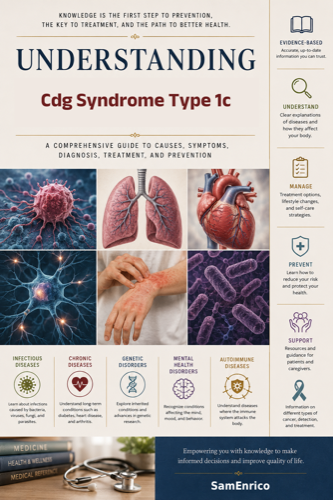 Understanding Cdg Syndrome Type 1cMccarty Brianne$17.99
 Java Chicken BreedingMccarty Brianne$11.99
 How to Start a Post Business (Beginners Guide)Mccarty Brianne$11.99
 AI Financial Data StandardizationMccarty Brianne$12.99
You may also like
 Hong Kong Handover 1997Dunn Johnnie$11.99
 Zumba For Postnatal Recovery CourseNeal Christian$11.99
 Zumba for BeginnersLadner Nikia$11.99
 YouTube Comment Mining GuideHumes Pandora$12.99
 Worry Box MeditationCarlin Rudy$11.99
 Workplace Stress MeditationNguyen Lynn$11.99
 Workplace Stress and Sleep RepairHawley Ivory$11.99
 Workplace Perfectionism CureDelaney Jeffry$11.99
 Workplace Injustice Anger GuideWallen Isabelle$11.99
 Work Addiction and Burnout LinkGreenwood Ester$11.99
 Women in Yoga and WellnessBeattie Galina$11.99
 Women in Stand Up ComedyChun Evangeline$11.99