
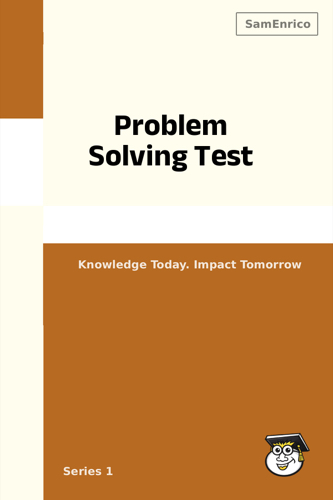
Free sample
Chapter 1: The Failure Paradox...–- Every morning, in thousands of offices around the world, competent, well-intentioned people make the same quiet calculation. A project goes off the rails. A deadline is missed. A product breaks in production. A customer complains in a way that reveals a deeper flaw.
And in that moment, before any meeting is called or any report is written, a private equation runs through the minds of everyone involved: If I admit what really happened, what will happen to me?The answer, in most organizations, is nothing good.Not because the people are cruel. Not because the culture is malicious. But because the incentives are misaligned in a way that nearly guarantees that problems will be hidden, downplayed, or blamed on the nearest convenient scapegoat. And when problems are hidden, they are not solved. They are merely deferred.This is the Failure Paradox: the very conditions that make failure most valuable for learning are the same conditions that make failure most dangerous for your career.
The faster you admit a mistake, the faster you can correct it. But the faster you admit a mistake, the faster you can be punished for it. So most people choose silence. And most organizations choose to remain ignorant.This chapter is not a theoretical discussion of failure. It is a diagnostic.
Before you can solve problems effectively—before you can use any of the tools in this book—you need to know what kind of environment you are operating in. Are you in a closed-loop system, where failures are recorded, analyzed, and fed back into improvement? Or are you in an open-loop system, where failures disappear into blame and cover-ups, teaching no one anything?The answer will determine which chapters of this book you can use immediately, which ones require you to change your environment first, and which ones you may need to implement secretly, protecting yourself while still trying to improve things.The Two Kinds of Failure Systems In 1999, a series of tragic medical errors at a prominent teaching hospital led to the death of a otherwise healthy patient. The root cause was eventually traced to a miscommunication during a shift change: a critical lab result was never verbally handed off from the departing resident to the incoming one. The hospital did something unusual.
Instead of firing the residents involved, instead of rewriting the policy manual in dense legalese, instead of holding a single mandatory training session and calling it fixed, they did something that would have seemed obvious in any other industry but was radical in medicine at the time.They looked at the system.They realized that shift changes happened under time pressure, in noisy hallways, with no standardized format, and with no redundancy for critical information. The problem was not the people. The problem was the architecture of the handoff. So they redesigned it: a silent, written handoff followed by a verbal read-back, both conducted in a quiet room, with a checklist. The error rate for shift-change miscommunications dropped by over seventy percent.
And—crucially—the residents involved in the original error were not punished. They were debriefed. Their failure became a learning event for the entire institution.That is a closed-loop system. It has four characteristics:Failures are recorded without fear of retribution for honest mistakes.Failures are analyzed systematically, not through rumor or gossip.Lessons are fed back into training, protocols, or system design.The loop repeats—each failure makes the system slightly more resilient.Aviation has had closed-loop systems for decades. Every plane crash is investigated not to assign blame but to understand what happened, and the findings are distributed to every airline in the world.
Simulators are updated with new scenarios based on real failures. Checklists are revised. Procedures change. The result is that commercial aviation has become extraordinarily safe, not because pilots never make mistakes, but because their mistakes are captured and taught to everyone else.Now consider the opposite: an open-loop system.A mid-level manager at a retail company misses her quarterly target by a small margin. The economy was soft.
A key supplier had a fire. Two of her best employees quit unexpectedly. But none of that matters. The regional vice president needs a scapegoat. The manager is put on a performance improvement plan, publicly humiliated in a conference call, and quietly starts updating her resume.
The actual problems—supplier concentration risk, weak retention incentives, lack of economic hedging—are never discussed. They cannot be discussed, because discussing them would require admitting that the system has flaws, and admitting flaws is seen as weakness.The manager leaves. Her replacement inherits the same fragile supply chain, the same retention problems, the same lack of hedging. Six months later, the same failure repeats. A new scapegoat is found.
The loop continues, but it is open: nothing learned, nothing fed back, nothing improved.Most organizations operate in open loops. Not because they are evil, but because closed loops require psychological safety, and psychological safety requires trust, and trust requires that leaders consistently choose learning over blaming. That is hard. It is much easier, in the short term, to fire someone and declare the problem solved.The Anatomy of a Blame Culture You can diagnose your organization's loop type without any formal survey. Just listen to the language people use after something goes wrong.In a closed-loop (healthy) culture, you hear:"What can we learn from this?""Where did the system break down?""What information did we lack?""How do we prevent this from happening again?""Thank you for surfacing this."In an open-loop (toxic) culture, you hear:"Who did this?""Why wasn't I told?""Whose fault is it?""How did this get past review?""I want a name."The difference is not subtle.
One set of questions points toward improvement. The other points toward punishment. And human beings are exquisitely sensitive to which set of questions their organization actually rewards.Consider a famous experiment from Stanford psychologist Carol Dweck. Fifth-grade students were given a moderately difficult puzzle. After they completed it, one group was praised for their intelligence ("You must be smart at this!").
The other group was praised for their effort ("You must have worked hard!"). Then both groups were offered a choice: they could take a second, harder puzzle and learn something new, or they could take an easier puzzle that they would surely succeed at.The students praised for intelligence overwhelmingly chose the easier puzzle. They did not want to risk failure, because failure would contradict the label "smart." The students praised for effort overwhelmingly chose the harder puzzle. Effort was not threatened by failure—failure just meant they needed to try a different approach.Your organization's response to failure is a massive, ongoing experiment in behavioral conditioning. When failures are punished, people learn to hide them.
When failures are analyzed without blame, people learn to surface them. The conditioning is so powerful that it operates even when no explicit punishment exists—people internalize the culture and preemptively silence themselves.I once consulted for a technology company where a junior engineer discovered a subtle bug that had been present in the payment processing system for over two years. The bug was minor—it…
This is the end of the free sample. Get the eBook to keep going. Buy now
About this book
Details
- Author
- Barry January
- Publisher
- SamEnrico
- Language
- English
- Genre
- Non-Fiction, Self-Help
- Released
- 2026-06-10
- Pages (approx.)
- 144
- Available as
- eBook, Audiobook

Read better in the ZLOADR app
Your eBooks on your phone or tablet. Sign in with your SamEnrico account and start reading.
More by Barry January
 Zumba Instructor CertificationBarry January$11.99
 The Nail Salon SlaveryBarry January$11.99
 The Quit Smoking Laser TherapyBarry January$11.99
 Student Classroom Distraction GuideBarry January$11.99
 Small Talk for Performance ReviewsBarry January$11.99
 Child Loss And PetsBarry January$11.99
 Logseq Memory ToolBarry January$11.99
 Mindfulness EQ Integration GuideBarry January$11.99
 The Last Masterpiece: How Picasso's Secret Sketchbook Reshaped Modern ArtBarry January$11.99
 The Serpent’s Fjord: Eirik the Red and the Birth of VinlandBarry January$11.99
 The Hollow Crown: The Phantom Kings of the Nubian DesertBarry January$11.99
 Procurement and Sourcing ManagementBarry January$11.99
You may also like
 Workplace Stress MeditationNguyen Lynn$11.99
 Volcano Monitoring ScientistCox Alexis$11.99
 The Tech Professional NetAguiar Nevada$11.99
 The Morning Metta RitualCanales Anya$11.99
 The Chunking Memory TechniqueClanton Hyacinth$11.99
 The Beginner Mistake FixAmmons Cassondra$11.99
 Surrendering to What IsGrimm Reatha$11.99
 Self Hypnosis for Fear of FireBillups Eli$11.99
 Road Rage for Professional DriversBrackett Janise$11.99
 Psychiatric Ward Nurse StressDunning Wyatt$11.99
 Observation vs Evaluation NVCTimmons Alda$11.99
 Networking for Nonprofit ProfessionalsPoole Jesse$11.99