
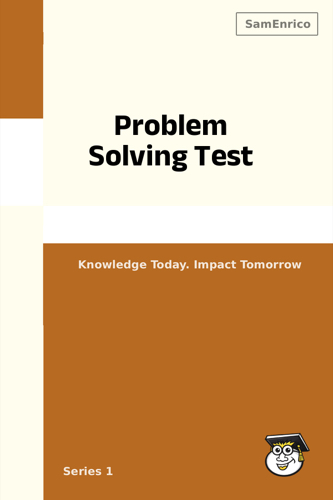
Free sample
Chapter 1: The Failure Paradox...–- Every morning, in thousands of offices around the world, competent, well-intentioned people make the same quiet calculation. A project goes off the rails. A deadline is missed. A product breaks in production. A customer complains in a way that reveals a deeper flaw.
And in that moment, before any meeting is called or any report is written, a private equation runs through the minds of everyone involved: If I admit what really happened, what will happen to me?The answer, in most organizations, is nothing good.Not because the people are cruel. Not because the culture is malicious. But because the incentives are misaligned in a way that nearly guarantees that problems will be hidden, downplayed, or blamed on the nearest convenient scapegoat. And when problems are hidden, they are not solved. They are merely deferred.This is the Failure Paradox: the very conditions that make failure most valuable for learning are the same conditions that make failure most dangerous for your career.
The faster you admit a mistake, the faster you can correct it. But the faster you admit a mistake, the faster you can be punished for it. So most people choose silence. And most organizations choose to remain ignorant.This chapter is not a theoretical discussion of failure. It is a diagnostic.
Before you can solve problems effectively—before you can use any of the tools in this book—you need to know what kind of environment you are operating in. Are you in a closed-loop system, where failures are recorded, analyzed, and fed back into improvement? Or are you in an open-loop system, where failures disappear into blame and cover-ups, teaching no one anything?The answer will determine which chapters of this book you can use immediately, which ones require you to change your environment first, and which ones you may need to implement secretly, protecting yourself while still trying to improve things.The Two Kinds of Failure Systems In 1999, a series of tragic medical errors at a prominent teaching hospital led to the death of a otherwise healthy patient. The root cause was eventually traced to a miscommunication during a shift change: a critical lab result was never verbally handed off from the departing resident to the incoming one. The hospital did something unusual.
Instead of firing the residents involved, instead of rewriting the policy manual in dense legalese, instead of holding a single…
This is the end of the free sample. Get the Audiobook to keep going. Buy now
About this book
Details
- Author
- Barry January
- Publisher
- SamEnrico
- Language
- English
- Genre
- Non-Fiction, Self-Help
- Released
- 2026-06-10
- Pages (approx.)
- 144
- Available as
- eBook, Audiobook

Listen in the VoxFlicks app
Audiobooks and audio dramas wherever you go. Sign in with your SamEnrico account and press play.
More by Barry January
 Zumba Instructor CertificationBarry January$11.99
 The Nail Salon SlaveryBarry January$11.99
 The Quit Smoking Laser TherapyBarry January$11.99
 Student Classroom Distraction GuideBarry January$11.99
 Small Talk for Performance ReviewsBarry January$11.99
 Child Loss And PetsBarry January$11.99
 Logseq Memory ToolBarry January$11.99
 Mindfulness EQ Integration GuideBarry January$11.99
 The Last Masterpiece: How Picasso's Secret Sketchbook Reshaped Modern ArtBarry January$11.99
 The Serpent’s Fjord: Eirik the Red and the Birth of VinlandBarry January$11.99
 The Hollow Crown: The Phantom Kings of the Nubian DesertBarry January$11.99
 Procurement and Sourcing ManagementBarry January$11.99
You may also like
 Workplace Stress MeditationNguyen Lynn$11.99
 Volcano Monitoring ScientistCox Alexis$11.99
 The Tech Professional NetAguiar Nevada$11.99
 The Morning Metta RitualCanales Anya$11.99
 The Chunking Memory TechniqueClanton Hyacinth$11.99
 The Beginner Mistake FixAmmons Cassondra$11.99
 Surrendering to What IsGrimm Reatha$11.99
 Self Hypnosis for Fear of FireBillups Eli$11.99
 Road Rage for Professional DriversBrackett Janise$11.99
 Psychiatric Ward Nurse StressDunning Wyatt$11.99
 Observation vs Evaluation NVCTimmons Alda$11.99
 Networking for Nonprofit ProfessionalsPoole Jesse$11.99