
Non-FictionHealth & WellnessPolypharmacy
Multimodal Pain Medication Plan
Combine different drug classes for additive pain r
Combine different drug classes for additive pain relief with lower individual doses.
Formats
About this book
Free sample
Chapter 1: The Opioid Trap--For the past three decades, American medicine has been running a failing experiment on the backs of chronic pain patients. The experiment went like this: when a patient reports pain, prescribe an opioid. When the pain persists, increase the dose. When tolerance develops, increase the dose again. When the patient returns asking for more, assume they are drug-seeking rather than suffering.
The results of this experiment are now impossible to ignore. Over 50 million adults in the United States live with persistent pain that lasts more than three months—a number that exceeds the populations of Texas and Florida combined. Among those 50 million, nearly 20 percent report that their pain is so severe it frequently limits their ability to work, sleep, eat, and engage with their families. Yet despite the unprecedented scale of suffering, the primary pharmaceutical response has been a single class of drugs that, when used long-term, makes pain worse for a significant subset of patients while exposing everyone to the risks of addiction, respiratory depression, constipation, hormonal dysregulation, and premature death.This is not how pain medicine was supposed to evolve. In the 1990s, a well-intentioned but scientifically flawed campaign argued that opioids were safe and non-addictive for chronic non-cancer pain.
Pharmaceutical companies funded professional societies, pain was declared the "fifth vital sign," and regulators encouraged aggressive prescribing. The result was catastrophic: from 1999 to 2019, nearly 500,000 Americans died from opioid-related overdoses, and millions more developed opioid use disorder. But here is the cruel irony that the headlines often miss. Even among patients who never become addicted, even among those who take their opioids exactly as prescribed, the drugs often stop working. This phenomenon is called opioid-induced hyperalgesia—a state in which chronic opioid exposure actually lowers the pain threshold, making patients more sensitive to pain than they were before starting the medication.
In other words, the very drug prescribed to relieve pain can, over time, create more pain.The alternative presented in this book is not a rejection of pharmacology. It is a rejection of pharmacological laziness—the habit of reaching for a single "strong" drug when a thoughtful…
This is the end of the free sample. Get the eBook to keep going. Buy now
Contents
- Chapter 1
- Chapter 2
- Chapter 3
- Chapter 4
- Chapter 5
- Chapter 6
- Chapter 7
- Chapter 8
- Chapter 9
- Chapter 10
- Chapter 11
- Chapter 12
Details
- Author
- Roberge Zetta
- Publisher
- SamEnrico
- Language
- English
- Genre
- Non-Fiction, Health & Wellness, Polypharmacy
- Released
- 2026-06-08
- Pages (approx.)
- 146
- Available as
- eBook, Audiobook

Read better in the ZLOADR app
Your eBooks on your phone or tablet. Sign in with your SamEnrico account and start reading.
More by Roberge Zetta
 The Student to Worker PipelineRoberge Zetta$11.99
 Personal Ing For Success Executive GuideRoberge Zetta$11.99
 Intuitive Eating Meal Planning WorkbookRoberge Zetta$11.99
 The Eviction Notice AuthorRoberge Zetta$11.99
 Shadows of the First Dawn: The Lost Cave Paintings of BorneoRoberge Zetta$11.99
 The Vanishing of Flight 447: The Black Box That Never SpokeRoberge Zetta$11.99
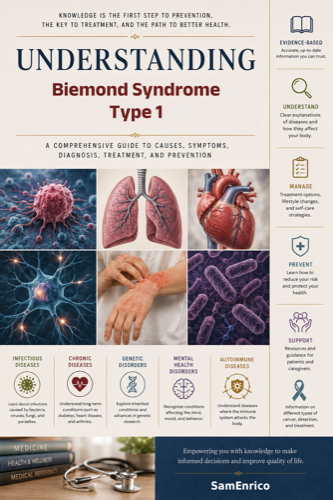 Understanding Biemond Syndrome Type 1Roberge Zetta$17.99
 Rapeseed HarvestingRoberge Zetta$11.99
 How to Start a Power-driven Mobile Lifting Frames Business (Beginners Guide)Roberge Zetta$11.99
 Return on Education CalculatorRoberge Zetta$12.99
 Expedited LLC Formation ServicesRoberge Zetta$12.99
You may also like
 Hong Kong Handover 1997Dunn Johnnie$11.99
 Zumba For Postnatal Recovery CourseNeal Christian$11.99
 Zumba for BeginnersLadner Nikia$11.99
 YouTube Comment Mining GuideHumes Pandora$12.99
 Worry Box MeditationCarlin Rudy$11.99
 Workplace Stress MeditationNguyen Lynn$11.99
 Workplace Stress and Sleep RepairHawley Ivory$11.99
 Workplace Perfectionism CureDelaney Jeffry$11.99
 Workplace Injustice Anger GuideWallen Isabelle$11.99
 Work Addiction and Burnout LinkGreenwood Ester$11.99
 Women in Yoga and WellnessBeattie Galina$11.99
 Women in Stand Up ComedyChun Evangeline$11.99