
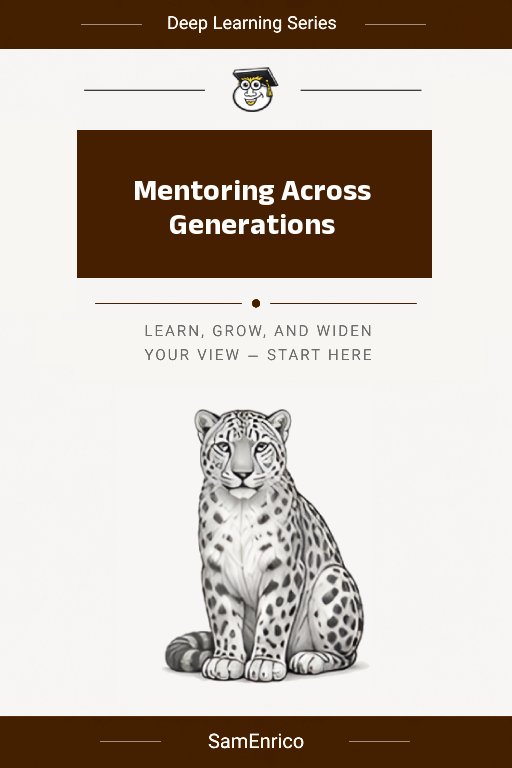
Mentoring Across Generations Audiobook
Bridge generational gaps when mentoring Gen Z and
by Haskins Elia
Bridge generational gaps when mentoring Gen Z and Millennial junior colleagues globally.
Formats
Free sample
Chapter 1: The Respect Hypothesis--When a 24-year-old junior analyst in Singapore burst into tears because her manager said “Let’s discuss your report’s formatting errors” in a slightly louder voice than usual, the manager assumed she was fragile. When a 22-year-old software developer in Berlin walked out of a performance review after being told “You need to be more proactive” and never returned to the office, his team assumed he was entitled. When a 26-year-old marketing associate in São Paulo stopped speaking up in meetings after being interrupted three times by a senior director, her colleagues assumed she was lazy.All of these assumptions were wrong. And they are costing organizations billions of dollars in turnover, disengagement, and lost talent every year.The problem is not that young people are fragile, entitled, or lazy. The problem is that most mentors, managers, and senior leaders do not understand the neurobiological reality of the 18-to-27-year-old brain.
Specifically, they do not understand what this chapter calls the Respect Hypothesis: that young adults are neurologically wired to crave status, autonomy, and social approval more intensely than any other age group, while simultaneously being hypersensitive to social pain—shame, humiliation, condescension, and public correction.This chapter dismantles the lazy generational stereotypes that dominate workplace conversations and replaces them with a science-backed framework for understanding why Gen Z and the youngest Millennials behave the way they do. More importantly, it introduces the Mentor Mindset—a specific, teachable orientation that transforms how senior leaders show up for their junior colleagues. By the end of this chapter, you will understand why your best intentions may have backfired, and you will have a concrete path forward.The Cost of Getting It Wrong Before diving into the science, let us be honest about the stakes. In 2025, a global study of 15,000 knowledge workers found that 47 percent of Gen Z employees had left a job within the first 12 months, and the single most cited reason was not salary, not workload, not commute—it was “feeling disrespected by my manager.” Not disrespected through overt abuse. Disrespected through tone, through being talked down to, through feedback that felt more like a verdict than a conversation.Simultaneously, 62 percent of senior leaders in that same study reported feeling “exhausted” by managing young employees, describing them as “too sensitive,” “unwilling to pay dues,” or “unable to take criticism.” Both groups are miserable.
Both groups blame the other. And both groups are trapped in a cycle that the neurobiology of the young brain…
This is the end of the free sample. Get the Audiobook to keep going. Buy now
About this book
Details
- Author
- Haskins Elia
- Publisher
- SamEnrico
- Language
- English
- Genre
- Non-Fiction, Professional's Cheat Sheet, Generations
- Released
- 2026-05-29
- Pages (approx.)
- 148
- Available as
- eBook, Audiobook

Listen in the VoxFlicks app
Audiobooks and audio dramas wherever you go. Sign in with your SamEnrico account and press play.
More by Haskins Elia
 Remote Exit Interviews GuideHaskins Elia$11.99
 Newsletter Content Strategy GuideHaskins Elia$11.99
 Self Hypnosis For Fertility Support CourseHaskins Elia$11.99
 People Pleasing in RelationshipsHaskins Elia$11.99
 The Vitamin K2 BreakthroughHaskins Elia$11.99
 The Phantom Ledger: The $1.2 Billion Heist That Vanished Without a TraceHaskins Elia$11.99
 The Ancient Healers: North America’s Forgotten AntibioticsHaskins Elia$11.99
 How to Become a InvestigatorHaskins Elia$11.99
 Lead Mobile DeveloperHaskins Elia$11.99
 House Sitting Long Term GuideHaskins Elia$12.99
 Understanding Epitheliopathy (Apmppe)Haskins Elia$17.99