
Non-FictionSelf-HelpScientific Communication
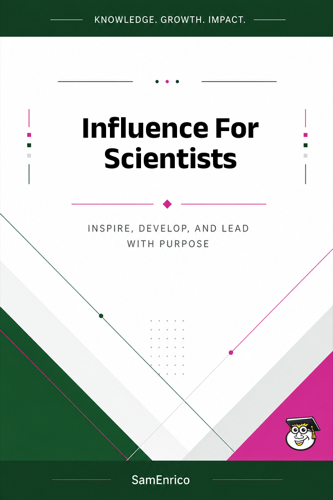
Influence For Scientists eBook
Gets funding and publishes research through clear
by Lynn Coralee
Gets funding and publishes research through clear persuasion.
Formats
Free sample
Chapter 1: The Broken Pipeline--–- Dr. Elena Vasquez had just received the highest reviewer scores of her career. Two reviewers called her proposal "transformative." A third wrote, "This could redefine the standard of care for metastatic breast cancer." Her National Institutes of Health impact score was in the first percentile—a near-perfect rating. She began shopping for a larger lab space, drafting offers for two new postdocs, and mentally composing her acceptance speech for the inevitable press release.Three months later, the funding letter arrived. "Despite the high priority score," it read, "funding was not recommended due to budgetary constraints." But that wasn't the full truth.
Elena discovered later, through a program officer willing to speak off the record, that the real reason was buried in a single sentence from a fourth reviewer—a late addition to the panel who had been assigned her proposal as a "reader" rather than a primary reviewer. This reviewer, a chemist by training, had written: "I do not understand why this is important. The mechanisms described seem highly specific to a rare subtype of cancer that affects only a small subset of patients."Elena's work was on triple-negative breast cancer, which kills more women under forty than any other cancer. The reviewer, a specialist in protein folding, had no clinical background. But his vote counted equally.
And his confusion—stemming not from any flaw in her science but from her failure to explain why her molecular mechanism mattered to patients—had tipped the committee's discussion. The funding went to a less innovative proposal that was easier to understand.Elena's story is not an outlier. It is the norm.Every year, billions of dollars in research funding and tens of thousands of publications are evaluated by reviewers who are overworked, underprepared, and often working outside their primary expertise. These reviewers are not evil. They are not stupid.
They are human. And the single greatest predictor of whether your grant gets funded or your paper gets accepted is not the quality of your data—it is whether you have successfully managed the cognitive and emotional state of the person reading it.This book is about how to do that.The Myth That Keeps Good Science Unfunded There is a story that scientists tell themselves. It goes like this: "If my science is good enough, if my data are rigorous, if my sample size is adequate, and if my statistics are correct, then the reviewers will recognize its merit. The system is a meritocracy. My job is to do the work.
The reviewers' job is to recognize it."This story is comforting. It allows scientists to focus entirely on the technical aspects of their research without developing the uncomfortable skills of persuasion, framing, and narrative construction. It allows principal investigators to believe that a poorly written grant failed because "the reviewers didn't understand" rather than because the author failed to make it understandable.The story is also demonstrably false.In 2012, a remarkable experiment was published in the Proceedings of the National Academy of Sciences. Researchers Michael Mahoney and colleagues submitted a paper to twelve different journals. The paper was scientifically sound but unremarkable.
The twist? They resubmitted the exact same paper to the same journals after changing only the title and abstract to emphasize different aspects of the findings. The acceptance rate varied by a factor of four. The same data, the same figures, the same statistics—but different framing produced wildly different outcomes.In another study, researchers analyzed the funding decisions of the National Science Foundation over a five-year period. They found that proposals with nearly identical scientific merit scores had vastly different funding outcomes based on one variable: the clarity of the broader impacts statement.
Not the quality of the science. Not the feasibility of the methods. The clarity of a single paragraph explaining why anyone should care.This is not a bug in the system. It is a feature of how human brains process information. And until scientists accept this reality, they will continue to lose funding and publication opportunities to peers who are no smarter, no more rigorous, and no more creative—but who are better persuaders.The Receiver: Who Is Actually Reading Your Work?Before we can persuade anyone, we must understand the person we are trying to persuade.
Let us call this person the Receiver—the reviewer, editor, program officer, or search committee member who stands between you and your goal.The Receiver has four defining characteristics that you must internalize before writing another word of any scientific document.First, the Receiver is overwhelmed. The average peer reviewer receives twenty to thirty review invitations per year. The average grant reviewer reads ten to fifteen proposals in a single sitting, often on a weekend or evening after a full day of their own work. The average journal editor handles fifty to one hundred submissions per month. Your proposal or paper is not being read in a quiet library with a cup of coffee and undivided attention.
It is being read on a laptop at 10:37 PM, sandwiched between a rejected revision and a reminder about departmental service.Second, the Receiver is skeptical. The Receiver has been burned before. They have recommended funding a proposal that produced nothing. They have recommended accepting a paper that later had to be retracted. They have been fooled by beautiful figures that concealed p-hacking and by eloquent introductions that promised more than the data delivered.
As a result, the Receiver starts with a default assumption of distrust. It is not personal. It is protective. And it means that every claim you make must be supported, every assumption you hold must be justified, and every leap of logic must be bridged.Third, the Receiver is time-poor. The National Institutes of Health estimates that the average reviewer spends between sixty and ninety minutes reading a full grant proposal before the study section meeting.
That is ninety minutes to understand the background, evaluate the methods, assess the preliminary data, judge the feasibility, and write a critique—for a proposal that represents two to five years of the applicant's life. This means the Receiver is scanning, not reading. They are looking for reasons to say no, because saying yes is riskier and requires more cognitive effort. They are looking for the signal in the noise, and they have very little patience for noise.Fourth, and most importantly, the Receiver is often a generalist. Even when a proposal is assigned to a "specialist" panel, the specific reviewer may have expertise in a related but distinct subfield.
A cancer biologist may review a proposal on immunology. A materials scientist may review a proposal on soft matter physics. An economist may review a proposal on behavioral psychology. This cross-disciplinary review is intentional—funding agencies want fresh perspectives to prevent insular thinking—but it creates a massive communication challenge. Your reviewer may not know your literature.
They may not know your techniques. They may not even know why your question is worth asking.This fourth characteristic is the source of most funding failures. And it leads us to the central concept of this chapter.The Paradigm Gap: Where Good Science Goes to Die Imagine two people looking at…
This is the end of the free sample. Get the eBook to keep going. Buy now
About this book
Details
- Author
- Lynn Coralee
- Publisher
- SamEnrico
- Language
- English
- Genre
- Non-Fiction, Self-Help, Scientific Communication
- Released
- 2026-06-05
- Pages (approx.)
- 157
- Available as
- eBook, Audiobook

Read better in the ZLOADR app
Your eBooks on your phone or tablet. Sign in with your SamEnrico account and start reading.
More by Lynn Coralee
 Morning Routine for New ParentsLynn Coralee$11.99
 The Selenium GuideLynn Coralee$11.99
 Burnout Prevention for ClergyLynn Coralee$11.99
 Workaholic Mindfulness GuideLynn Coralee$11.99
 Pharmacist Imposter GuideLynn Coralee$11.99
 CPR for GymsLynn Coralee$11.99
 Anki Card Design GuideLynn Coralee$11.99
 The Trial That Split a Nation: The Unseen Battle Over the 1973 Supreme Court’s Roe v. Wade Draft LeakLynn Coralee$11.99
 The Alchemists of Timbuktu: Black Genius in the Golden Age of ScienceLynn Coralee$11.99
 How to Start a Courier (travel) Business (Beginners Guide)Lynn Coralee$11.99
 How to Produce Saxophone NecksLynn Coralee$11.99
 A Collector's Handbook to the Austin 4 (1937-39)Lynn Coralee$11.99
You may also like
 Hong Kong Handover 1997Dunn Johnnie$11.99
 Zumba For Postnatal Recovery CourseNeal Christian$11.99
 Zumba for BeginnersLadner Nikia$11.99
 YouTube Comment Mining GuideHumes Pandora$12.99
 Worry Box MeditationCarlin Rudy$11.99
 Workplace Stress MeditationNguyen Lynn$11.99
 Workplace Stress and Sleep RepairHawley Ivory$11.99
 Workplace Perfectionism CureDelaney Jeffry$11.99
 Workplace Injustice Anger GuideWallen Isabelle$11.99
 Work Addiction and Burnout LinkGreenwood Ester$11.99
 Women in Yoga and WellnessBeattie Galina$11.99
 Women in Stand Up ComedyChun Evangeline$11.99