
Non-FictionSelf-HelpStudy Skills
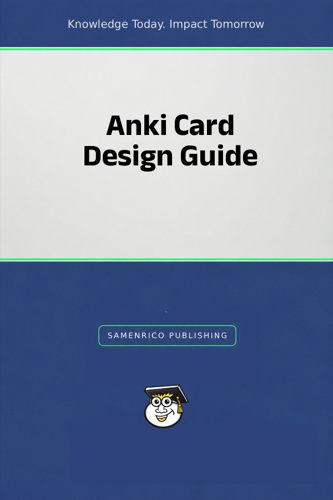
Anki Card Design Guide
Teaches creating effective front back cards that m
by Lynn Coralee
Teaches creating effective front back cards that maximize retention and minimize review time.
Formats
About this book
Free sample
Chapter 1: The Retrieval Paradox--Most people believe that memory works like a camera – you point it at information, click the shutter, and later retrieve a perfect copy of what you saw. This intuitive model is also completely wrong. Memory is not a storage device. It is a reconstruction engine that rebuilds the past from fragments every single time you reach for it. Understanding this distinction is not academic trivia.
It is the difference between thriving with Anki and drowning in reviews.Let me start with a confession. When I first discovered spaced repetition software over a decade ago, I did exactly what most beginners do. I downloaded shared decks, imported thousands of cards, and dutifully reviewed them every morning. For the first few weeks, it felt like magic. Information I had struggled to memorize was suddenly sticking.
But then something changed. The review count grew. Cards that had been easy became hard. I started pressing “Again” on cards I knew I had mastered. The magic turned into drudgery.
Like thousands of users, I concluded that spaced repetition simply did not work for my brain.I was wrong. The problem was not the algorithm. The problem was that I had no idea how memory actually works. I was treating Anki as a database when I should have been treating it as a gym. You do not build muscle by passively watching someone else lift weights.
You build muscle by struggling against resistance. Memory works the same way. Every time you successfully retrieve a fact, you strengthen the neural pathway to that fact. Every time you fail, you do nothing. And every time you see the answer without trying, you actively weaken your ability to recall it later.This chapter lays the foundation for everything that follows.
You will learn why retrieval is the engine of lasting memory, what the FSRS algorithm actually tracks, and why the simple act of creating your own cards gives you an unfair advantage that no algorithm can replicate. By the end of this chapter, you will understand why most Anki users are unknowingly sabotaging their own learning…
This is the end of the free sample. Get the eBook to keep going. Buy now
Contents
- Chapter 1
- Chapter 2
- Chapter 3
- Chapter 4
- Chapter 5
- Chapter 6
- Chapter 7
- Chapter 8
- Chapter 9
- Chapter 10
- Chapter 11
- Chapter 12
Details
- Author
- Lynn Coralee
- Publisher
- SamEnrico
- Language
- English
- Genre
- Non-Fiction, Self-Help, Study Skills
- Released
- 2026-06-06
- Pages (approx.)
- 138
- Available as
- eBook, Audiobook

Read better in the ZLOADR app
Your eBooks on your phone or tablet. Sign in with your SamEnrico account and start reading.
More by Lynn Coralee
 Morning Routine for New ParentsLynn Coralee$11.99
 The Selenium GuideLynn Coralee$11.99
 Burnout Prevention for ClergyLynn Coralee$11.99
 Workaholic Mindfulness GuideLynn Coralee$11.99
 Pharmacist Imposter GuideLynn Coralee$11.99
 CPR for GymsLynn Coralee$11.99
 Influence For ScientistsLynn Coralee$11.99
 The Trial That Split a Nation: The Unseen Battle Over the 1973 Supreme Court’s Roe v. Wade Draft LeakLynn Coralee$11.99
 The Alchemists of Timbuktu: Black Genius in the Golden Age of ScienceLynn Coralee$11.99
 How to Start a Courier (travel) Business (Beginners Guide)Lynn Coralee$11.99
 How to Produce Saxophone NecksLynn Coralee$11.99
 A Collector's Handbook to the Austin 4 (1937-39)Lynn Coralee$11.99
You may also like
 Hong Kong Handover 1997Dunn Johnnie$11.99
 Zumba For Postnatal Recovery CourseNeal Christian$11.99
 Zumba for BeginnersLadner Nikia$11.99
 YouTube Comment Mining GuideHumes Pandora$12.99
 Worry Box MeditationCarlin Rudy$11.99
 Workplace Stress MeditationNguyen Lynn$11.99
 Workplace Stress and Sleep RepairHawley Ivory$11.99
 Workplace Perfectionism CureDelaney Jeffry$11.99
 Workplace Injustice Anger GuideWallen Isabelle$11.99
 Work Addiction and Burnout LinkGreenwood Ester$11.99
 Women in Yoga and WellnessBeattie Galina$11.99
 Women in Stand Up ComedyChun Evangeline$11.99