
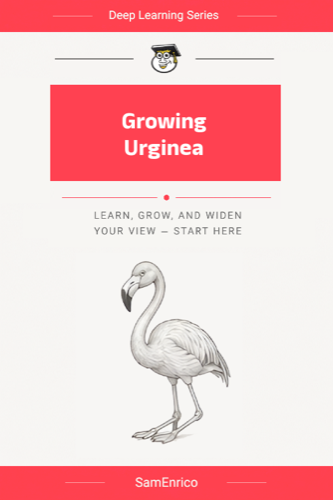
Growing Urginea
This publication, published by SamEnrico, covers G
This publication, published by SamEnrico, covers Growing Urginea
Formats
About this book
Free sample
Chapter 1: The Bulb That Killed Pharaohs--–- The first time I killed an Urginea, I didn't even know I had killed it. I just saw a pot of dry soil with a sad, papery onion sitting on top, and I assumed I had been sold a dead bulb at a premium price. I threw it in the compost. Six months later, at a botanical garden in southern California, I saw the same sad, papery onion pushing up a six-foot spike of white flowers that looked like an exploding firework frozen in time. I had thrown away a perfectly healthy, dormant bulb because no one had taught me the single most important lesson about this plant: it does not follow the rules of normal bulbs.This chapter will teach you why the Sea Squill has been feared as a poison, revered as a medicine, and misunderstood by gardeners for thousands of years.
By the end, you will understand the two growth cycles that govern every decision you will ever make with this plant, and you will never again throw a dormant bulb into the compost.--The Ancient Paradox The story of Urginea begins not in a nursery catalog or a botanical garden, but in the tombs of ancient Egypt. Archaeologists have found dried Sea Squill bulbs in burial chambers alongside jars of wine and loaves of bread—provisions for the afterlife. The Egyptians knew something that modern gardeners are only now rediscovering: this bulb contains power. The power to heal. The power to kill.
And, if you understand it, the power to transform how you think about every plant you grow.Let me start with the killing part first, because it is the part that captures the imagination.The same bulb that you might order today from a rare plant nursery was once used to poison wolves in ancient Greece. The historian Theophrastus, a student of Aristotle, wrote in the 4th century BCE about fishermen who mashed Sea Squill bulbs and threw the mixture into coves to stun fish, which would float to the surface for easy collection. In North Africa, tribes coated…
This is the end of the free sample. Get the eBook to keep going. Buy now
Contents
- Chapter 1
- Chapter 2
- Chapter 3
- Chapter 4
- Chapter 5
- Chapter 6
- Chapter 7
- Chapter 8
- Chapter 9
- Chapter 10
- Chapter 11
- Chapter 12
Details
- Author
- Turnbull Almeda
- Publisher
- SamEnrico
- Language
- English
- Genre
- Non-Fiction, Informative, Educational
- Released
- 2026-05-18
- Pages (approx.)
- 143
- Available as
- eBook, Audiobook

Read better in the ZLOADR app
Your eBooks on your phone or tablet. Sign in with your SamEnrico account and start reading.
More by Turnbull Almeda
 Postpartum Low Milk Supply GuideTurnbull Almeda$11.99
 Triggers and Substance UseTurnbull Almeda$11.99
 Skin Needling At Home Safety ManualTurnbull Almeda$11.99
 Client Centered Scripting ApproachTurnbull Almeda$11.99
 Autonomous Vehicle PlanTurnbull Almeda$11.99
 MBSR for Corporate WorkplacesTurnbull Almeda$11.99
 Chronic Migraine PreventionTurnbull Almeda$11.99
 Gaslighting And AngerTurnbull Almeda$11.99
 Time Blocking For EntrepreneursTurnbull Almeda$11.99
 The Tsar's Maestro: Glinka and the Birth of Russian Classical MusicTurnbull Almeda$11.99
 Silicon Bloodlines: The Untold Legacy of Steve Jobs and the Next Tech DynastyTurnbull Almeda$11.99
 Silk & Shadows: The Forbidden Fashion Empire of the Silk RoadTurnbull Almeda$11.99