
Non-FictionInformativeEducational
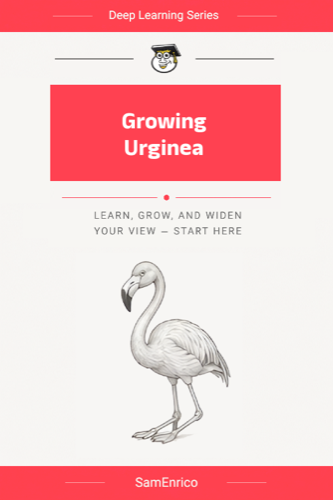
Growing Urginea eBook
This publication, published by SamEnrico, covers G
This publication, published by SamEnrico, covers Growing Urginea
Formats
Free sample
Chapter 1: The Bulb That Killed Pharaohs--–- The first time I killed an Urginea, I didn't even know I had killed it. I just saw a pot of dry soil with a sad, papery onion sitting on top, and I assumed I had been sold a dead bulb at a premium price. I threw it in the compost. Six months later, at a botanical garden in southern California, I saw the same sad, papery onion pushing up a six-foot spike of white flowers that looked like an exploding firework frozen in time. I had thrown away a perfectly healthy, dormant bulb because no one had taught me the single most important lesson about this plant: it does not follow the rules of normal bulbs.This chapter will teach you why the Sea Squill has been feared as a poison, revered as a medicine, and misunderstood by gardeners for thousands of years.
By the end, you will understand the two growth cycles that govern every decision you will ever make with this plant, and you will never again throw a dormant bulb into the compost.--The Ancient Paradox The story of Urginea begins not in a nursery catalog or a botanical garden, but in the tombs of ancient Egypt. Archaeologists have found dried Sea Squill bulbs in burial chambers alongside jars of wine and loaves of bread—provisions for the afterlife. The Egyptians knew something that modern gardeners are only now rediscovering: this bulb contains power. The power to heal. The power to kill.
And, if you understand it, the power to transform how you think about every plant you grow.Let me start with the killing part first, because it is the part that captures the imagination.The same bulb that you might order today from a rare plant nursery was once used to poison wolves in ancient Greece. The historian Theophrastus, a student of Aristotle, wrote in the 4th century BCE about fishermen who mashed Sea Squill bulbs and threw the mixture into coves to stun fish, which would float to the surface for easy collection. In North Africa, tribes coated arrow tips with Sea Squill sap, creating a poison so potent that a single scratch could bring down an antelope. During the Middle Ages, Europeans mixed powdered Squill with fat and spread it on walls to kill rats. The rodents would eat the bait, then die of heart failure within hours.The active compound responsible for this lethality is a family of chemicals called bufadienolides.
They are cardiac glycosides—the same class of compounds found in foxglove (Digitalis), which gives us the modern heart medication digoxin. In small, controlled doses, these compounds strengthen heart contractions and regulate irregular heartbeats. In uncontrolled doses, they stop the heart entirely. There is no antidote, only a stomach pump and a prayer.This brings us to the healing part.The first written record of Sea Squill as medicine appears in the Ebers Papyrus of ancient Egypt, dating to approximately 1550 BCE. The scribes recommended Squill mixed with honey and water as a treatment for what they called "dropsy"—the swelling of tissues caused by fluid retention, which we now know as edema, often a symptom of heart failure.
The irony is exquisite: a plant that can stop the heart was used to treat a condition caused by a failing heart.By the time the Kreuterbuch—the great German herbal of 1498—was printed, Sea Squill had become a standard remedy across Europe. Physicians prescribed it for coughs, asthma, and kidney stones. Apothecaries dried the bulbs, sliced them into thin rounds, and soaked them in vinegar to make a syrup called Oxymel scillae. This syrup was still being manufactured commercially in the early 20th century, alongside digitalis preparations, before modern synthetic drugs replaced most plant-derived cardiac medications.The paradox at the heart of this plant is simple: the same chemistry that makes it dangerous makes it valuable. The same compounds that kill rats, when properly extracted and dosed, can keep human hearts beating.
And the same survival strategy that allows the bulb to survive months of drought—the complete shutdown of metabolic activity during dormancy—is what confuses and defeats most gardeners who try to grow it.You cannot understand how to keep this plant alive until you understand why it needs to look dead for half the year.--The Two Faces of Urginea: Mediterranean vs. South African Here is where almost every care guide you will find online gets it wrong. They treat Urginea as a single plant with a single set of instructions. But the genus—whether you call it Urginea or the newer name Drimia—contains species that have evolved on two different continents, under two completely different climate patterns. What works for a Mediterranean Sea Squill will kill a South African one, and vice versa.Let me give you a visual anchor that you will return to throughout this book.
Draw two circles in your mind.The Mediterranean Circle The first circle represents the climate of coastal southern Europe, North Africa, and the Middle East. Winters are cool and wet. Summers are hot and bone-dry. The Mediterranean Urginea species—most famously Urginea maritima, the giant Sea Squill—has evolved to do all its growing during the wet winter months.In October or November, when autumn rains arrive, the bulb sends up a rosette of broad, strappy green leaves. These leaves photosynthesize through the mild winter, building energy stores.
By late spring, as temperatures rise and rain becomes scarce, the leaves begin to yellow. By early summer, the leaves have completely died back to a papery husk. The bulb retreats underground, or semi-exposed, and waits.Then something strange happens. In July or August, at the height of summer drought, a thick flower spike rockets out of the bare soil—no leaves attached, just a naked stalk that can reach six feet tall. Over the course of a few weeks, hundreds of small white or pink flowers open from the bottom of the spike upward.
The spike stands alone in the garden, a ghostly tower of blooms when almost nothing else is flowering. After the flowers fade, seed capsules form and ripen. By late autumn, the spike collapses, and the cycle begins again with new leaves.This rhythm—leaves in winter, dormancy in summer, flowers in late summer—is the Mediterranean signature. If you try to water a Mediterranean Urginea during its summer dormancy, you will rot the bulb. If you try to keep it indoors in a warm living room during winter, it will never receive the cool, wet signal it needs to break dormancy properly.
It will languish and eventually die.The South African Circle The second circle represents the climate of the Western Cape of South Africa, home to a different group of Urginea (now usually called Drimia) species. Here, the seasons are flipped relative to the Northern Hemisphere, but more importantly, the rainfall pattern is different. The Western Cape has wet winters and dry summers—similar to the Mediterranean—but with milder temperatures and less extreme drought.Wait, you might say. That sounds the same. Why does it matter?Because the South African species have evolved a different growth schedule that is offset by…
This is the end of the free sample. Get the eBook to keep going. Buy now
About this book
Details
- Author
- Turnbull Almeda
- Publisher
- SamEnrico
- Language
- English
- Genre
- Non-Fiction, Informative, Educational
- Released
- 2026-05-18
- Pages (approx.)
- 143
- Available as
- eBook, Audiobook

Read better in the ZLOADR app
Your eBooks on your phone or tablet. Sign in with your SamEnrico account and start reading.
More by Turnbull Almeda
 Postpartum Low Milk Supply GuideTurnbull Almeda$11.99
 Triggers and Substance UseTurnbull Almeda$11.99
 Skin Needling At Home Safety ManualTurnbull Almeda$11.99
 Client Centered Scripting ApproachTurnbull Almeda$11.99
 Autonomous Vehicle PlanTurnbull Almeda$11.99
 MBSR for Corporate WorkplacesTurnbull Almeda$11.99
 Chronic Migraine PreventionTurnbull Almeda$11.99
 Gaslighting And AngerTurnbull Almeda$11.99
 Time Blocking For EntrepreneursTurnbull Almeda$11.99
 The Tsar's Maestro: Glinka and the Birth of Russian Classical MusicTurnbull Almeda$11.99
 Silicon Bloodlines: The Untold Legacy of Steve Jobs and the Next Tech DynastyTurnbull Almeda$11.99
 Silk & Shadows: The Forbidden Fashion Empire of the Silk RoadTurnbull Almeda$11.99
You may also like
 Hong Kong Handover 1997Dunn Johnnie$11.99
 Zumba For Postnatal Recovery CourseNeal Christian$11.99
 Zumba for BeginnersLadner Nikia$11.99
 YouTube Comment Mining GuideHumes Pandora$12.99
 Worry Box MeditationCarlin Rudy$11.99
 Workplace Stress MeditationNguyen Lynn$11.99
 Workplace Stress and Sleep RepairHawley Ivory$11.99
 Workplace Perfectionism CureDelaney Jeffry$11.99
 Workplace Injustice Anger GuideWallen Isabelle$11.99
 Work Addiction and Burnout LinkGreenwood Ester$11.99
 Women in Yoga and WellnessBeattie Galina$11.99
 Women in Stand Up ComedyChun Evangeline$11.99