
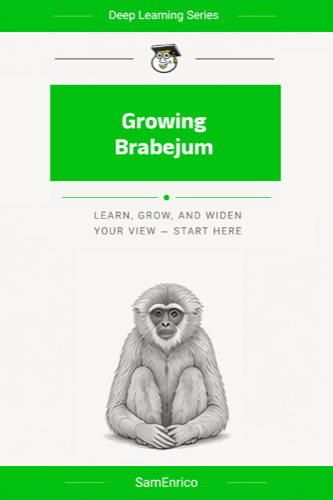
Growing Brabejum
This publication, published by SamEnrico, covers G
This publication, published by SamEnrico, covers Growing Brabejum
Formats
About this book
Free sample
Chapter 1: The Living Fortress...--The first thing you must understand about Brabejum stellatifolium is that it is not a gentle plant. It does not offer sweet fruit or soft foliage. It does not welcome a careless touch. What it offers instead is something far rarer in the modern garden: a living history that you can touch, a boundary that breathes, and a connection to one of the most dramatic collisions of culture, colonialism, and survival ever enacted on African soil.To plant a wild almond today is to reach back across nearly four centuries. It is to place your hands on the same species that Jan van Riebeeck's workmen shoved into the ground in 1660, sweating under the Cape sun as they dug a trench from the slopes of Table Mountain down to the marshes of the Liesbeeck River.
They were not gardening. They were building a fortress. And whether you intend your own Brabejum as a privacy screen, a heritage statement, or simply a botanical curiosity, you are inheriting that original intention. The wild almond does not forget its purpose.This chapter tells the story of that purpose. It is a story of bitter almonds and bitterer politics, of indigenous knowledge and colonial fear, of a hedge that became a national monument and a tree that became a living witness.
By the time you finish reading, you will understand why growing Brabejum is not merely horticulture but an act of historical preservation. You will also understand, clearly and without romanticism, why this plant demands respect before affection.The Company's Garden and the Colony's Fear To understand the wild almond hedge, you must first understand the precariousness of the early Cape Colony. When Jan van Riebeeck arrived in Table Bay on April 6, 1652, under the authority of the Dutch East India Company (the VOC, or Vereenigde Oostindische Compagnie), his instructions were strictly commercial. He was to establish a refreshment station for ships traveling the spice route between the Netherlands and the Dutch East Indies. Grow vegetables.
Raise livestock. Trade politely with the local Khoi pastoralists. Do not colonize.But the Cape had other plans.Within a few years…
This is the end of the free sample. Get the eBook to keep going. Buy now
Contents
- Chapter 1
- Chapter 2
- Chapter 3
- Chapter 4
- Chapter 5
- Chapter 6
- Chapter 7
- Chapter 8
- Chapter 9
- Chapter 10
- Chapter 11
- Chapter 12
Details
- Author
- Barrios Amado
- Publisher
- SamEnrico
- Language
- English
- Genre
- Non-Fiction, Informative, Educational
- Released
- 2026-06-02
- Pages (approx.)
- 145
- Available as
- eBook, Audiobook

Read better in the ZLOADR app
Your eBooks on your phone or tablet. Sign in with your SamEnrico account and start reading.
More by Barrios Amado
 Financial Stress and HealthBarrios Amado$11.99
 Jimmy Hoffa Cold Case Modern InvestigationBarrios Amado$11.99
 Funeral Anxiety GuideBarrios Amado$11.99
 Falklands War Peace CampaignerBarrios Amado$11.99
 Trello Card Cover Images GuideBarrios Amado$11.99
 Backwards Goal PlanningBarrios Amado$11.99
 Mastodon Decentralized ComparisonBarrios Amado$11.99
 Job Loss and MedicationBarrios Amado$11.99
 The Silk Road Phantom: The Great Escape from Baghdad's Central PrisonBarrios Amado$11.99
 The Silk and the Sword: A Marriage of EmpiresBarrios Amado$11.99
 How to Produce Multi-game TablesBarrios Amado$11.99
 A Collector's Handbook to the Rover 80Barrios Amado$11.99