
Non-FictionInformativeEducational
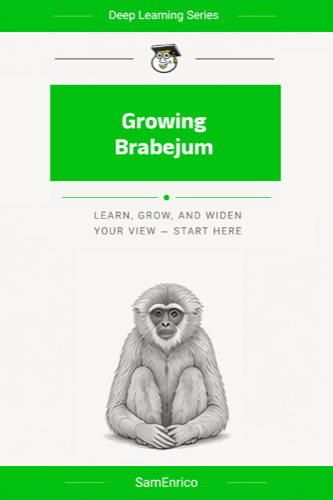
Growing Brabejum eBook
This publication, published by SamEnrico, covers G
This publication, published by SamEnrico, covers Growing Brabejum
Formats
Free sample
Chapter 1: The Living Fortress...--The first thing you must understand about Brabejum stellatifolium is that it is not a gentle plant. It does not offer sweet fruit or soft foliage. It does not welcome a careless touch. What it offers instead is something far rarer in the modern garden: a living history that you can touch, a boundary that breathes, and a connection to one of the most dramatic collisions of culture, colonialism, and survival ever enacted on African soil.To plant a wild almond today is to reach back across nearly four centuries. It is to place your hands on the same species that Jan van Riebeeck's workmen shoved into the ground in 1660, sweating under the Cape sun as they dug a trench from the slopes of Table Mountain down to the marshes of the Liesbeeck River.
They were not gardening. They were building a fortress. And whether you intend your own Brabejum as a privacy screen, a heritage statement, or simply a botanical curiosity, you are inheriting that original intention. The wild almond does not forget its purpose.This chapter tells the story of that purpose. It is a story of bitter almonds and bitterer politics, of indigenous knowledge and colonial fear, of a hedge that became a national monument and a tree that became a living witness.
By the time you finish reading, you will understand why growing Brabejum is not merely horticulture but an act of historical preservation. You will also understand, clearly and without romanticism, why this plant demands respect before affection.The Company's Garden and the Colony's Fear To understand the wild almond hedge, you must first understand the precariousness of the early Cape Colony. When Jan van Riebeeck arrived in Table Bay on April 6, 1652, under the authority of the Dutch East India Company (the VOC, or Vereenigde Oostindische Compagnie), his instructions were strictly commercial. He was to establish a refreshment station for ships traveling the spice route between the Netherlands and the Dutch East Indies. Grow vegetables.
Raise livestock. Trade politely with the local Khoi pastoralists. Do not colonize.But the Cape had other plans.Within a few years, the refreshment station had become something larger. Former company employees, freed from their contracts, requested land to farm independently. Van Riebeeck, a pragmatic man who understood that settled farmers produced more reliably than itinerant traders, granted them plots along the Liesbeeck River, east of the fort.
By 1659, eighteen free burghers were cultivating grain and vineyards on land that the Khoi considered their own seasonal grazing grounds.The Khoi were not amused.Conflict was inevitable. The Khoi, led by chieftains like Doman and Gogosoa, had watched the Dutch presence expand from a small fort to a network of farms. They had traded cattle, sometimes willingly, sometimes under duress. They had suffered smallpox and other European diseases. And now they were watching their grazing land disappear under plows and fences.
In 1659, open war broke out—the First Khoi-Dutch War. It was a brutal, asymmetrical conflict of raids and reprisals, and it frightened the settlers deeply.Van Riebeeck needed a solution. He could not afford a standing army. He could not build a wall around every farm. But he could plant one.The Hedge That Changed Everything On April 23, 1660, Van Riebeeck recorded in his famous journal the decision that would immortalize Brabejum stellatifolium in South African history.
He wrote of his plan to plant "a thick hedge of wilde amandel boomen" (wild almond trees) along the eastern boundary of the colony, stretching from the foot of Table Mountain to the Liesbeeck River. The hedge would be reinforced with brambles, thorns, and any other prickly vegetation the colonists could gather. It would be, in essence, a botanical wall.The choice of the wild almond was no accident. Van Riebeeck had observed the plant growing abundantly in the kloofs and along the streams of Table Mountain. He knew it grew quickly, suckered aggressively, and produced dense, evergreen foliage.
He knew, too, that its nuts were poisonous—a fact that would later become infamous but also served as an additional deterrent. Who would risk eating their way through a hedge that could kill them?The planting took months. Workmen dug a trench approximately one kilometer long. They set young wild almond saplings at intervals of roughly 1.5 to 2 meters, in a double staggered row that would create an impenetrable mass as the plants matured. Between the almonds, they wove cuttings of brambles, wild asparagus, and other thorny shrubs.
The result, when completed in late 1660, was a living barrier that no casual raiding party could cross without serious injury.Van Riebeeck called it the "Land van Waveren" hedge, after a family estate in the Netherlands. But everyone else simply called it the wild almond hedge.For the remaining two years of Van Riebeeck's command, the hedge served its purpose. Khoi raids did not cease entirely—the hedge was not a wall, and determined men could go around it or cut through it—but it slowed incursions and made the colony's boundary visible in a way that a line on a map never could. It said, in the language of thorns and poison: this far, and no further.The Bitter Almond Incident The same toxicity that made the wild almond an effective barrier also made it a domestic danger. And within a few years of the hedge's planting, that danger claimed its first recorded victim.The "Bitter Almond Incident" appears in VOC records as a brief, grim entry.
A settler child—the records do not name the child, though some historians speculate it was the son or daughter of a free burgher—ate several of the almond-like nuts from a wild almond tree. Within hours, the child was vomiting uncontrollably, then suffering seizures. Despite whatever treatments the colony's limited medical resources could offer, the child died.It was the first documented fatal poisoning from Brabejum stellatifolium in South African colonial history. It would not be the last.The incident circulated through the small colony as both warning and scandal. Parents admonished their children to avoid the "bitteramandel." Servants were told never to touch the nuts.
And Van Riebeeck, ever the practical administrator, noted in his journal that the hedge's toxicity was now proven—a grisly endorsement of his security strategy.But the incident also revealed something else: the limits of colonial knowledge. The Dutch settlers knew the nuts were poisonous. They did not know why. They did not know that the toxin, a compound called protoanemonin, could be leached out with repeated soaking and boiling. They did not know that the indigenous Khoi people, who had lived alongside the wild almond for millennia, possessed exactly this knowledge.The Khoi and the Tree They Knew First Before Van Riebeeck ever saw Table Mountain, the Khoi knew Brabejum stellatifolium.
They called it by names that have not survived in written records—oral traditions are fragile things, and the Khoi language was never systematically transcribed by Dutch scribes—but they knew its properties intimately.The Khoi did not fear the wild almond. They respected it.Archaeological and ethnographic evidence suggests that indigenous peoples of the Cape used Brabejum nuts as a food source for centuries before European arrival. The processing…
This is the end of the free sample. Get the eBook to keep going. Buy now
About this book
Details
- Author
- Barrios Amado
- Publisher
- SamEnrico
- Language
- English
- Genre
- Non-Fiction, Informative, Educational
- Released
- 2026-06-02
- Pages (approx.)
- 145
- Available as
- eBook, Audiobook

Read better in the ZLOADR app
Your eBooks on your phone or tablet. Sign in with your SamEnrico account and start reading.
More by Barrios Amado
 Financial Stress and HealthBarrios Amado$11.99
 Jimmy Hoffa Cold Case Modern InvestigationBarrios Amado$11.99
 Funeral Anxiety GuideBarrios Amado$11.99
 Falklands War Peace CampaignerBarrios Amado$11.99
 Trello Card Cover Images GuideBarrios Amado$11.99
 Backwards Goal PlanningBarrios Amado$11.99
 Mastodon Decentralized ComparisonBarrios Amado$11.99
 Job Loss and MedicationBarrios Amado$11.99
 The Silk Road Phantom: The Great Escape from Baghdad's Central PrisonBarrios Amado$11.99
 The Silk and the Sword: A Marriage of EmpiresBarrios Amado$11.99
 How to Produce Multi-game TablesBarrios Amado$11.99
 A Collector's Handbook to the Rover 80Barrios Amado$11.99
You may also like
 Hong Kong Handover 1997Dunn Johnnie$11.99
 Zumba For Postnatal Recovery CourseNeal Christian$11.99
 Zumba for BeginnersLadner Nikia$11.99
 YouTube Comment Mining GuideHumes Pandora$12.99
 Worry Box MeditationCarlin Rudy$11.99
 Workplace Stress MeditationNguyen Lynn$11.99
 Workplace Stress and Sleep RepairHawley Ivory$11.99
 Workplace Perfectionism CureDelaney Jeffry$11.99
 Workplace Injustice Anger GuideWallen Isabelle$11.99
 Work Addiction and Burnout LinkGreenwood Ester$11.99
 Women in Yoga and WellnessBeattie Galina$11.99
 Women in Stand Up ComedyChun Evangeline$11.99