
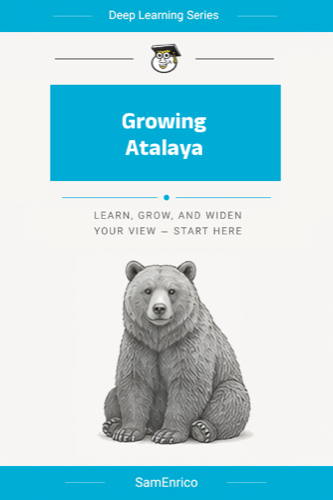
Non-FictionInformativeEducational
Growing Atalaya
This publication, published by SamEnrico, covers G
This publication, published by SamEnrico, covers Growing Atalaya
Formats
About this book
Free sample
Chapter 1: The Extinction That Wasn't...–- On a humid Miami morning in 1979, a lepidopterist named Dr. Thomas Emmel walked past a suburban garden and stopped dead. Tucked among the leathery fronds of an ancient cycad, he spotted a flash of crimson and jet black—a caterpillar he had only ever seen in museum drawers. The Atala butterfly (Eumaeus atala), officially declared extinct for nearly a decade, was very much alive, chewing its way through someone's landscaping. That moment of disbelief would ripple through the scientific community and eventually transform how thousands of gardeners think about extinction, abundance, and the responsibilities of stewardship.The story of the Atala's disappearance began long before that Miami morning.
It started with a plant that had survived the asteroid that killed the dinosaurs: the Coontie, Zamia integrifolia, the only cycad native to the eastern United States. For millennia, this ancient plant grew in dense colonies across Florida's sandy scrublands, from the Panhandle down to the Everglades. Its roots were tough, its leaves leathery, and its seeds encased in bright orange flesh that warned of toxins within. It was not a plant that invited intimacy. But it held a secret that would nearly destroy it.The Coontie's underground stem—technically a caudex, a swollen storage organ—contained starch.
Not ordinary starch, but a carbohydrate that, when carefully processed through repeated washing to remove water-soluble toxins, could be ground into a nutritious flour. Indigenous peoples of Florida had used this flour for centuries, calling the plant conti or coonti. They harvested sustainably, taking only what they needed, allowing the slow-growing cycads to regenerate over years.Then came the settlers. Then came industry. Then came the starch factories.By the late 1800s, commercial operations were strip-mining Coonties from Florida's wildlands, grinding entire plants—roots, stems, and all—into a starch sold as "Florida arrowroot." It was a booming business.
One factory alone processed fifty tons of Coontie roots per week. The plants had no defense against this scale of destruction. Cycads grow slowly, taking five to seven years to reach maturity from seed. They could not outpace the…
This is the end of the free sample. Get the eBook to keep going. Buy now
Contents
- Chapter 1
- Chapter 2
- Chapter 3
- Chapter 4
- Chapter 5
- Chapter 6
- Chapter 7
- Chapter 8
- Chapter 9
- Chapter 10
- Chapter 11
- Chapter 12
Details
- Author
- Gallardo Leia
- Publisher
- SamEnrico
- Language
- English
- Genre
- Non-Fiction, Informative, Educational
- Released
- 2026-05-11
- Pages (approx.)
- 132
- Available as
- eBook, Audiobook

Read better in the ZLOADR app
Your eBooks on your phone or tablet. Sign in with your SamEnrico account and start reading.
More by Gallardo Leia
 Gambling Addiction and ADHD ConnectionGallardo Leia$11.99
 Cocaine Use in Restaurant IndustryGallardo Leia$11.99
 Adult Child Loss GriefGallardo Leia$11.99
 Trello Power Ups Mastery GuideGallardo Leia$11.99
 Polydrug Detox StrategyGallardo Leia$11.99
 HIIT for Moms GuideGallardo Leia$11.99
 Online Fighting De escalationGallardo Leia$11.99
 Baby Loss Support Groups OnlineGallardo Leia$11.99
 The Silent Code: How a 19th-Century Spy Ring Shaped Modern CryptographyGallardo Leia$11.99
 The Ionian Gambit: Athens' Doomed Naval Gambit in the Peloponnesian WarGallardo Leia$11.99
 A Collector's Handbook to the Renault 4lGallardo Leia$11.99
 How to Produce EnginesGallardo Leia$11.99
You may also like
 Hong Kong Handover 1997Dunn Johnnie$11.99
 Zumba For Postnatal Recovery CourseNeal Christian$11.99
 Zumba for BeginnersLadner Nikia$11.99
 YouTube Comment Mining GuideHumes Pandora$12.99
 Worry Box MeditationCarlin Rudy$11.99
 Workplace Stress MeditationNguyen Lynn$11.99
 Workplace Stress and Sleep RepairHawley Ivory$11.99
 Workplace Perfectionism CureDelaney Jeffry$11.99
 Workplace Injustice Anger GuideWallen Isabelle$11.99
 Work Addiction and Burnout LinkGreenwood Ester$11.99
 Women in Yoga and WellnessBeattie Galina$11.99
 Women in Stand Up ComedyChun Evangeline$11.99