

Non-FictionInformativeEducational
Goethite Mining eBook
A Coursebook on Goethite Mining
A Coursebook on Goethite Mining
Formats
Free sample
Chapter 1: The Ochre Burden--Goethite is the mineral that the iron ore industry tried to ignore. For decades, miners blasted through it, crushed past it, and discarded it to tailings, all in pursuit of the easier, richer, more cooperative hematite below. They called it “ochre,” “yellow dirt,” or simply “the garbage.” They built their mines, their processing plants, and their entire business models around avoiding it. But the industry can no longer afford that luxury. The easy hematite is gone, and what remains—the burden of the twenty-first-century iron ore miner—is goethite.This is not a story of resource scarcity.
There is no shortage of iron in the Earth’s crust. The problem is one of chemistry, texture, and economics. Goethite is abundant, accessible, and increasingly unavoidable. But it is also soft, porous, waterlogged, and chemically stubborn. It resists the simple crushing-screening-washing flowsheets that turned hematite into steel for a hundred years.
It requires heat, pressure, and careful engineering to yield its iron. And as the world’s blast furnaces demand ever-cleaner, ever-higher-grade feed, the gap between what goethite offers and what steelmakers need has become the central challenge of modern iron ore mining.This chapter establishes the foundation for understanding that challenge. We will place goethite within the family of iron oxides and oxyhydroxides, compare it to its better-behaved cousins, and introduce the critical distinction between vitreous and ochreous varieties—a distinction that will echo through every subsequent chapter. We will explore how goethite forms, why its bound water is not an impurity but a structural feature, and why the industry’s historical preference for hematite is now a liability. By the end of this chapter, the reader will understand that goethite is not simply a problem to be managed but a mineral whose properties must be respected, characterized, and addressed through deliberate, informed process design.The Iron Oxide Family: A Tale of Four Minerals To understand goethite, one must first understand the neighborhood in which it lives.
The iron oxides and oxyhydroxides form a closely related family of minerals, each built from iron and oxygen, each with its own crystal structure and personality. Four members dominate the conversation in mining and steelmaking: hematite, magnetite, goethite, and lepidocrocite. Their differences are not academic; they are the difference between a profitable mine and a financial disaster.Hematite (α-Fe₂O₃) is the aristocrat of the family. It crystallizes in the trigonal system, forming dense, hard grains with a characteristic reddish-brown to metallic gray sheen. In its pure form, hematite contains 69.9 percent iron.
More importantly, it contains no hydrogen. There is no water in its structure, bound or otherwise. This absence of water means that hematite does not dehydroxylate—it does not release steam when heated—making it stable in blast furnaces and straightforward to beneficiate. For generations, hematite was the preferred feed for steelmaking because it was predictable, forgiving, and required little more than crushing and screening to produce a marketable product.Magnetite (Fe₃O₄) is the overachiever. With 72.4 percent iron in its pure form, it is the iron-richest common ore mineral.
But its real superpower is magnetism. Magnetite is ferromagnetic, meaning it responds eagerly to low-intensity magnetic fields. This property makes beneficiation almost trivial: crush the ore, pass it through a low-intensity magnetic separator, and recover a clean concentrate while discarding the gangue. The penalty is that magnetite often occurs in low-grade deposits that require fine grinding to liberate the magnetite grains—and grinding is expensive. But for deposits where the trade-off works, magnetite is a gift.Lepidocrocite (γ-Fe OOH) is goethite’s polymorph—a mineral with the same chemical formula but a different crystal structure.
It is less common, less stable, and rarely forms the primary iron mineral in economic deposits. When it appears, it is typically as a transient phase in specific weathering environments. For practical purposes, lepidocrocite shares many of goethite’s challenging properties: bound water, fine grain size, and difficulty in conventional separation. But because it is rarely dominant, it receives less attention.Then there is goethite (α-Fe OOH). With 62.9 percent iron in its pure form, it is the poor relation—the lowest-grade member of the family.
That 63 percent is the theoretical maximum; real goethite ores typically run 50 to 58 percent iron, with the balance made up of water, aluminum, silica, and other impurities. The water is not incidental. It is structural: approximately 10 percent of goethite’s weight is hydroxyl (OH) groups integrated into the crystal lattice. This bound water is the source of most of goethite’s bad behavior. When heated, it releases as steam, consuming energy and destabilizing agglomerates.
When crushed, it makes the mineral soft and prone to over-grinding. When processed, it creates a host of dewatering and handling challenges that hematite miners never face.The distinctions among these four minerals are not subtle. A hematite miner lives in a world of dense, dry, hard particles that respond predictably to gravity and magnetic separation. A goethite miner lives in a world of porous, wet, soft particles that over-grind, retain water, and resist separation. As the hematite is mined out, more and more miners are being forced to move from the first world to the second.
This book is their guide.The Great Depletion: Why Hematite Is Running Out The iron ore industry was built on a simple model. Find a large deposit of high-grade hematite. Strip the overburden. Blast and excavate the ore. Crush it to size.
Screen it. Ship it. The hematite-rich ores of the Mesabi Range, the Hamersley Province, and the Carajás region powered the industrial revolution, the post-war boom, and the Chinese economic miracle. These ores were so forgiving that a high school graduate could run the processing plant. They were the easy money of the mining world.That era is ending.
Not because the world is running out of iron—iron is the fourth most abundant element in the Earth’s crust. It is ending because the world is running out of accessible, high-grade hematite that requires minimal processing. The mines that once produced 64 to 66 percent iron ore are now yielding 58 to 62 percent. The hematite-rich zones that were the focus of exploration for a century have been largely identified and exploited. What remains are lower-grade deposits, more complex mineralogies, and, increasingly, goethite.Consider the numbers.
In Western Australia’s Hamersley Province, which supplies approximately 40 percent of the world’s seaborne iron ore, the average head grade of new deposits has fallen from over 64 percent iron in the 1980s to under 60 percent today. Goethite content in these ores has risen correspondingly, from less than 10 percent in the old reserves to 30 to 50 percent in the new reserves. In India’s Bihar-Orissa belt, some remaining deposits are dominated by aluminum-rich goethite with total iron grades below 55 percent and alumina contents above 5 percent—levels that would have been considered waste a generation ago.This depletion is not a crisis in the sense of imminent exhaustion. There is plenty of iron left to mine. But it is a crisis of economics and technology.
The ore that remains is harder to process, more expensive to upgrade, and more damaging to blast furnace performance. The simple flowsheets of the past no longer work. New flowsheets—more complex…
This is the end of the free sample. Get the eBook to keep going. Buy now
About this book
Details
- Author
- Tillery Missy
- Publisher
- SamEnrico
- Language
- English
- Genre
- Non-Fiction, Informative, Educational
- Released
- 2026-06-02
- Pages (approx.)
- 142
- Available as
- eBook, Audiobook

Read better in the ZLOADR app
Your eBooks on your phone or tablet. Sign in with your SamEnrico account and start reading.
More by Tillery Missy
 401k Hardship Withdrawal GuideTillery Missy$11.99
 Deadline Overload Management HandbookTillery Missy$11.99
 From Soap Operas to SimpsonsTillery Missy$11.99
 Loving Kindness for Dental FearTillery Missy$11.99
 Abruption and Preterm Premature RuptureTillery Missy$11.99
 The Phantom of the Ring: Sugar Ray Robinson's Lost Title Fight in Paris (1952)Tillery Missy$11.99
 A Beginners Guide to Glima (Volume 1)Tillery Missy$11.99
 Lululemon SWOT GuideTillery Missy$12.99
 Excel Economics Formula LibraryTillery Missy$12.99
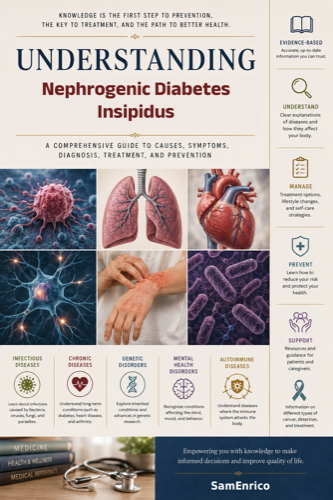 Understanding Nephrogenic Diabetes InsipidusTillery Missy$17.99
You may also like
 Hong Kong Handover 1997Dunn Johnnie$11.99
 Zumba For Postnatal Recovery CourseNeal Christian$11.99
 Zumba for BeginnersLadner Nikia$11.99
 YouTube Comment Mining GuideHumes Pandora$12.99
 Worry Box MeditationCarlin Rudy$11.99
 Workplace Stress MeditationNguyen Lynn$11.99
 Workplace Stress and Sleep RepairHawley Ivory$11.99
 Workplace Perfectionism CureDelaney Jeffry$11.99
 Workplace Injustice Anger GuideWallen Isabelle$11.99
 Work Addiction and Burnout LinkGreenwood Ester$11.99
 Women in Yoga and WellnessBeattie Galina$11.99
 Women in Stand Up ComedyChun Evangeline$11.99