
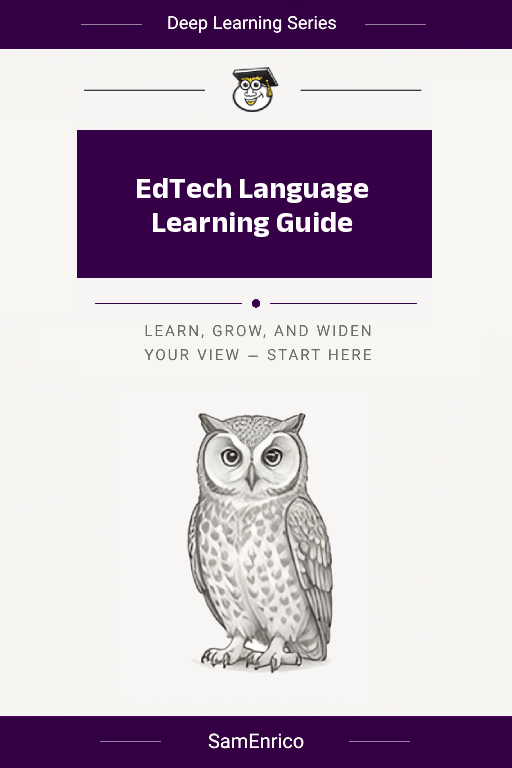
Non-FictionForecast & OutlookEducation
EdTech Language Learning Guide eBook
Discover English language platform demand, coding
by Christie Min
Discover English language platform demand, coding bootcamps, and upskilling for digital economy.
Formats
Free sample
Chapter 1: The Digital Trinity–- In a small apartment on the outskirts of São Paulo, a 34-year-old former retail manager named Mariana sat in front of a laptop that had cost her two months of savings. She had just completed a $8,000 data science certification from a prestigious university—a certificate she had framed and hung on her wall with pride. Yet three technical interviews later, she had received three rejections. Not because she couldn’t write Python code. Not because she didn’t understand regression models or neural networks.
She was rejected because when the interviewer asked, “Can you walk me through your approach to handling missing values in this dataset?” Mariana froze. She knew the answer in Portuguese. She could have explained it flawlessly in her native language. But in English, the words scattered like leaves in a storm.Mariana’s story is not unusual. It is not a cautionary tale about a single individual who fell through the cracks.
It is, instead, a portrait of the single greatest barrier to economic mobility in the twenty-first century: the gap between technical skill and professional English fluency. According to a 2024 report by the International Labour Organization, over 1.2 billion workers globally possess some level of digital skill, but fewer than 15 percent have the English proficiency required to access high-wage remote work. That gap represents trillions of dollars in unrealized earning potential. It also represents an opportunity—one that this book was written to help you seize.This chapter establishes the three pillars of modern career resilience: English fluency, coding literacy, and adaptability. These are no longer optional advantages for the ambitious few.
They are foundational requirements for anyone who hopes to participate meaningfully in the global digital economy. We will introduce the concept of parallel upskilling—the simultaneous development of language and technical skills—as a high-leverage strategy that compounds learning outcomes. We will explore case studies of non-native English speakers who transformed their careers by reaching intermediate English proficiency. And we will provide you with a self-assessment tool to identify your current skill gap and, more importantly, a roadmap for closing it.The End of the Single-Skill Professional For most of modern economic history, specialization was the path to prosperity. You learned one trade—plumbing, accounting, legal research, mechanical engineering—and you practiced that trade for forty years.
The global economy rewarded depth over breadth. A welder who welded beautifully earned more than a welder who also spoke a second language but welded poorly.That world no longer exists.The digital economy does not reward depth alone. It rewards what economists call complementary skillsets—combinations of abilities that, when brought together, unlock exponentially greater value than any single skill could generate. The most powerful complementary pair in the current labor market is English fluency plus coding proficiency. Consider the following data points:Remote job postings requiring both English fluency and programming skills grew 340 percent between 2020 and 2025, according to data from the job platform Turing.The average salary differential for a software developer in a non-native English-speaking country is 2.7x higher when the developer possesses professional English proficiency (B2 or above) compared to an otherwise identical developer with basic English (A2 or below).Among graduates of coding bootcamps, those who achieved B2 English within six months of graduation had job placement rates of 78 percent within 90 days, compared to 31 percent for those with A2 or lower.These numbers tell a clear story.
English is no longer merely a communication tool. It is a lever that multiplies the value of every other skill you possess.But let us be precise about what we mean by “English fluency.” We are not referring to the ability to recite Shakespeare or to write poetry. We are referring to professional operational English—the capacity to participate in a technical interview, to write clear documentation, to ask clarifying questions in a Slack channel, to negotiate a contract, and to explain your code to a colleague who lives six time zones away. This is a specific, learnable subset of the English language. And it is achievable for nearly every motivated learner.The Parallel Upskilling Advantage Traditional education treats skills as sequential: first learn English, then learn to code, then look for a job.
This linear model is inefficient and, for many adult learners, impractical. It assumes unlimited time and unlimited patience. It also ignores a fundamental insight from cognitive science: skills learned in parallel reinforce each other.Parallel upskilling is the simultaneous development of language and technical skills. Rather than spending six months on English and six months on coding, you spend twelve months on both, with each hour of practice supporting the other. Why does this work?
Because programming languages and human languages share more cognitive infrastructure than most people realize.When you learn the syntax of Python—the rules for how functions are defined, arguments are passed, and variables are scoped—you are also training your brain to recognize structural patterns. Those same pattern-recognition networks are engaged when you learn the syntax of English: subject-verb-object order, conditional clauses, subordinate conjunctions. The brain does not store “coding knowledge” and “language knowledge” in completely separate silos. It integrates them into a broader capacity for symbolic manipulation.Research published in the journal Cognitive Science in 2023 found that bilingual adults who learned a programming language showed faster acquisition of syntax rules than monolingual adults, even when the programming language was their first. Conversely, programmers who studied a second human language demonstrated improved debugging skills, presumably because both activities require careful attention to syntactical precision.Parallel upskilling also solves a motivational problem.
Learning English alone can feel abstract and disconnected from your career goals. Learning to code alone can feel overwhelming when every tutorial assumes native-level reading comprehension. But learning both together creates immediate feedback loops. You write a few lines of code, and you see the result. You learn a new English phrase, and you immediately use it in a comment or a commit message.
Progress in one domain fuels progress in the other.The Gatekeeper Rule: Your Minimum Viable Threshold However, parallel upskilling is not appropriate for every learner at every stage. This is where the Gatekeeper Rule comes into play.After analyzing hundreds of learner trajectories and consulting with language acquisition specialists, bootcamp admissions directors, and remote hiring managers, we have identified a clear threshold: A2 English proficiency (elementary level) is the minimum required to begin parallel upskilling.Below A2, the cognitive load of trying to learn two symbolic systems simultaneously is too high. Learners with A1 or lower English struggle to understand tutorial instructions, to read error messages, or to ask basic questions in English-language forums. Attempting to code at this stage leads to frustration and high dropout rates.At A2 and above, parallel upskilling becomes not only possible but optimal. Learners can comprehend basic documentation, follow along with video tutorials using subtitles, and participate in beginner-friendly coding communities.
The language skills are sufficient to support technical learning, and the technical learning provides authentic contexts for language practice.What does A2 actually mean in practice? According to the Common European Framework of Reference for Languages (CEFR), an A2 learner can:Understand sentences and frequently used expressions related to areas…
This is the end of the free sample. Get the eBook to keep going. Buy now
About this book
Details
- Author
- Christie Min
- Publisher
- SamEnrico
- Language
- English
- Genre
- Non-Fiction, Forecast & Outlook, Education
- Released
- 2026-06-01
- Pages (approx.)
- 142
- Available as
- eBook, Audiobook

Read better in the ZLOADR app
Your eBooks on your phone or tablet. Sign in with your SamEnrico account and start reading.
More by Christie Min
 Talent Migration Patterns for SpousesChristie Min$11.99
 The Kercher Autopsy Forensic ReviewChristie Min$11.99
 Suicide Loss HandbookChristie Min$11.99
 Pain Neuroscience Education PrimerChristie Min$11.99
 Bill Gates Antitrust BattleChristie Min$11.99
 The Last Broadcast: The Night Radio Saved a NationChristie Min$11.99
 Understanding Lichen PlanusChristie Min$17.99
 How to Become a CollectorChristie Min$11.99
 West African Trade Payment Solutions GuideChristie Min$12.99
 Diagnostic Medical SonographerChristie Min$11.99
You may also like
 Hong Kong Handover 1997Dunn Johnnie$11.99
 Zumba For Postnatal Recovery CourseNeal Christian$11.99
 Zumba for BeginnersLadner Nikia$11.99
 YouTube Comment Mining GuideHumes Pandora$12.99
 Worry Box MeditationCarlin Rudy$11.99
 Workplace Stress MeditationNguyen Lynn$11.99
 Workplace Stress and Sleep RepairHawley Ivory$11.99
 Workplace Perfectionism CureDelaney Jeffry$11.99
 Workplace Injustice Anger GuideWallen Isabelle$11.99
 Work Addiction and Burnout LinkGreenwood Ester$11.99
 Women in Yoga and WellnessBeattie Galina$11.99
 Women in Stand Up ComedyChun Evangeline$11.99