
Dry Cleaning Pickle Guide
Air out dry-cleaned clothes before bringing indoor
by Lowman Mendy
Air out dry-cleaned clothes before bringing indoors, ideally for 24 hours to offgas perc.
Formats
About this book
Free sample
Chapter 1: The Chemistry of Convenience--–- The suit hangs on the back of the door, wrapped in thin plastic, emanating that unmistakable smell of freshness. You brought it home from the dry cleaner three hours ago, and already the odor has migrated from the garment bag into the hallway, then under the bedroom door, then into the very air you are breathing as you read this sentence. That smell—the one the industry has trained you to associate with cleanliness, professionalism, and care—is not a sign of purity. It is a chemical signal, a vapor trail leading directly into your lungs. This chapter reveals the molecular identity of that smell, explains why the dry cleaning industry fell in love with a toxic solvent, and exposes the fundamental paradox that defines the modern dry cleaning pickle: the very properties that make perchloroethylene an exceptional cleaner are the same properties that make it an inescapable indoor air pollutant.The Molecule Behind the Smell Perchloroethylene—known in the trade as Perc, PCE, or tetrachloroethylene—is a chlorinated hydrocarbon with the chemical formula C₂Cl₄.
Its structure is deceptively simple: two carbon atoms double-bonded to each other, with each carbon also bonded to two chlorine atoms. The molecule is symmetrical, nonpolar, and remarkably stable. Those three characteristics explain almost everything about why dry cleaners love it and why toxicologists fear it.The stability of Perc is what allows it to be recycled. In a dry cleaning machine, the same Perc can be used hundreds of times, distilled and filtered between cycles to remove the oils, greases, and soils it has dissolved. Unlike hydrocarbon solvents such as gasoline or mineral spirits, Perc does not readily break down under heat or pressure.
It can be heated to 121 degrees Celsius (250 degrees Fahrenheit) without decomposing—a property that makes the drying cycle possible.The nonpolar nature of Perc is what makes it such an effective degreaser. Polar solvents like water dissolve polar substances—salts, sugars, most organic acids. But the stains that plague fine clothing—body oils, lipstick, butter, salad dressing, motor oil—are nonpolar. They repel water. Trying to…
This is the end of the free sample. Get the eBook to keep going. Buy now
Contents
- Chapter 1
- Chapter 2
- Chapter 3
- Chapter 4
- Chapter 5
- Chapter 6
- Chapter 7
- Chapter 8
- Chapter 9
- Chapter 10
- Chapter 11
- Chapter 12
Details
- Author
- Lowman Mendy
- Publisher
- SamEnrico
- Language
- English
- Genre
- Non-Fiction, Health & Wellness, Clothing Offgassing
- Released
- 2026-06-07
- Pages (approx.)
- 150
- Available as
- eBook, Audiobook

Read better in the ZLOADR app
Your eBooks on your phone or tablet. Sign in with your SamEnrico account and start reading.
More by Lowman Mendy
 Book Conversation StartersLowman Mendy$11.99
 Live Service Game SpendingLowman Mendy$11.99
 Body Scan For Zoom FatigueLowman Mendy$11.99
 MBSR for Corporate ProfessionalsLowman Mendy$11.99
 Frozen Echoes of the Lost ExpeditionLowman Mendy$11.99
 Startup Marketing One Page PlanLowman Mendy$12.99
 Express Entry After PGWP ExpiryLowman Mendy$12.99
 Facility Executive TechnicalLowman Mendy$11.99
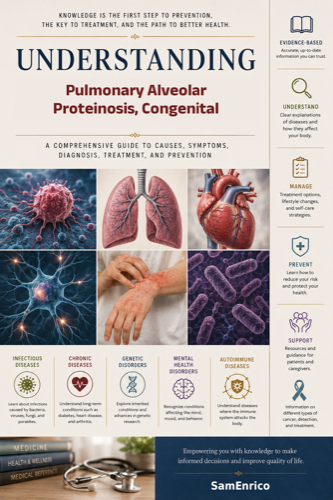 Understanding Pulmonary Alveolar Proteinosis, CongenitalLowman Mendy$17.99
 How to Become a Oiling-machine OperatorLowman Mendy$11.99