
Non-FictionFirst 30 DaysReferences
Co Founder Reference Check Guide eBook
Call past colleagues, co-founders, and managers to
Call past colleagues, co-founders, and managers to verify work history and collaboration style.
Formats
Free sample
Chapter 1: The Two-Million-Dollar Handshake--–- In a crowded coffee shop in San Francisco, two founders shook hands over a latte. They had known each other for six weeks, admired each other's ambition, and signed a 50/50 equity agreement without a single phone call to anyone who had ever worked with either of them. Eighteen months later, one founder was locked out of the company Slack, the other had drained the bank account to pay a lawyer, and their product—a promising AI tool that had once been described as "the next big thing"—was dead. The handshake cost them two million dollars in wasted capital, eighteen months of their lives they will never get back, and a friendship that had once seemed unbreakable. The worst part?
A single reference check—one hour of phone calls—would have revealed that the co-founder had been fired from his previous two startups for exactly the same behavior that eventually destroyed their company.This is not an outlier. It is the rule.The Graveyard of Great Ideas The startup graveyard is not filled with companies that had bad products. It is filled with companies that had great products and broken partnerships. According to research from Harvard Business School and multiple longitudinal studies of startup failures, approximately 65 percent of startups fail due to co-founder conflict, not market conditions, not competition, and not lack of funding. Let that number sink in for a moment.
More than half of all startup failures—nearly two out of three—could have been prevented not by better technology, more customers, or a stronger pitch deck, but by a single conversation that almost nobody has.The tragedy is not that co-founder conflict happens. The tragedy is that it is almost always predictable. The warning signs exist. The data is available. The people who could warn you are out there, many of them willing to speak honestly if you ask the right questions in the right way.
But founders don't call them. They don't call because reference checks feel awkward. They don't call because they are already excited about the person sitting across from them. They don't call because they have convinced themselves that asking about the past is somehow rude or untrusting. And so they shake hands, sign documents, and walk blindly into a partnership that will eventually tear their company apart.This book exists because that pattern is entirely preventable.The Laptop You Chose vs.
The Person You Chose Let me ask you a question, and I want you to answer honestly. When you bought your current laptop, how many hours did you spend researching the decision? Did you read reviews? Compare specifications? Watch You Tube videos benchmarking performance?
Ask friends what they used? Wait for a sale? Now ask yourself a second question: how many hours have you spent researching the person you are considering as a co-founder? Have you called their former colleagues? Have you spoken to someone they fired?
Have you asked a former manager what it was like to hold them accountable?The asymmetry is absurd and it is everywhere. Founders will spend twenty hours choosing a laptop that costs two thousand dollars and will be replaced in three years. Those same founders will spend twenty minutes choosing a co-founder who will own half their company, influence every strategic decision, and shape the culture of every person they hire. This is not a rational allocation of attention. It is a cognitive bias dressed up as trust.The bias has a name: the halo effect.
When we meet someone who is charismatic, confident, and successful on paper, we tend to assume they are good at everything. We see the polished Linked In profile, the impressive job titles, the confident handshake, and we extrapolate. Surely someone who talks so well must execute well. Surely someone who has raised money before must know how to be a good partner. Surely someone who seems so nice in coffee shops must be nice under pressure.
The halo effect blinds us to the very information we most need: how this person behaves when things go wrong, how they treat people who cannot help them, how they handle criticism, how they respond to being wrong.Reference checks are the antidote to the halo effect. They pull back the curtain. They replace assumption with evidence. They turn the charismatic stranger into a known quantity.The Sixty-Second Reference Check (And Why It Is Not Enough)There is a concept that circulates in venture capital circles called the sixty-second reference check. It goes like this: you call a reference, you ask a single question—"Would you work with this person again?"—and you hang up.
The theory is that this binary question cuts through all the noise and gives you the only signal that matters. If the answer is anything other than an immediate, enthusiastic "yes," you walk away.This is a useful mental model and a terrible due diligence process.It is useful because it captures something essential: trust is binary. You either trust someone to have your back in a crisis or you don't. There is no middle ground. And the "would you work with them again?" question forces references to make a judgment call that cuts through the politeness and the euphemisms.
When a reference hesitates, when they say "yes, but...", when they say "in the right context"—that is not a yes. That is a no wearing a disguise.But the sixty-second reference check is not enough for a co-founder decision because a co-founder is not an employee. An employee has a manager who sets their priorities, a structure that contains their behavior, and an off-ramp if things go wrong. A co-founder has none of those things. A co-founder is your equal in power, your peer in decision-making, and your partner in stress.
The behavioral patterns that would be manageable in an employee become catastrophic in a co-founder. The person who struggles with feedback as an employee can be coached or managed out. The same person as a co-founder will block every difficult conversation, gaslight you during conflicts, and blame you when things go wrong—and you cannot fire them without buying out their equity or dissolving the company.This is why the sixty-second reference check is a starting point, not a finish line. You need the binary yes/no question as a filter, but then you need the depth. You need to understand the pattern of behavior across multiple contexts.
You need to hear from managers, peers, and direct reports. You need to know how this person behaves when they are tired, when they are wrong, when they have lost a deal, when their code has broken production, when their team has missed a deadline. The sixty-second check tells you whether to proceed. The full reference check tells you how to proceed—and whether to proceed at all.The Three Costs of a Bad Co-Founder When founders contemplate the risk of a bad co-founder, they almost always think about financial cost. The startup runs out of money.
The product fails to launch. The investors pull their term sheet. These are real risks, and they are substantial. A failed startup can cost hundreds…
This is the end of the free sample. Get the eBook to keep going. Buy now
About this book
Details
- Author
- Mackey Tillie
- Publisher
- SamEnrico
- Language
- English
- Genre
- Non-Fiction, First 30 Days, References
- Released
- 2026-06-01
- Pages (approx.)
- 142
- Available as
- eBook, Audiobook

Read better in the ZLOADR app
Your eBooks on your phone or tablet. Sign in with your SamEnrico account and start reading.
More by Mackey Tillie
 Child Loss Photography MemoryMackey Tillie$11.99
 Nipping Negotiation AnchorsMackey Tillie$11.99
 Daily Sobriety Maintenance ManualMackey Tillie$11.99
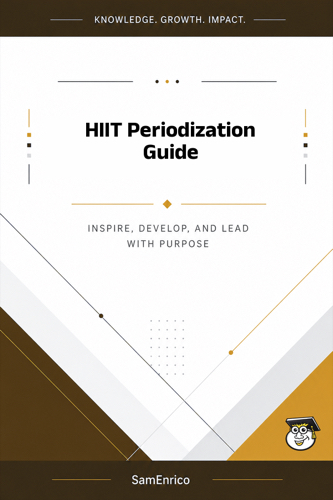 HIIT Periodization GuideMackey Tillie$11.99
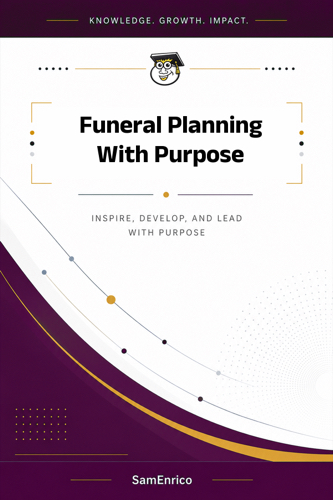 Funeral Planning With PurposeMackey Tillie$11.99
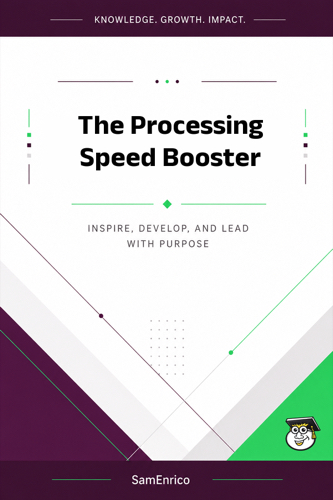 The Processing Speed BoosterMackey Tillie$11.99
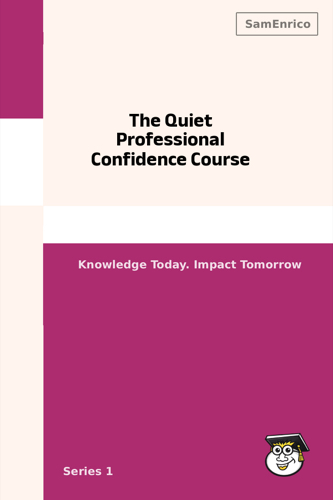 The Quiet Professional Confidence CourseMackey Tillie$11.99
 No Kids Divorce RecoveryMackey Tillie$11.99
 The Windward Crown: How the Dutch Ruled the WavesMackey Tillie$11.99
 The Storming of the Yuan: Kublai Khan's Last Stand at XiangyangMackey Tillie$11.99
 How to Produce Motor Vehicle TowingMackey Tillie$11.99
 How to Produce Laser EquipmentMackey Tillie$11.99
You may also like
 Hong Kong Handover 1997Dunn Johnnie$11.99
 Zumba For Postnatal Recovery CourseNeal Christian$11.99
 Zumba for BeginnersLadner Nikia$11.99
 YouTube Comment Mining GuideHumes Pandora$12.99
 Worry Box MeditationCarlin Rudy$11.99
 Workplace Stress MeditationNguyen Lynn$11.99
 Workplace Stress and Sleep RepairHawley Ivory$11.99
 Workplace Perfectionism CureDelaney Jeffry$11.99
 Workplace Injustice Anger GuideWallen Isabelle$11.99
 Work Addiction and Burnout LinkGreenwood Ester$11.99
 Women in Yoga and WellnessBeattie Galina$11.99
 Women in Stand Up ComedyChun Evangeline$11.99