
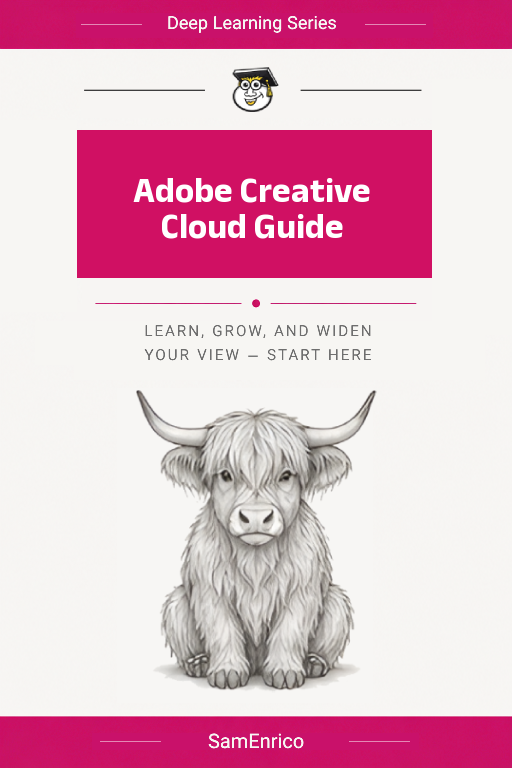
Non-FictionStrategic AtlasRetention Strategy
Adobe Creative Cloud Guide Audiobook
Learn forced cloud transition, frequent updates, a
Learn forced cloud transition, frequent updates, and integration lock-in that converted pirates to subscribers.
Formats
Free sample
Chapter 1: The 2013 Earthquake--May 6, 2013, began like any other Monday for the creative industry. Designers opened their email, photographers culled through weekend shoots, and agency owners prepared for another week of client revisions. Then the announcement hit. Adobe, the company whose software had defined professional creativity for a quarter century, declared that it would never again sell a perpetual license. Creative Suite 6—CS6—would be the last version anyone could buy and own forever.
From that day forward, the only way to access Photoshop, Illustrator, In Design, and every other Adobe tool would be a monthly subscription called Creative Cloud.The backlash was immediate and ferocious. Forums exploded with thousands of angry posts. Petitions circulated demanding Adobe reverse course. Long-time users calculated what they would pay over five, ten, or twenty years and discovered that the new model would cost them three to five times more than buying upgrades every two to three years under the old system. Commentators predicted a mass exodus to alternatives like Corel, Pixelmator, and GIMP.
One particularly prescient critic wrote, “Adobe is trading a generation of customer goodwill for a short-term stock pop.”That critic was wrong about the stock pop—and right about everything else.Within six months of the announcement, Adobe’s share price had dropped approximately six percent. Wall Street hated uncertainty, and the transition from perpetual licenses to subscriptions created nothing but uncertainty. Analysts downgraded the stock. Competitors rushed out press releases touting their one-time-purchase models. For a brief moment, it looked as though the creative industry might fracture, with professionals migrating to cheaper, owned-forever alternatives while Adobe’s revenue cratered.That moment passed.
And then something remarkable happened.By 2015, Adobe’s stock had not only recovered but surpassed its pre-announcement high. By 2018, it had doubled. By 2020, it had quadrupled. As of 2026, Adobe’s market capitalization exceeds $200 billion—more than ten times what it was on the morning of May 6, 2013. The company that critics said had committed suicide by subscription had instead engineered one of the most successful business pivots in software history.The question that haunts every Creative Cloud subscriber today is not whether Adobe won—it obviously did—but how.
And more importantly, what did the creative industry lose in the process?The Death of Ownership To understand the magnitude of what Adobe did in 2013, you must first understand what came before. Creative Suite was not merely a collection of applications.…
This is the end of the free sample. Get the Audiobook to keep going. Buy now
About this book
Details
- Author
- Higgins Tiffany
- Publisher
- SamEnrico
- Language
- English
- Genre
- Non-Fiction, Strategic Atlas, Retention Strategy
- Released
- 2026-05-30
- Pages (approx.)
- 143
- Available as
- eBook, Audiobook

Listen in the VoxFlicks app
Audiobooks and audio dramas wherever you go. Sign in with your SamEnrico account and press play.
More by Higgins Tiffany
 State Privacy Law PatchworkHiggins Tiffany$11.99
 Pharmacist Imposter SyndromeHiggins Tiffany$11.99Pharmacist Imposter SyndromeHiggins Tiffany$11.99
 The Teen Self Esteem Podcast GuideHiggins Tiffany$11.99
 Instagram Carousel MasteryHiggins Tiffany$11.99
 The Narcissistic Abuse Self EsteemHiggins Tiffany$11.99
 The Shield of the Sun: The Military Genius of the Aksumite EmpireHiggins Tiffany$11.99
 Understanding Prinzmetal's Variant AnginaHiggins Tiffany$17.99
 Courier Success SpecialistHiggins Tiffany$11.99
 Executive Summary for Strategic PlansHiggins Tiffany$12.99
 How to Start a Ballet Dancers - Independent BusinessHiggins Tiffany$11.99
You may also like
 Hong Kong Handover 1997Dunn Johnnie$11.99
 Zumba For Postnatal Recovery CourseNeal Christian$11.99
 Zumba for BeginnersLadner Nikia$11.99
 YouTube Comment Mining GuideHumes Pandora$12.99
 Worry Box MeditationCarlin Rudy$11.99
 Workplace Stress MeditationNguyen Lynn$11.99
 Workplace Stress and Sleep RepairHawley Ivory$11.99
 Workplace Perfectionism CureDelaney Jeffry$11.99
 Workplace Injustice Anger GuideWallen Isabelle$11.99
 Work Addiction and Burnout LinkGreenwood Ester$11.99
 Women in Yoga and WellnessBeattie Galina$11.99
 Women in Stand Up ComedyChun Evangeline$11.99