
Non-FictionAI OperatorHealthcare AdminWorkbook
Voice To Text Documentation Workbook eBook
Train AI to transcribe clinical dictations with sp
Train AI to transcribe clinical dictations with specialty-specific vocabulary and formatting rules. Includes accent adaptation, abbreviation expansion, and real-time editing prompts.
Formats
Free sample
Chapter 1: The Listening Lie...--–- Most doctors believe that voice-to-text software hears what they say. That is the first and most dangerous lie in medical documentation. The truth is far stranger and far more important: Automatic Speech Recognition (ASR) systems do not hear at all. They predict. Every word that appears on your screen is not a recording of your voice but a statistical bet made by a machine that has never understood a single syllable of human language.This distinction between hearing and predicting is not academic pedantry.
It is the entire foundation upon which this workbook is built. If you approach AI transcription as if it were a human transcriptionist—someone who listens, understands context, and types what you meant—you will spend hours correcting the same errors, cursing the software, and eventually reverting to typing your own notes. But if you understand that the AI is a probability engine that needs to be trained, edited, and commanded in real time, you become something far more valuable than a transcriptionist. You become a Medical Language Specialist.The medical documentation profession is undergoing its most radical transformation since the adoption of the typewriter. In the past five years, the role has shifted from linear typing (listen → type verbatim → review) to parallel editing (listen → AI transcribes → edit simultaneously → command corrections).
The human at the keyboard is no longer a typist; they are a diagnostician of machine error, a prompt engineer, and a risk manager rolled into one. This chapter dismantles the old mindset and builds the new one, starting with the single most important concept: the Hybrid Workflow.The Great Role Reversal For decades, medical transcription followed a linear, predictable path. A clinician dictated into a cassette recorder or a digital voice file. A human transcriptionist listened, typed, printed, and filed. The transcriptionist's job was verbatim accuracy—every "um," every false start, every repetition preserved.
The skill that mattered was typing speed. The faster you typed, the more notes you produced, the more you were paid. The clinician reviewed the final document and signed it.That world is dead. Not dying—dead.Today's AI-powered documentation tools like Dragon Medical One, Suki, Nuance DAX, and Open AI Whisper can transcribe speech at speeds exceeding 150 words per minute with word error rates below 10% for clear audio. A human transcriptionist averages 60-80 words per minute.
You cannot compete on speed. You cannot compete on verbatim accuracy for routine speech. What you can do—what only a human can do—is understand clinical nuance, detect logical contradictions, and override the AI when its statistical prediction is dangerously wrong.The new role is the Medical Language Specialist. This person does not type. They edit, correct, train, and verify.
They work in parallel: listening to the clinician's voice while simultaneously scanning the AI's output and issuing verbal correction commands. They are not slower than the AI; they are faster because they know exactly where the AI will fail and they preempt those failures.Consider this example. A radiologist dictates: "No evidence of acute fracture or dislocation. Mild degenerative changes noted at the L4-L5 facet joints." An untrained AI, hearing a slight cough over the word "facet," might output "Mild degenerative changes noted at the L4-L5 faucet joints." A human reading "faucet joints" knows immediately that this is nonsense. A Medical Language Specialist knows to say "Correct that—facet, F-A-C-E-T" before finishing the sentence.
The AI learns. The document is clean. The time lost is one second instead of ten seconds of backspacing and retyping.The Hybrid Workflow: A Symbiotic Loop The core model for this workbook is what we call the Hybrid Workflow. It is a loop with four stages, each requiring a specific human skill.Stage One: The Clinician's Voice. This is the input.
It is messy, accented, variable in speed, and contaminated by ambient noise. The clinician may dictate while walking, while looking at a screen, or while examining a patient. The voice contains the clinical data, but it also contains artifacts: coughs, pauses, self-corrections, and side conversations. The Medical Language Specialist does not control the clinician's voice, but they understand its limitations. They know that a whisper will confuse the AI.
They know that dictating after a sip of water (wet mouth) creates plosives. They know that turning away from the microphone changes the frequency response.Stage Two: Automatic Speech Recognition (ASR). The ASR system converts acoustic signals into phonemes, then phonemes into words, then words into sentences. This is where the "listening lie" happens. The ASR does not know that "facet" is a bone and "faucet" is a plumbing fixture.
It only knows that the acoustic pattern for "facet" and "faucet" is statistically similar. It chooses the more common word unless trained otherwise. The ASR's output is raw text—often called a "draft" or "transcript." It is never final. It is never trusted.Stage Three: Large Language Model (LLM). The LLM takes the ASR's raw text and applies context.
It knows that "L4-L5" is a spinal level. It knows that "degenerative changes" are orthopedic. It might correct "faucet" to "facet" based on that context. But the LLM also hallucinates. It adds words that were never spoken because they are statistically likely.
It removes negations like "no" or "not" because those words are less common. It invents lab values that fit the pattern but are factually wrong. The LLM's output is the "edited draft"—better than the ASR output, but still dangerous.Stage Four: The Human Editor (You). This is the most important stage. You are not reading for typos.
You are reading for clinical coherence. You are checking for contradictions, omissions, and hallucinations. You are issuing commands to correct, expand, and format. You are training the AI by your corrections. And you are doing all of this in real time, often while the clinician is still speaking.The Hybrid Workflow is symbiotic because each stage improves the others.
Your corrections train the ASR and LLM. The ASR's confidence scores tell you where to focus your attention. The LLM's context suggestions speed up your editing. Over time, the loop tightens: you correct less because the AI learns your voice, your vocabulary, and your documentation style.The Myth of "Set It and Forget It"Vendors of voice-to-text software often advertise their products as turnkey solutions. "Just speak and see your text appear," the marketing copy reads.
"Accurate out of the box." This is a lie. No ASR system achieves clinically acceptable accuracy out of the box for any clinician with a non-standard accent, any specialty with rare terminology, or any environment with ambient noise. The baseline Word Error Rate (WER) for a general-purpose ASR on medical dictation is typically 15-25%. That means one in every five to seven words is wrong. For a 300-word clinic note, that is 45-75 errors.Let me repeat that for emphasis: out of the box, the AI will make 45 to 75 errors in a single clinic note.
These errors are not evenly distributed. They cluster around medical terminology, numbers, negations, and homophones. "The patient denies chest pain" becomes "The patient admits chest pain"—a single word changes the clinical meaning completely. "Ejection fraction 55%" becomes "Ejection fraction…
This is the end of the free sample. Get the eBook to keep going. Buy now
About this book
Details
- Author
- Sewell Helene
- Publisher
- SamEnrico
- Language
- English
- Genre
- Non-Fiction, AI Operator, Healthcare Admin, Workbook
- Released
- 2026-05-30
- Pages (approx.)
- 137
- Available as
- eBook, Audiobook

Read better in the ZLOADR app
Your eBooks on your phone or tablet. Sign in with your SamEnrico account and start reading.
More by Sewell Helene
 Nonverbal Cues in RelationshipsSewell Helene$11.99
 Burnout Prevention for Optometrists HandbookSewell Helene$11.99
 Pet Loss Ceremony GuideSewell Helene$11.99
 Joan of Arc AccountSewell Helene$11.99
 The Self Esteem After Divorce WorkbookSewell Helene$11.99
 The Scarab's Oath: Nefertiti's Lost ProphecySewell Helene$11.99
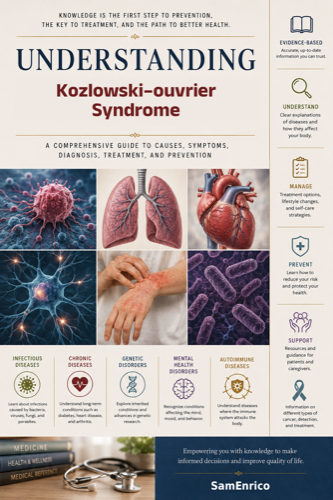 Understanding Kozlowski–ouvrier SyndromeSewell Helene$17.99
 SaaS International Expansion GuideSewell Helene$12.99
 Architectural DraftsmanSewell Helene$11.99
 How to Start a Hobby in Snow SkiingSewell Helene$11.99
You may also like
 Hong Kong Handover 1997Dunn Johnnie$11.99
 Zumba For Postnatal Recovery CourseNeal Christian$11.99
 Zumba for BeginnersLadner Nikia$11.99
 YouTube Comment Mining GuideHumes Pandora$12.99
 Worry Box MeditationCarlin Rudy$11.99
 Workplace Stress MeditationNguyen Lynn$11.99
 Workplace Stress and Sleep RepairHawley Ivory$11.99
 Workplace Perfectionism CureDelaney Jeffry$11.99
 Workplace Injustice Anger GuideWallen Isabelle$11.99
 Work Addiction and Burnout LinkGreenwood Ester$11.99
 Women in Yoga and WellnessBeattie Galina$11.99
 Women in Stand Up ComedyChun Evangeline$11.99