
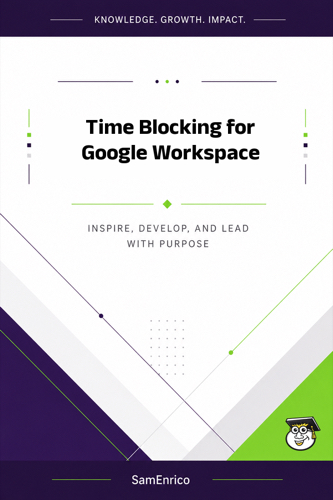
Non-FictionSelf-HelpGoogle Productivity
Time Blocking for Google Workspace eBook
Integrate Gmail, Tasks, and Keep with Google Calen
by Cho Emmanuel
Integrate Gmail, Tasks, and Keep with Google Calendar blocks.
Formats
Free sample
Chapter 1: The List That Lies...--–- Your morning ritual is familiar. You pour coffee, open your laptop, and glance at Google Tasks. Twenty-three items stare back. Some have been there for weeks. The checkboxes remain unfilled.
A few have red due-date warnings screaming for attention. You feel a knot in your stomach before you have typed a single word. This is not a productivity system. This is a guilt generator.The problem is not you. The problem is that most people confuse a to-do list with a plan.
They are not the same thing. A to-do list is a catalog of desires. A plan is a schedule of actions. The difference between the two is the difference between hoping and doing. This chapter dismantles the myth that lists create results and introduces the foundational distinction that makes time blocking work: the separation of Due Dates from Do Dates.The Anatomy of a Broken List Open your Google Tasks right now.
Look at the first five items. Ask yourself three questions about each one. How long will it actually take? When will you start working on it? What else is competing for that same time?
Chances are, you cannot answer any of those questions with confidence. That is because Google Tasks, by itself, tracks what needs to be done but completely ignores when and how long. A task that requires five minutes appears identical to a task that requires five hours. A task due next Tuesday looks exactly like a task due this afternoon.This design flaw creates a specific kind of cognitive burden called the Zeigarnik Effect. Psychologists discovered nearly a century ago that unfinished tasks occupy persistent mental bandwidth.
Your brain keeps them active in the background, like a browser tab you cannot close. The more tasks you have without scheduled completion times, the more mental energy leaks away. You are not forgetting the tasks. You are carrying them everywhere you go.Google Tasks excels at capture. It is fast, simple, and deeply integrated.
You can hit Shift + T from any email and instantly create a task. This ease of capture is both its greatest strength and its most dangerous trap. Because when capturing takes zero effort, you accumulate tasks faster than you can possibly complete them. The list grows. The guilt compounds.
And the calendar remains empty.The 2025–2026 updates to Google Workspace (explained fully in Chapter 2) solve this problem by allowing tasks to live on the calendar. But before you can use those tools effectively, you must understand why the old way failed. Otherwise, you will simply migrate your broken list onto your calendar and call it progress.Due Dates versus Do Dates: The Critical Distinction Due Date = The deadline by which something must be finished. This is an external constraint. It comes from your boss, your client, your mortgage company, or the laws of physics.
You do not control due dates. You respond to them.Do Date = The specific calendar slot when you actually work on the task. This is an internal commitment. You control it completely. A do date is a promise you make to yourself about when you will invest your attention.Most productivity tools obsess over due dates.
Google Tasks does this. Asana does this. Trello does this. They all want to know when something is due. But due dates create anxiety, not action.
A task that is due next Friday does not tell you what to do today. It only tells you that you are running out of time.Do dates, by contrast, create momentum. When you assign a task to Tuesday at 10:00 AM, two things happen. First, your brain stops worrying about that task because it now has a designated time slot. Second, your calendar becomes a commitment device that protects that time from other demands.Here is a simple test.
Think of a task that has been on your list for more than a week. Now give it a do date: block 90 minutes on your calendar for tomorrow morning at 9:00. Notice what happens to your feeling about that task. For most people, the vague dread transforms into specific anticipation. You are no longer hoping to do it.
You are planning to do it.The Parking Psychology Imagine you need to remember to pick up milk on your way home from work. If you simply tell yourself "don't forget the milk," you will carry that thought for hours. It will interrupt your work. It will nag at you during meetings. You might even repeat it like a mantra.
This is exhausting.Now imagine you write "milk" on a sticky note and place it on your dashboard. The moment you do that, your brain relaxes. You have offloaded the memory. You know you will see it when you get in the car. The task is no longer burning mental energy.Parking is the same concept applied to your calendar.
When you assign a task to a specific time block, you are not just scheduling it. You are telling your brain that the task has a designated parking spot. It can stop circling the runway and land.The 2025–2026 updates to Google Workspace make parking automatic. When you create a Task block directly on your calendar (as opposed to an Event block), Google marks that time as busy, enables Do Not Disturb, and protects the slot from meeting invites. Your brain receives the signal that this time is spoken for.
The task is parked.But parking requires trust. If you constantly ignore your own time blocks, your brain learns that calendar slots are meaningless. You must treat do dates with the same seriousness you treat meetings with your boss. When you block 9:00 AM for deep work, that time belongs to you. Protect it accordingly.Why Duration and Energy Matter A to-do list treats all tasks as equal.
A five-minute email reply sits next to a three-hour strategic plan. Both have checkboxes. Both feel urgent. This flat structure hides the two most important dimensions of productive work: duration and energy level.Duration is how long a task takes. Without duration estimates, you cannot build a realistic schedule.
You might block 30 minutes for a task that actually requires two hours, guaranteeing failure. Or you might block three hours for a task that takes 20 minutes, wasting valuable time that could have been used for something else.Energy level is how demanding a task is on your cognitive resources. Some tasks require deep focus, creative thinking, and uninterrupted attention. Other tasks require only shallow processing, routine execution, and minimal concentration. Mixing these indiscriminately on a list leads to exhaustion and poor outcomes.Google Tasks, used alone, captures neither duration nor energy.
A task called "write proposal" could mean anything from a 15-minute email to a 4-day research project. A task called "call client" could be a 2-minute confirmation or a 45-minute negotiation. The list does not tell you. Your calendar, however, forces you to confront both dimensions.When you drag a task onto your calendar, you must decide how long it will take. That decision alone improves your planning accuracy dramatically.
And when you mark a Task block as "Focus Time" versus "Task Time" (detailed in Chapter 5), you signal to…
This is the end of the free sample. Get the eBook to keep going. Buy now
About this book
Details
- Author
- Cho Emmanuel
- Publisher
- SamEnrico
- Language
- English
- Genre
- Non-Fiction, Self-Help, Google Productivity
- Released
- 2026-06-10
- Pages (approx.)
- 131
- Available as
- eBook, Audiobook

Read better in the ZLOADR app
Your eBooks on your phone or tablet. Sign in with your SamEnrico account and start reading.
More by Cho Emmanuel
 Body Scan Meditation Track PackCho Emmanuel$11.99
 Parental Anger RethinkingCho Emmanuel$11.99
 Antarctica Traverse GuideCho Emmanuel$11.99
 Unidentified Remains Hair MicroscopyCho Emmanuel$11.99
 Bangladeshi Garment Worker To OwnerCho Emmanuel$11.99
 Atomic Habits For Habit ResetCho Emmanuel$11.99
 Small Habit ChangesCho Emmanuel$11.99
 The Silk Road Heist: How a 19th-Century Scam Fooled the WorldCho Emmanuel$11.99
 The Humber Bridge: Breaking the Limits of Steel and DreamsCho Emmanuel$11.99
 How to Start a Sixth Form Colleges Business (Beginners Guide)Cho Emmanuel$11.99
 How to Produce Aldehyde, Ketone and QuinoneCho Emmanuel$11.99
 Franchise Brand Localization GuideCho Emmanuel$12.99
You may also like
 Hong Kong Handover 1997Dunn Johnnie$11.99
 Zumba For Postnatal Recovery CourseNeal Christian$11.99
 Zumba for BeginnersLadner Nikia$11.99
 YouTube Comment Mining GuideHumes Pandora$12.99
 Worry Box MeditationCarlin Rudy$11.99
 Workplace Stress MeditationNguyen Lynn$11.99
 Workplace Stress and Sleep RepairHawley Ivory$11.99
 Workplace Perfectionism CureDelaney Jeffry$11.99
 Workplace Injustice Anger GuideWallen Isabelle$11.99
 Work Addiction and Burnout LinkGreenwood Ester$11.99
 Women in Yoga and WellnessBeattie Galina$11.99
 Women in Stand Up ComedyChun Evangeline$11.99