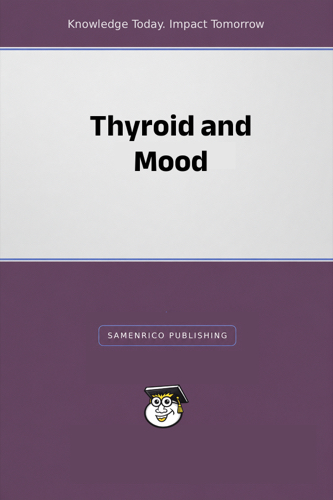
Thyroid and Mood eBook
undefined
by Castillo Bob
undefined
Formats
Free sample
Chapter 1: The Diagnostic Odyssey--–- The email arrived at 3:47 AM on a Tuesday. Sarah had been awake for an hour, staring at the ceiling, running through the mental list of everything she had tried over the past seven years. Zoloft. Lexapro. Wellbutrin.
Then a switch to Cymbalta when the Lexapro stopped working. A brief, terrifying trial of Abilify when one psychiatrist suggested she might have "bipolar tendencies." Two different therapists. A three-week outpatient program. A sleep study that found nothing. A gluten-free trial that lasted exactly eleven days.
Acupuncture. Yoga. Meditation apps. A gratitude journal that made her feel worse because she couldn't think of anything to be grateful for.The email was to her primary care physician, a woman she had seen six times in the past eighteen months. Sarah had drafted it carefully, deleted it, rewritten it, and finally sent it in the desperate hour when sleep is clearly not coming and the mind starts bargaining with itself."Dr.
Chen," she wrote, *"I know my labs came back 'normal' last month. I know my TSH was 3.8 and you said that's within range. But I cannot keep living like this. I am a 34-year-old mother of two who needs to set an alarm to remember to brush her teeth. I fell asleep at my desk twice last week.
My husband asked me last night if I even still loved him because I haven't touched him in three months. I didn't have the energy to be offended. I just said 'I don't know' and rolled over. Please. I will try anything.
I will pay for any test. I just need someone to believe me when I say that this is not who I am."*Seven years. Seven years of being told she was depressed, anxious, possibly bipolar, possibly just a tired mom who needed more "self-care." Seven years of medications that made her feel either nothing at all or actively worse. Seven years of her husband's patience wearing thin, of her children asking why Mommy was always "resting," of her mother suggesting she just needed to get out of the house more.And then, three weeks after that email, a different doctor—one recommended by a friend who had been through something similar—ran a different set of tests. Not just TSH, but the full panel.
Free T3. Free T4. Reverse T3. Thyroid peroxidase antibodies. Thyroglobulin antibodies.The results came back on a Friday afternoon.Her TSH was 3.8—still "normal" by the lab's reference range of 0.5 to 4.5.
But her Free T3 was at the bottom 2 percent of the range. Her Reverse T3 was sky-high, essentially blocking what little T3 was reaching her brain. And her TPO antibodies were positive—through the roof, actually—indicating an active autoimmune attack on her thyroid gland.Sarah had Hashimoto's thyroiditis. Not depression. Not anxiety.
Not bipolar tendencies. Not a personal failure of willpower or discipline or gratitude. An autoimmune disease that had been quietly, systematically dismantling her brain chemistry for seven years.The doctor prescribed a low dose of T3 medication—just 5 micrograms twice a day—and asked Sarah to keep a simple log: energy levels each morning, mood each afternoon, hours of sleep each night.Day three, she noticed she didn't need her afternoon coffee.Day five, she laughed at something her youngest said. Actually laughed. Not the performative laugh she had been using to convince everyone she was fine, but a real, involuntary, surprised-herself laugh.Day seven, she initiated sex with her husband.
Not because she felt obligated, but because she actually wanted to.Day ten, she called her mother and said, "I think I know what was wrong."This is not an unusual story. It is, in fact, so common that thyroid specialists have a name for it: the "diagnostic odyssey." The average patient with thyroid-related mood symptoms sees four different doctors over six years before receiving a correct diagnosis. During that time, they are prescribed an average of three different psychiatric medications. They are told, over and over, that their labs are "normal" and that their symptoms must be "stress-related" or "in their head."They are not crazy. They are not lazy.
They are not broken.They have a thyroid problem.The Great Artificial Divide Here is a fact that should startle you: the thyroid gland contains the highest concentration of iodine—a critical nutrient for brain development and function—outside the central nervous system. Your body prioritizes thyroid hormone delivery to your brain above almost every other organ. When thyroid hormone is scarce, your brain is the last organ to experience the shortage, but it is the first organ to show symptoms.And yet, the medical system has created a nearly complete separation between the doctors who treat thyroids (endocrinologists) and the doctors who treat mood (psychiatrists). Your endocrinologist checks your TSH, declares you "euthyroid" (normal thyroid function), and sends you on your way. Your psychiatrist prescribes an SSRI for your depression, a benzodiazepine for your anxiety, and a stimulant for your fatigue.
Neither one looks at the full picture.The result is a public health crisis hiding in plain sight.Consider these numbers:Approximately 20 million Americans have some form of thyroid disease.Up to 60 percent of them are unaware of their condition.Among patients with treatment-resistant depression—meaning they have tried at least two antidepressants without success—the rate of undiagnosed thyroid dysfunction is nearly 50 percent.Patients with "normal" TSH but positive thyroid antibodies have a 3.5 times higher risk of major depression than those without antibodies.Let me say that last statistic again, because it is the most important sentence in this entire chapter: Patients with a "normal" TSH and positive thyroid antibodies have a 3.5 times higher risk of major depression.Three point five times.That is not a small effect. That is not a statistical fluke. That is a massive, undeniable signal that the current standard of care—testing only TSH and calling it a day—is leaving millions of people depressed, anxious, exhausted, and suicidal.The Biochemistry of Emotion To understand why thyroid disease causes mood disorders, you need to understand a little bit about how your brain works. I promise to keep this simple.Your brain runs on three primary neurotransmitters: serotonin, dopamine, and GABA.Serotonin is your "happy" neurotransmitter. It regulates mood, appetite, sleep, and social behavior.
Low serotonin is associated with depression, anxiety, and obsessive thoughts. It is the primary target of most antidepressant medications.Dopamine is your "reward" neurotransmitter. It drives motivation, pleasure, focus, and the feeling of accomplishment. Low dopamine looks like apathy, anhedonia (the inability to feel pleasure), and the kind of profound lack of motivation that makes it hard to get out of bed.GABA is your "calm" neurotransmitter. It slows down neural activity, reducing anxiety, promoting relaxation, and helping you fall asleep.
Low GABA feels like being "wired but tired"—exhausted but unable to turn off your racing thoughts.Here is what your psychiatrist probably never told you: thyroid hormone is the gas pedal for the genes that produce all three of these neurotransmitters.Think of your DNA as a library of recipes. The recipe for serotonin is in there. The recipe for dopamine is in there. The recipe for GABA…
This is the end of the free sample. Get the eBook to keep going. Buy now
About this book
Details
- Author
- Castillo Bob
- Publisher
- SamEnrico
- Language
- English
- Genre
- Non-Fiction, Health & Wellness / Mental Health
- Released
- 2026-06-06
- Pages (approx.)
- 144
- Available as
- eBook, Audiobook

Read better in the ZLOADR app
Your eBooks on your phone or tablet. Sign in with your SamEnrico account and start reading.
More by Castillo Bob
 Sleep And Working MemoryCastillo Bob$11.99
 Mayor of a Refugee CityCastillo Bob$11.99
 Parental Self Care Daily RoutineCastillo Bob$11.99
 Coping With Foreclosure ProcessCastillo Bob$11.99
 School Crisis Leadership GuideCastillo Bob$11.99
 Amazon Inventory Management GuideCastillo Bob$11.99
 Code Commit FrequencyCastillo Bob$11.99
 Microbiome Sports PerformanceCastillo Bob$11.99
 The Phantom of Wembley: England’s 55-Year Curse and the Night It BrokeCastillo Bob$11.99
 The Sound of America: The Pioneers of JazzCastillo Bob$11.99
 The Grand Calculators of Timbuktu: Masters of the Mathematical UniverseCastillo Bob$11.99
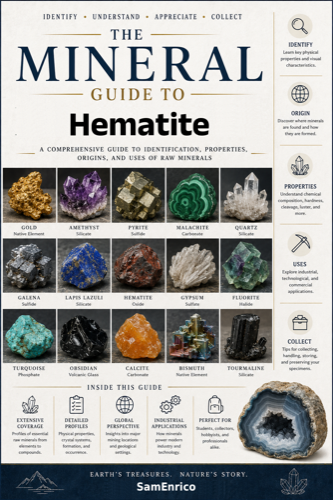 The Mineral Guide to HematiteCastillo Bob$11.99